
- Education
- Diamond Shapes
- Step Cut vs Brilliant Cut: How the Two Faceting Styles Differ
Diamond shapes
Step Cut vs Brilliant Cut: How the Two Faceting Styles Differ
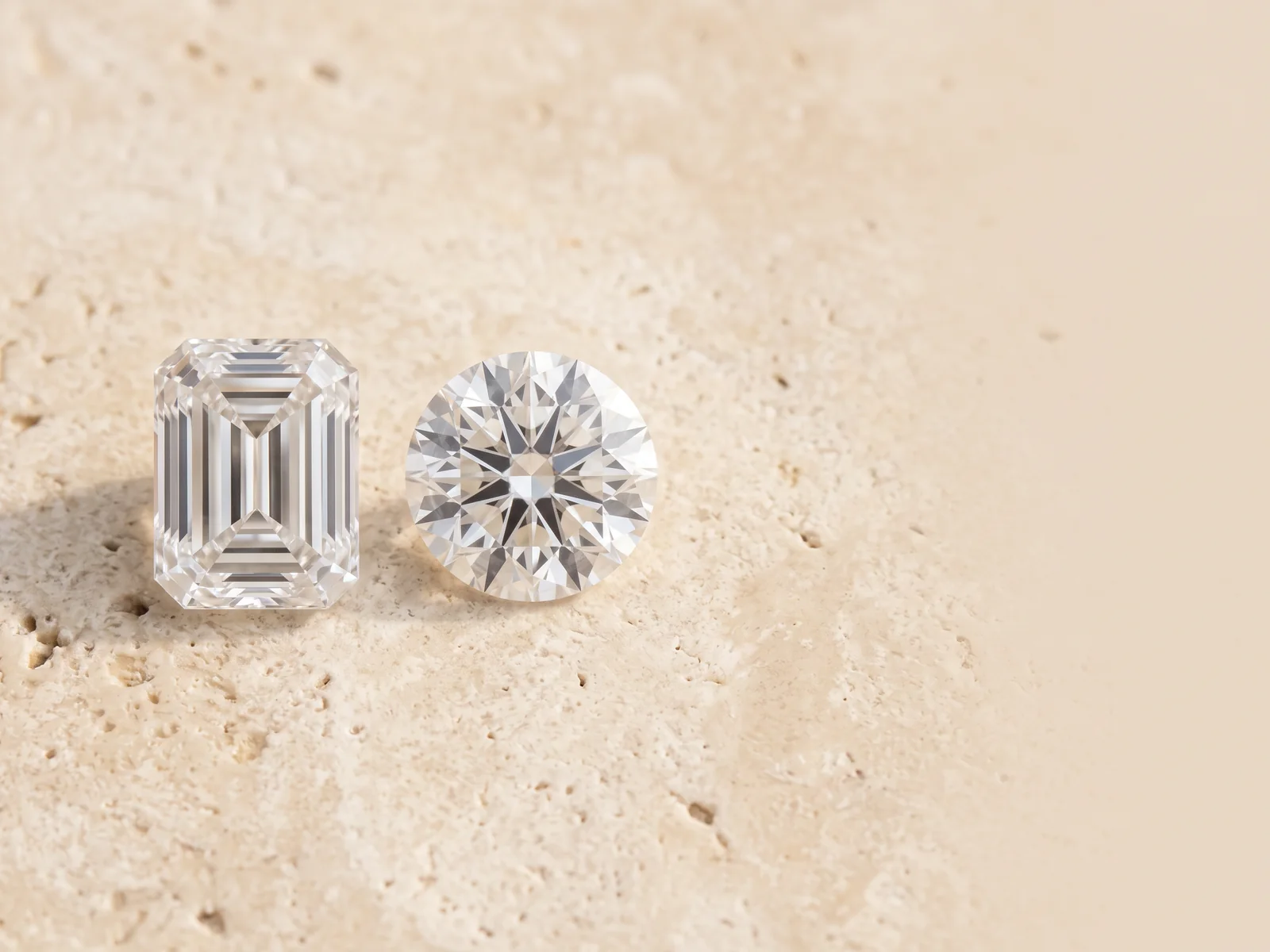
Every diamond shape is cut in one of two main styles, and the choice of step cut vs brilliant cut changes how the stone sparkles, which grades you need and what you pay. Here is how the two compare.
 Reviewed by Raj Sood, Graduate Gemologist (GIA), AJP (GIA)Master jeweller and Graduate Gemologist (GIA) · reviewed 4 November 2026
Quick answer
A step cut has long, straight facets running parallel to the girdle like stairs, giving broad flashes of light and a clear, glassy look, as in emerald and Asscher cuts. A brilliant cut has triangular and kite facets radiating from the centre, giving more sparkle and hiding inclusions better. Brilliants forgive lower clarity; step cuts need higher clarity.
What is a step cut diamond?
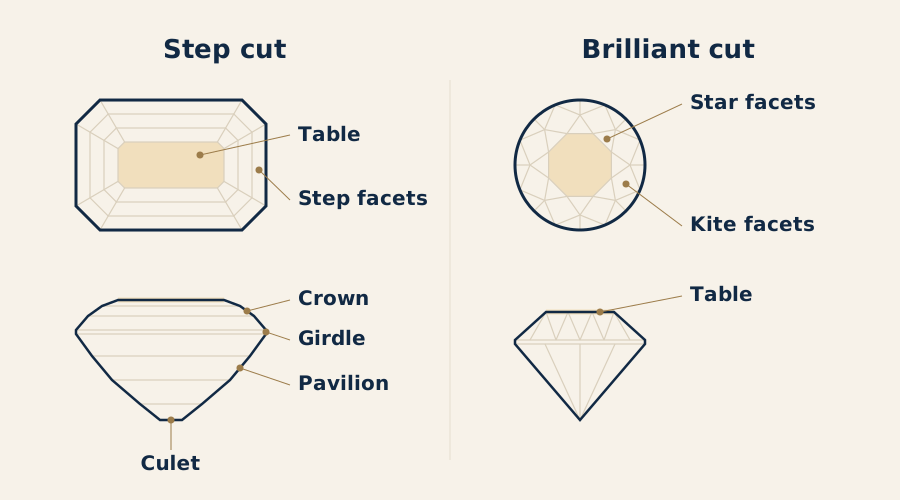
A step cut is a faceting style in which long, narrow, four-sided facets run parallel to the girdle (the thin outer edge of the stone), stacked in rows like the steps of a staircase. Seen from above, the facets form concentric rectangles or squares around a large, flat table (the top facet). The emerald cut, the Asscher, the carré and the baguette are all step cuts, and our step cut diamond guide to emerald, Asscher and carré covers each one in detail.
A typical emerald cut has three rows of steps on the crown (the top half, above the girdle) and three or four on the pavilion (the lower half), for around 50 to 58 facets in total. Simpler step cuts have far fewer: a small baguette often has only 14. That is why straight and tapered baguettes look like slim, clean bars of light beside a centre stone rather than sparkling points.
Step cutting is one of the oldest ways to shape a gem. It grew out of the early table cut, and it suits coloured stones as well as diamond: the emerald cut takes its name from emerald, which is often step-cut because the flat, even facets show colour well and reduce stress on a stone that is prone to fractures. Our page on how coloured gemstones are cut explains why. Any unfamiliar term here is also in our glossary of jewellery terms.
What is a brilliant cut diamond?
A brilliant cut uses triangular and kite-shaped facets that radiate outwards from the centre of the stone. The facets are angled so that light entering the top bounces off the pavilion and comes back up through the crown, broken into many small, bright points. The standard round brilliant has 57 facets, or 58 if it has a culet (a tiny flat facet at the bottom point): 33 on the crown and 24 on the pavilion.
The round is the reference point for the whole style, and the modern round brilliant is the only shape GIA gives an overall cut grade (Excellent to Poor). Cutters have also produced variations with extra or rearranged facets; see star and Portuguese variations on the round.
Brilliant faceting did not appear overnight. Earlier forms such as the cushion-shaped Old Mine and the round Old European Old Mine and Old European cuts had smaller tables, higher crowns and larger culets, and were cut by eye for candlelight. The modern proportions were refined through the twentieth century. Today, most fancy shapes, including oval, pear, marquise, heart and princess, are modified brilliants: brilliant-style facets arranged around a non-round outline.
Step cut vs brilliant cut: what is the difference?
The two styles use the same material, diamond, with the same hardness (10 on the Mohs scale) and refractive index (about 2.42). The difference is entirely in the facet pattern, and that changes how the stone looks and what it forgives.
| Step cut | Brilliant cut | |
|---|---|---|
| Facet shape | Long rectangles and trapezoids | Triangles and kites |
| Facet direction | Parallel to the girdle | Radiating from the centre |
| Typical facet count | 14 (baguette) to about 58 (emerald) | 57–58 on a round; varies on fancies |
| Look | Broad flashes, mirror-like, calm | Many small, lively points of light |
| Shows inclusions | Easily, through the open table | Less, broken up by facets |
| Shows body colour | More | Less |
| Clarity usually advised | VS2 or better | SI1 often eye-clean |
| Examples | Emerald, Asscher, carré, baguette | Round, oval, pear, marquise, heart, princess |
There is also a third group, mixed cuts, which combine the two: often a brilliant-style crown over a step-cut pavilion, or the reverse. The radiant cut is the best-known mixed cut, with a step-cut outline and cropped corners but brilliant faceting throughout. Many coloured gemstones are mixed cuts too. And some cuts belong to neither family: the flat-backed rose cut has triangular facets rising to a dome, as our rose cut compared with the brilliant explains.
Related guideAll 34 Diamond Cuts: Every Shape Explained and ComparedHow do step cuts and brilliant cuts handle light?
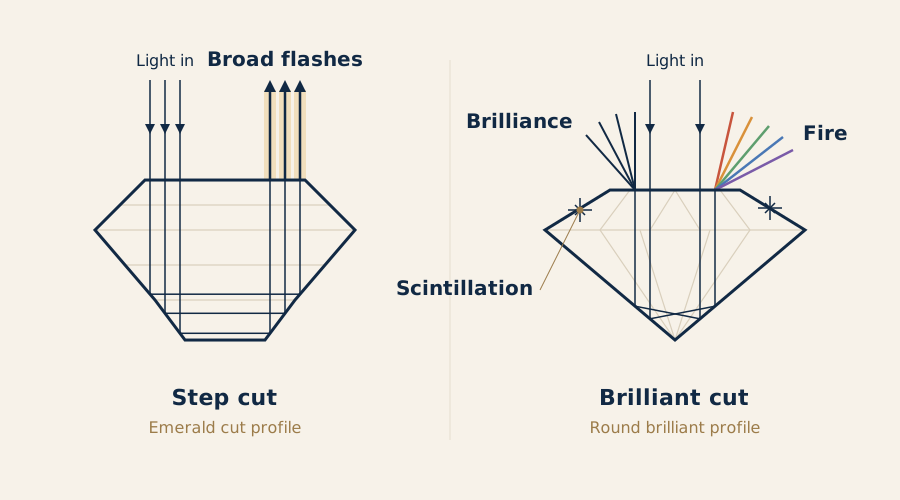
Gemmologists describe a diamond's light in three parts. Brilliance is white light returned to your eye. Fire is flashes of spectral colour, caused by diamond's dispersion (about 0.044), which splits white light into colours. Scintillation is the sparkle and pattern of light and dark you see when the stone, the light or your eye moves.
A brilliant cut is designed to maximise all three. Its many angled facets break light into small, fast-moving points, so the stone looks busy and bright, even in dim restaurant or office lighting.
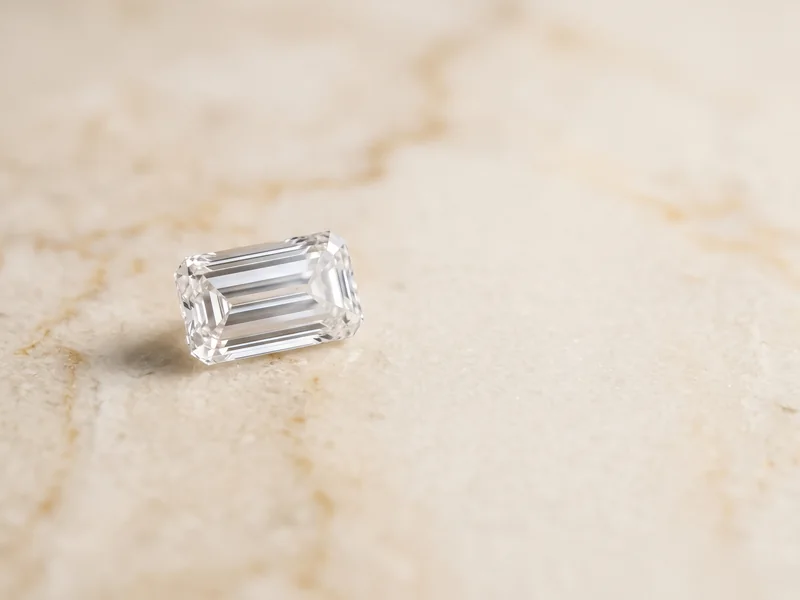
A step cut works differently. Its large, parallel facets act like a set of mirrors, returning light in fewer, larger flashes. Looking down into a well-cut emerald cut, you see a hall-of-mirrors effect: rectangles of light and dark that seem to step down into the stone. It is quieter and more architectural than a brilliant, and many people choose it precisely for that. It is not a lesser look, just a different one.
Because step cuts depend on clean, even steps, proportions matter. A step cut that is too shallow can look glassy and washed out in the middle, called a window, where you can see straight through the stone. One that is too deep looks dark and small for its weight.
Not sure which one is right?
Send us the stones you are looking at and our gemologist will tell you which to choose and why.
Which cut hides inclusions and colour better?
Brilliant cuts hide far more. The fragmented sparkle breaks up the view into the stone, so small inclusions (internal features such as crystals or feathers) are hard to pick out. Step cuts have a large, open table and long flat facets that work like windows, so an inclusion in the middle of an emerald cut is easy to see.
- Brilliant cuts: SI1 is often eye-clean (no inclusions visible without magnification at normal viewing distance), and some SI2 stones are too, especially in rounds under 1 carat.
- Step cuts: most people choose VS2 or better, and VS1 is worth considering in emerald and Asscher cuts above about 1.5 carats.
- Colour in brilliants: H or I usually faces up white in white gold or platinum.
- Colour in step cuts: the broad facets show body colour more, so G or H is a common choice in white metal; I or J can work in yellow or rose gold.
This affects the budget. A step cut often needs a higher clarity grade than a brilliant to look clean, which narrows the price gap between the two styles more than the per-carat figures alone suggest.
Which diamond shapes are step cuts and which are brilliants?
The outline of a stone is its shape; the facet pattern is its cut style. Most shapes are firmly in one family, but a few are cut both ways. If you are new to the vocabulary, our introduction to diamond shapes is a good starting point, and all 34 cuts compared in one place goes through every shape.
| Shape | Usual cut style | Notes |
|---|---|---|
| Round | Brilliant | 57–58 facets; the only shape with a GIA cut grade |
| Oval, pear, marquise, heart | Modified brilliant | Elongated outlines; can show a bow-tie |
| Princess | Modified brilliant | Square, with chevron-pattern pavilion |
| Cushion | Brilliant or modified brilliant | Rounded square; 'crushed ice' or chunky facets |
| Radiant | Mixed | Step-cut outline with brilliant faceting |
| Emerald | Step | Rectangle with cut corners; ratio about 1.30–1.50 |
| Asscher | Step | Square with deeply cut corners, high crown |
| Carré | Step | Square with sharp, uncut corners |
| Baguette, tapered baguette | Step | Mostly side stones |
| Trapezoid, bullet, half moon | Usually step | Side stones; some are brilliant-cut |
| Shield, kite, hexagon | Step or brilliant | Geometric shapes cut both ways |
| Calf's head | Usually step | Five-sided, mainly side stones or one-offs |
For the round-outline and elongated shapes, see our guide to oval, pear, marquise and other elongated shapes. The square outlines are split across families, which is where most confusion arises: the princess, radiant and cushion family are brilliants or mixed cuts, while the Asscher and carré are step cuts of a similar outline. Cushions vary the most from stone to stone, so the page on brilliant and modified cushions explains how to tell the facet patterns apart.
Newer and unusual outlines are often step-cut, because straight steps suit straight edges. Our page on shield, kite and hexagon cuts shows both versions, and the five-sided calf's head cut is a good example of a shape that is nearly always cut in steps.
Step cut vs brilliant cut: which looks bigger for its carat weight?
Carat is weight, not size. What you see on the hand is the face-up size, the outline measured from above in millimetres. Shapes and styles that carry less weight in the pavilion spread wider for the same carat.
| 1 ct shape | Style | Typical face-up size | How big it looks |
|---|---|---|---|
| Round | Brilliant | about 6.4–6.5 mm | The reference point |
| Oval | Modified brilliant | about 7.7 × 5.7 mm | Larger than a round |
| Marquise | Modified brilliant | about 10.0 × 5.0 mm | Among the largest-looking |
| Princess | Modified brilliant | about 5.5 × 5.5 mm | Slightly smaller than a round |
| Radiant | Mixed | about 6.5 × 5.0 mm | Similar to a round |
| Emerald | Step | about 7.0 × 5.0 mm | Similar to or slightly larger than a round |
| Asscher | Step | about 5.5 × 5.5 mm | Smaller than a round |
These are typical figures for well-proportioned stones; individual diamonds vary with depth and ratio. The pattern is consistent, though. Elongated brilliants look largest for their weight. The emerald cut, with its shallow steps and long outline, keeps pace with a round. The Asscher, with its high crown, small table and deeper pavilion, holds a lot of weight underneath and faces up smaller. Always compare the millimetre measurements on the grading report, not just the carat weight.
Do step cuts cost less than brilliant cuts?
Per carat, usually yes. Round brilliants cost the most of any shape, partly because demand is highest and partly because cutting a round from a rough crystal loses more weight. Emerald and Asscher cuts, like most fancy shapes, usually cost less per carat than a round of the same colour and clarity. Remember, though, that a step cut often needs a higher clarity grade to look clean.
| 1 ct, G–H, VS | Natural (approx. AUD) | Lab-grown (approx. AUD) |
|---|---|---|
| Round brilliant | about $8,000–$16,000 | about $800–$2,500 |
| Oval brilliant | about $6,000–$12,000 | about $700–$2,200 |
| Emerald step cut | about $5,500–$11,000 | about $700–$2,200 |
| Asscher step cut | about $5,500–$11,000 | about $700–$2,200 |
These are broad ranges only; prices move with the market and the exact grades. Both natural and laboratory-grown diamonds are cut in step and brilliant styles. Lab-grown diamonds are real diamond, with the same hardness, refractive index and dispersion, grown in a laboratory rather than mined; they cost much less than natural. Natural diamonds are rarer. Either way, ask for an independent grading report from a lab such as GIA or IGI, which states whether the stone is natural or lab-grown.
Browse natural and lab-grown diamonds in step and brilliant cuts
What settings suit step cuts and brilliant cuts?
Brilliant cuts are flexible. A round sits well in four or six claws, a bezel or a halo, and the setting barely changes how it sparkles. Modified brilliants with points, such as pears and marquises, need a V-claw to protect each tip.
- Emerald and other cut-corner step cuts: four claws, one at each cut corner, or double claws for a more secure, classic look. The cut corners themselves reduce the risk of chipping.
- Carré and other sharp-cornered step cuts: V-claws or a bezel to cover the exposed corners.
- Asscher: four claws or a bezel; the high crown suits a setting that lifts it slightly so light can reach the pavilion.
- Step-cut side stones: baguettes and trapezoids sit well in channels or with small claws, and their straight lines frame either style of centre stone.
Pairing the two styles is common: a round brilliant with tapered baguettes either side, or an emerald cut flanked by trapezoid, half moon and bullet side stones. The contrast between sparkle and flash is part of the appeal.
How do you choose between a step cut and a brilliant cut?
- Decide on the look. Lots of small, lively sparkle points to a brilliant; calm, broad flashes and clean lines point to a step cut.
- Check the report. Confirm shape, measurements, colour, clarity, polish, symmetry and whether the diamond is natural or lab-grown.
- Set the clarity floor. For a step cut, start at VS2 and look through the table yourself; for a brilliant, an eye-clean SI1 is often fine.
- Set the colour. Allow one grade higher for a step cut in white metal, as the broad facets show tint.
- Compare millimetres. Use the face-up measurements to compare size across shapes, not carat alone.
- Watch a video or view in person. Look for windows or dark centres in step cuts and a dark bow-tie in elongated brilliants.
- Plan the setting. Make sure corners and points are protected before you commit to the stone.
Free consultation
Talk to a gemologist
Compare stones in person or online with Raj Sood, Graduate Gemologist (GIA), AJP (GIA).
Book a consultationShop this shape
FAQ
Common questions
What is the difference between a step cut and a brilliant cut?
A step cut has long, straight facets parallel to the girdle, giving broad flashes and a clear, mirror-like look. A brilliant cut has triangular and kite facets radiating from the centre, giving more small points of sparkle.
Which sparkles more, a step cut or a brilliant cut?
A brilliant cut shows more sparkle and scintillation. A step cut shows fewer, larger flashes of light, which many people prefer for its calmer, more architectural look.
Is an emerald cut a step cut?
Yes. The emerald cut is the best-known step cut, a rectangle with cut corners and rows of parallel facets. The Asscher, carré and baguette are step cuts too.
Is a radiant cut a step cut or a brilliant cut?
Neither exactly. The radiant is a mixed cut: it has the cut-corner outline of an emerald cut but brilliant-style faceting, so it sparkles more like a brilliant.
Do step cut diamonds need higher clarity?
Usually. The large table and flat facets make inclusions easier to see, so most people choose VS2 or better, while an SI1 brilliant is often eye-clean.
Are step cut diamonds cheaper than round brilliants?
Per carat, emerald and Asscher cuts usually cost less than a round of the same grades. The gap narrows because step cuts often need higher clarity to look clean.

Ask a gemologist
Not sure which diamond to choose?
Raj Sood is a Graduate Gemologist (GIA) and master jeweller. Bring the stones you are considering, or send the reports, and he will tell you honestly which one is better and why.
Keep learning
Related guides
 Diamond ShapesStep Cut Diamonds: Emerald, Asscher, Baguette, Carré and More
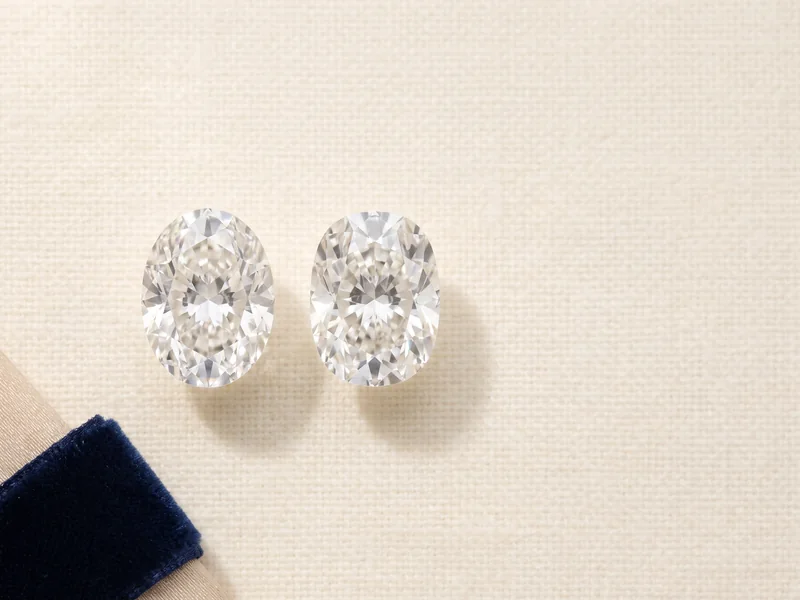 Diamond ShapesRound Brilliant Diamonds
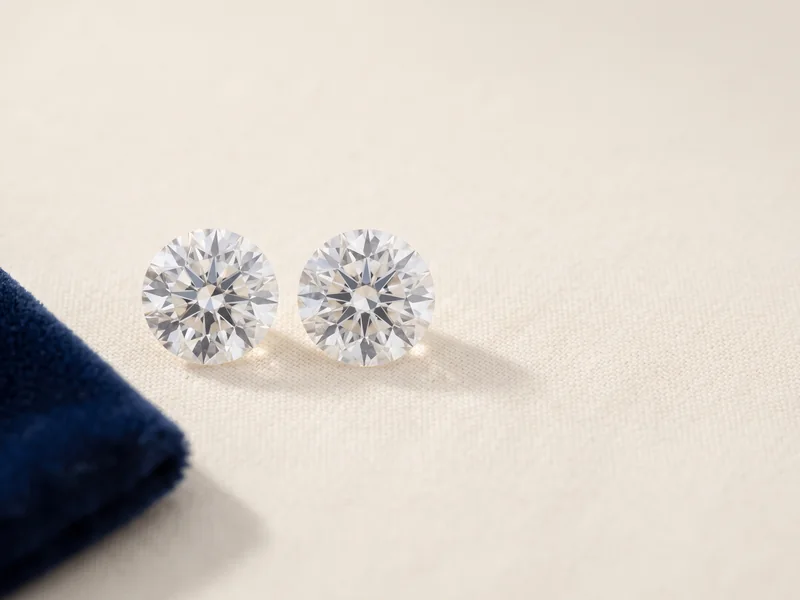 Diamond ShapesRose Cut vs Brilliant Cut DiamondsDiamond ShapesUnderstanding Diamond Shapes
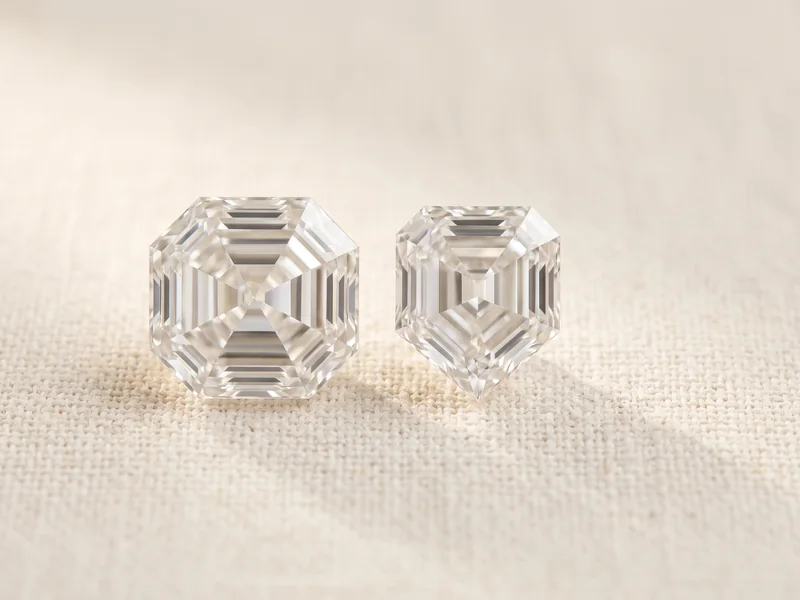 Diamond ShapesGeometric Diamond Cuts: Shield, Kite, Hexagon, Pentagon and More
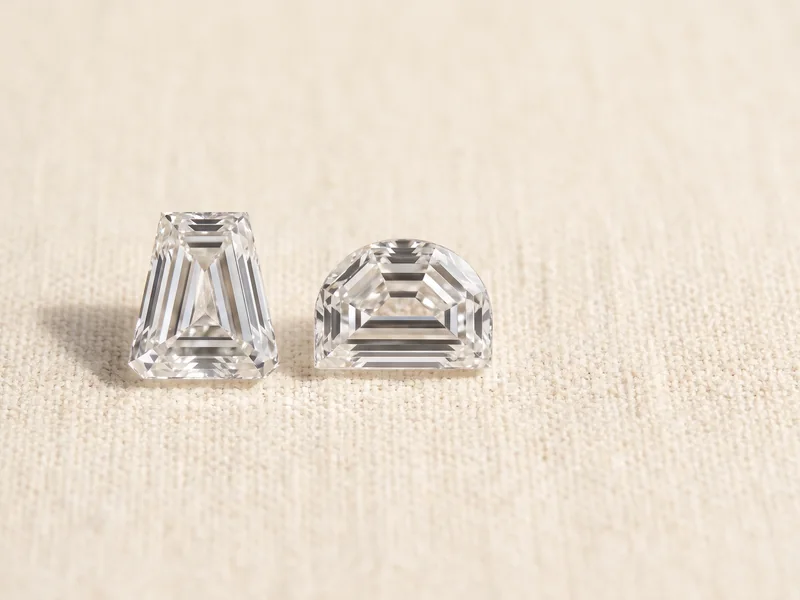 Diamond ShapesSide Stone Diamond Cuts: Trapezoid, Half Moon, Bullet, Baguette, Trilliant
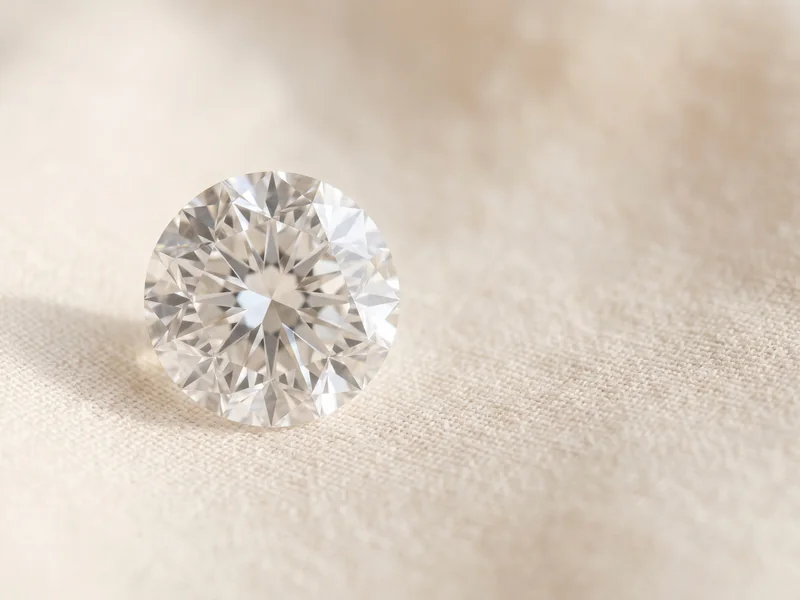 Diamond ShapesRound Brilliant Family: Round, Star and Portuguese Cuts
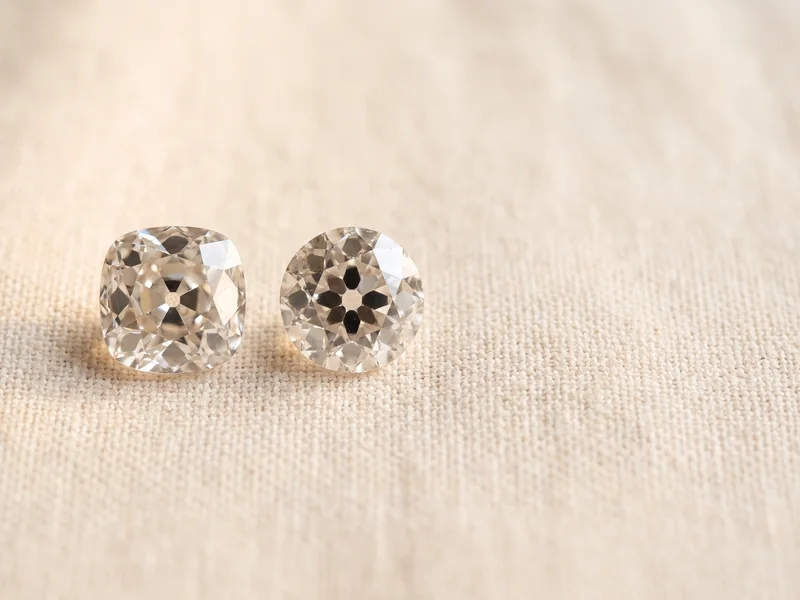 Diamond ShapesAntique Diamond Cuts: Old Mine, Old European and Rose
Explore more
More guides on this topic
Education