
- Education
- Diamond Shapes
- Calf's Head Cut Diamond Guide: Shape, Facets, Ratio and Settings
Diamond shapes
Calf's Head Cut Diamond Guide: Shape, Facets, Ratio and Settings
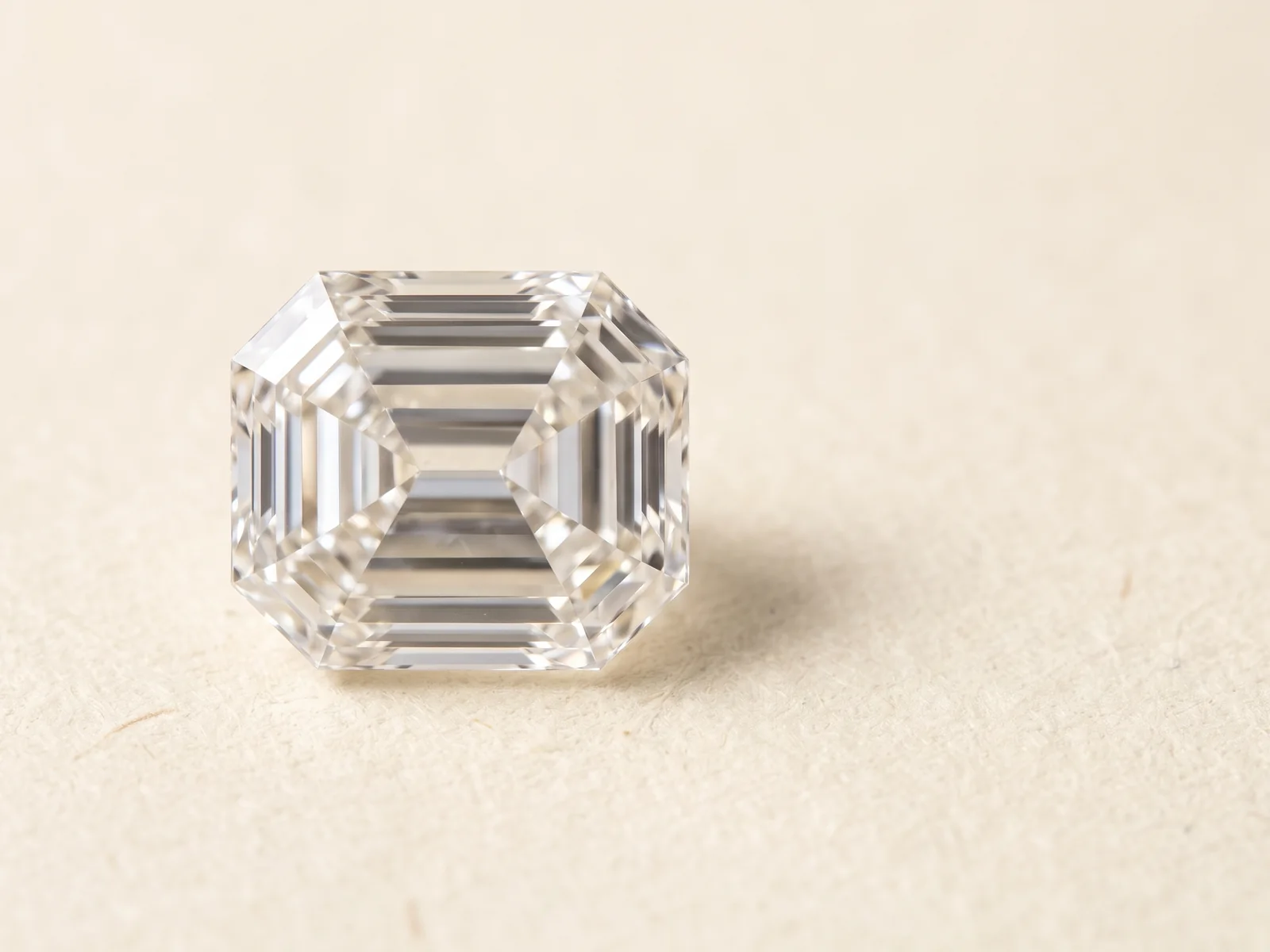
The calf's head cut diamond is one of the rarest geometric shapes, and few people have seen one in person. Here is what it looks like, how it is faceted and what to check before you commit to one.
 Reviewed by Raj Sood, Graduate Gemologist (GIA), AJP (GIA)Master jeweller and Graduate Gemologist (GIA) · reviewed 4 November 2026
Quick answer
A calf's head cut diamond is a six-sided shape with a flat top, short upper sides and two long sides tapering to a narrow base, like a calf's face. Most are step cut. Look for a ratio of about 1.00–1.30, matched sides, VS2 or better clarity and a bezel or claw setting that protects the corners.
What is a calf's head cut diamond?
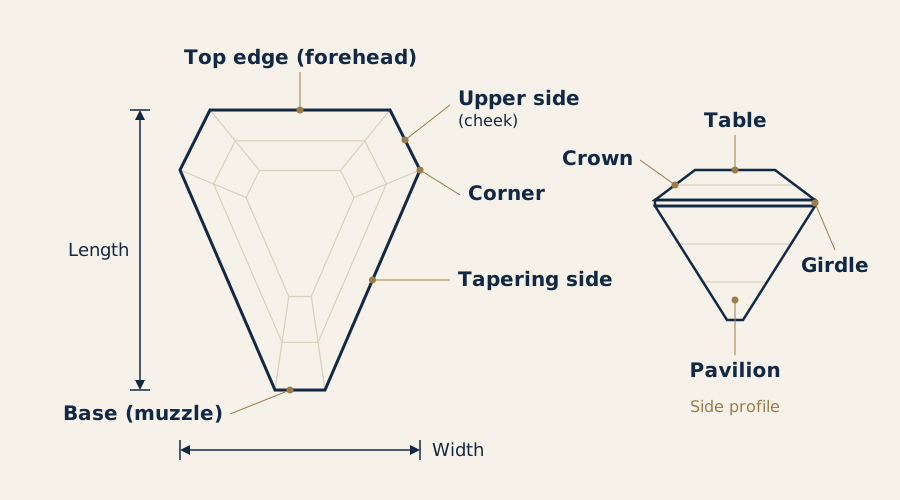
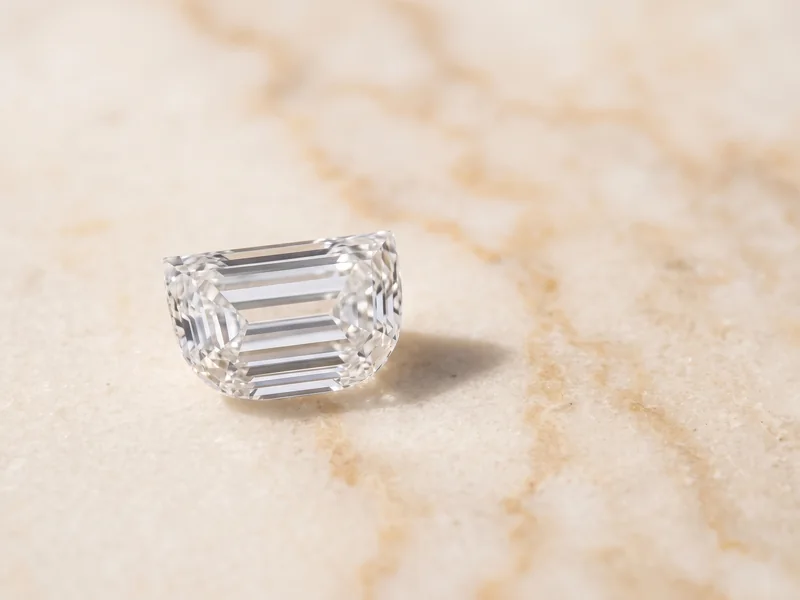
A calf's head cut diamond is a geometric fancy shape named for its outline, which looks a little like the face of a calf seen straight on. It has a flat top edge (the forehead), two short sides dropping from each top corner (the cheeks), and two longer sides that taper inward to a narrow base (the muzzle). That base is usually a short flat edge, although some cutters bring it almost to a point.
It is a niche cut. You will rarely find calf's heads in a standard diamond search, because most are cut one at a time from rough that suits the outline, or to order for a particular design. It sits in the same family as the shield, kite and hexagon, all of which are covered in our guide to geometric diamond cuts and how they differ. If you want to see where it fits among every shape, our page on all 34 diamond cuts explained side by side lists them together.
Because the outline has six straight edges and six corners, it behaves differently from curved shapes like ovals or pears. Straight edges make the shape crisp and architectural, but corners are the thinnest and most exposed parts of any diamond. Diamond is 10 on the Mohs hardness scale, yet it can still chip along its cleavage planes (natural lines of weakness in the crystal) if a corner takes a hard knock. Much of the advice below comes back to protecting those corners.
New to shape names in general? Our introduction to diamond shapes is a good starting point, and every technical word on this page is defined in the GemTrove jewellery glossary.
How is a calf's head diamond faceted: step cut or brilliant?
Most calf's heads are step cut. A step cut uses long, flat facets that run parallel to the edges, stacked like stairs down the sides of the stone. It is the same idea as an emerald cut or a baguette. The result is a calm, glassy look with broad flashes of light, sometimes called a hall of mirrors effect, rather than the busy sparkle of a round.
Some cutters give the calf's head a brilliant or mixed facet pattern instead, using triangular and kite-shaped facets on the pavilion (the lower half). This adds more sparkle and hides small inclusions better, at the cost of the clean, linear look. If you are weighing the two styles, our comparison of rose cut and brilliant cut faceting explains how facet shape changes the way a diamond returns light, and the Portuguese cut, with its many rows of facets shows how far a brilliant-style pattern can be pushed.
There is no standard facet count for a calf's head. A simple step-cut version might have roughly 20 to 40 facets; a brilliant version can have 50 or more. Squared brilliant shapes such as the princess cut show what a brilliant pavilion does inside a straight-edged outline, and a brilliant calf's head behaves in a similar way.
| Step-cut calf's head | Brilliant calf's head | |
|---|---|---|
| Look | Broad flashes, glassy, Art Deco | Smaller, livelier sparkle |
| Shows inclusions | More easily | Less easily |
| Shows body colour | Somewhat more | Somewhat less |
| Availability | More common of the two | Less common |
| Typical use | Side stones, Deco-style centre stones | Centre stones, pendants |
What is the ideal ratio for a calf's head diamond?
The length-to-width ratio compares the length (from the top edge down to the base) with the width (across the widest point, usually where the short upper sides meet the long tapering sides). Divide the length by the width given on the grading report.
| Ratio | How it looks | Suits |
|---|---|---|
| Below 1.00 | Wide and squat, closer to a shield | Side stones and east-west settings |
| 1.00–1.15 | Balanced, the classic calf's head | Most centre stones and pendants |
| 1.15–1.30 | Longer, with a slimmer taper | A more elongated look on the finger |
| Above 1.30 | Narrow, closer to a kite or elongated hexagon | Personal preference; check the outline still reads clearly |
These ranges are a guide only. Because calf's heads are cut individually, there is no industry-agreed ideal and labs such as GIA do not give fancy shapes an overall cut grade. As a rough starting point, many step-cut calf's heads sit around 60–70% total depth (the height of the stone compared with its width) and a table (the large flat top facet) of about 55–70% of the width. A stone cut much deeper carries hidden weight underneath and looks small face-up; a much shallower one can look glassy and dull in the middle, a sign of windowing, where light passes straight through instead of bouncing back.
The polish and symmetry grades on the report still matter. Our guide to what ideal and excellent cut grades really mean explains how those grades work and why they are only part of the picture for fancy shapes.
Symmetry is especially visible in a calf's head. Check that the two short upper sides are the same length, that the two long sides taper at the same angle, and that the base sits centred under the top edge. If one cheek is longer than the other, the whole stone appears to tilt.
What colour and clarity should you choose for a calf's head cut diamond?
Step cuts have large, open facets, so you can see deep into the stone. That makes clarity more important than in a brilliant. In a step-cut calf's head, aim for VS2 or better, and treat VS1 as the safer choice in stones over about 1 carat, where everything is magnified. A well-placed SI1 can work in a brilliant-faceted calf's head, but only if you have seen it on video and it is eye-clean (no inclusions visible without magnification at normal viewing distance).
For colour, body tint tends to gather at the corners and in the narrow base, where the stone is thinnest and the facets meet. Other step-cut geometrics, such as the octagonal step cut, show colour in the same way.
- White gold or platinum: G–H colour for a clean white look; F or better if you are sensitive to warmth.
- Yellow or rose gold: I–J colour usually looks white once set.
- Step cut: VS2 or better; VS1 for larger stones.
- Brilliant cut: VS2 or a carefully chosen eye-clean SI1.
- Avoid: feathers (small internal cracks) or chips near any corner, especially at the base.
Ask to see the report's plotting diagram, which maps where each inclusion sits. An inclusion in the middle of a step cut is easy to see; one under a claw at a corner may be hidden, but if it reaches the surface it can weaken that corner.
Not sure which one is right?
Send us the stones you are looking at and our gemologist will tell you which to choose and why.
How big are calf's head diamonds usually?
Calf's heads are made across a wide range of sizes, but they turn up most often in two roles. Small ones, roughly 0.10 to 0.50 carat, are used as side stones or accents, often in pairs. Larger ones, from about 0.70 carat upward, are used as centre stones in Art Deco-inspired and architectural ring designs, or as pendants.
Below about 0.30 carat, the short upper sides become so small that the outline can read as a simple shield or pentagon from a normal distance, especially once claws cover the corners. For a centre stone where the calf's head outline should be recognisable, most people look at 0.70 carat or more.
Because there is no standard proportion set, the millimetre size of a calf's head at any given carat weight varies a lot. Always compare the length and width measurements on the report rather than carat weight alone. A 1 carat step-cut calf's head will often measure somewhere around 6.0–7.0 mm across, but treat that only as a rough indication.
What is the best setting for a calf's head cut diamond ring?
With six corners, a calf's head needs a setting that covers its weak points. The common options:
- Six claws: one on each corner. V-shaped or flat-tipped claws wrap the corners better than round ones.
- Bezel or half-bezel: a thin rim of metal around the edge. The most protective choice and well suited to the clean step-cut look.
- East-west: setting the stone sideways, with the top edge facing one side of the finger, for a less expected look.
- Three-stone: a calf's head centre flanked by small bullet cut side stones or trilliant side stones.
- As side stones: a pair of small calf's heads can flank a larger step-cut centre, in the same way half moon cut diamonds are often matched to an oval or round.
Because calf's heads come in so many proportions, a setting is usually made around the actual stone rather than picked off a shelf. That suits custom work well.
For the wedding band, a straight band can sit flush beside a low bezel, but a raised claw setting often leaves a gap. A contoured band, or a setting designed with a lower profile, closes that gap. Plan the band at the same time as the engagement ring so the two sit together comfortably.
How does a calf's head compare with shield, kite and other geometric cuts?
The calf's head is often confused with its neighbours in the geometric family. The main differences are in the number of sides and how the outline tapers.
| Calf's head | Shield | Kite | Pentagon | Hexagon | |
|---|---|---|---|---|---|
| Sides | 6 | Usually 5–6 | 4 | 5 | 6 |
| Outline | Flat top, short upper sides, long taper to narrow base | Flat top, sides taper to a point | Diamond-like, two short and two long sides | Five equal or near-equal sides | Six sides, usually symmetrical top and bottom |
| Usual faceting | Mostly step | Step or brilliant | Step or brilliant | Step or brilliant | Mostly step |
| Fragile areas | Six corners, base | Point and corners | Two points | Five corners | Six corners |
| Typical use | Centre or side stones | Side stones, centre stones | Centre stones, side stones | Centre stones | Centre stones |
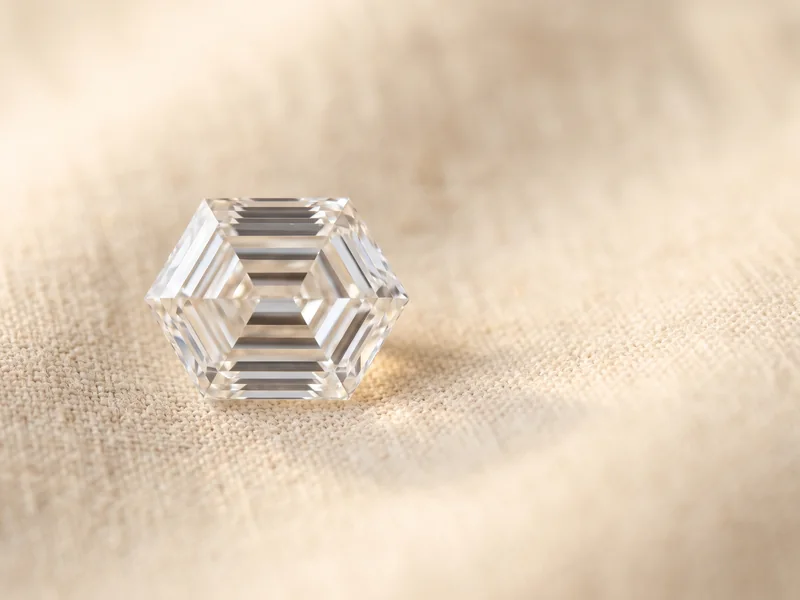
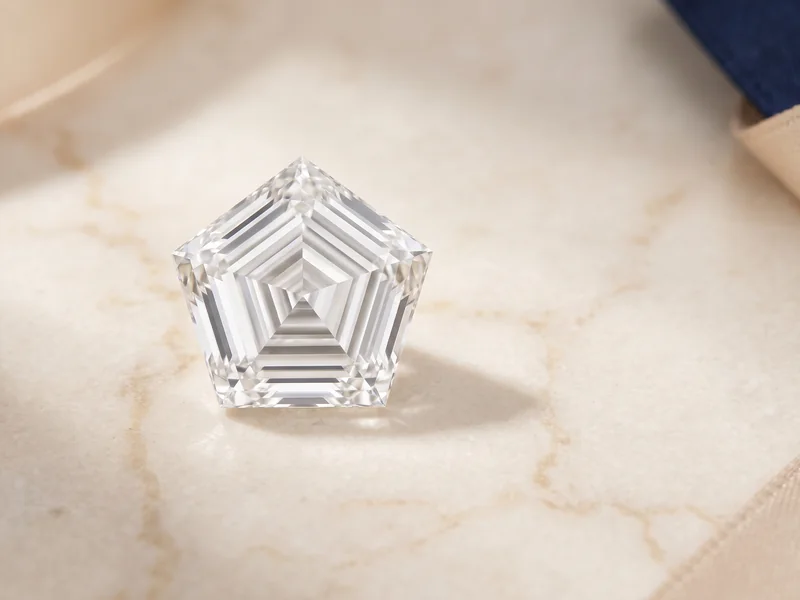
The closest relative is the shield. A shield cut diamond usually tapers more quickly to a sharper point, while the calf's head keeps short upright sides near the top and ends in a blunter base. The kite cut has only four sides and a longer, more dramatic point. If you like the balance of straight edges without a taper, compare the five-sided pentagonal cut and the hexagonal cut diamond.
Related guideShield Cut DiamondsFor something slimmer and more angular, the long, narrow lozenge cut is worth a look, and for three sides rather than six, see our guide to triangular step-cut diamonds.
How much does a calf's head cut diamond cost, natural or lab-grown?
Calf's heads are cut from both natural and laboratory-grown diamond, and the two look the same to the eye. Lab-grown diamonds are real diamond, grown in a laboratory rather than mined, with the same hardness and a refractive index of about 2.42. They cost much less than natural diamonds of similar grades. Any diamond you consider should come with an independent grading report that states whether it is natural or lab-grown.
| Calf's head, G–H, VS | Approximate price range (AUD) |
|---|---|
| 0.50 ct natural | about $1,500–$4,500 |
| 1.00 ct natural | about $4,500–$12,000 |
| 1.00 ct lab-grown | about $800–$2,500 |
These are broad ranges only. Pricing for rare shapes is harder to pin down than for rounds, because so few are on the market at any time. Per carat, a calf's head often costs less than a round of the same grades, since cutting the outline can keep more of the rough crystal. On the other hand, a matched pair or a stone cut to order can cost more, because of the cutter's time and the difficulty of finding a match. What moves the price most is carat, colour, clarity and how cleanly the outline is cut.
Browse our diamonds (no calf's head cuts in stock right now)
How do you choose a calf's head cut diamond? Step by step
- Read the report. Check the shape description, measurements, colour, clarity, polish and symmetry, and whether the diamond is natural or lab-grown.
- Work out the ratio. Divide length by width; about 1.00–1.15 is classic, up to about 1.30 for a longer look.
- Check the outline by eye. Matching upper sides, evenly tapered long sides and a base centred under the top edge.
- Watch a video. In a step cut, look for inclusions in the open middle and for a dull, see-through window.
- Inspect the corners. No chips, and no feathers reaching the surface near the base or corners.
- Compare millimetres, not carats. Calf's heads vary widely in spread, so face-up size matters more than weight.
- Plan the setting and band. Make sure every corner, especially the base, is protected, and that your wedding band will sit comfortably beside it.
Free consultation
Talk to a gemologist
Compare stones in person or online with Raj Sood, Graduate Gemologist (GIA), AJP (GIA).
Book a consultationShop this shape
FAQ
Common questions
What is a calf's head cut diamond?
It is a six-sided geometric diamond shape with a flat top, short upper sides and two long sides tapering to a narrow base, resembling a calf's face. Most are step cut, like an emerald cut.
Is a calf's head the same as a shield cut?
No, though they are close relatives. A shield usually tapers quickly to a sharper point, while a calf's head keeps short upright sides near the top and ends in a blunter, narrower base.
Are calf's head diamonds rare?
Yes. They are rarely stocked because most are cut individually or to order, so you may need to wait for one to be sourced or cut.
Can you get a lab-grown calf's head diamond?
Yes. Lab-grown diamond can be cut into a calf's head like any other shape, and it costs much less than a natural stone of similar grades. The grading report will state that it is lab-grown.
Is a calf's head cut diamond good for an engagement ring?
It can be, as long as the setting protects its corners, ideally with a bezel or a claw on each corner including the base. Choose VS2 or better clarity in a step-cut stone.
Do calf's head diamonds sparkle?
Step-cut calf's heads give broad flashes of light rather than the fine sparkle of a round. Brilliant-faceted versions sparkle more but are harder to find.

Ask a gemologist
Not sure which diamond to choose?
Raj Sood is a Graduate Gemologist (GIA) and master jeweller. Bring the stones you are considering, or send the reports, and he will tell you honestly which one is better and why.
Keep learning
Related guides
 Diamond ShapesShield Cut DiamondsDiamond ShapesGeometric Diamond Cuts: Shield, Kite, Hexagon, Pentagon and More
 Diamond ShapesKite Cut Diamonds
 Diamond ShapesHalf Moon Cut DiamondsDiamond ShapesUnderstanding Diamond Shapes
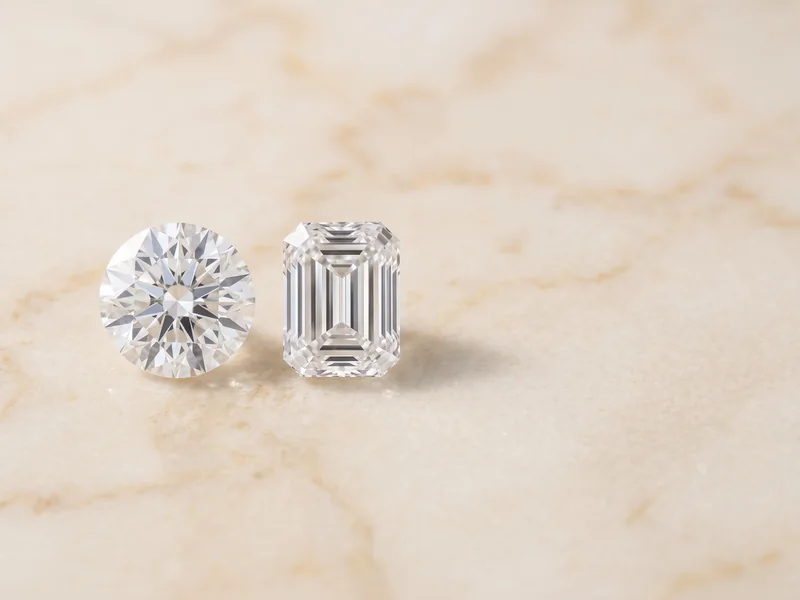 Diamond ShapesAll 34 Diamond Cuts: Every Shape Explained and Compared
 Diamond ShapesHexagonal Cut Diamonds
 Diamond ShapesPentagonal Cut Diamonds
Explore more
More guides on this topic
Education