
Gemstones
Lapis Lazuli Guide: Colour, Hardness, Treatments and Care
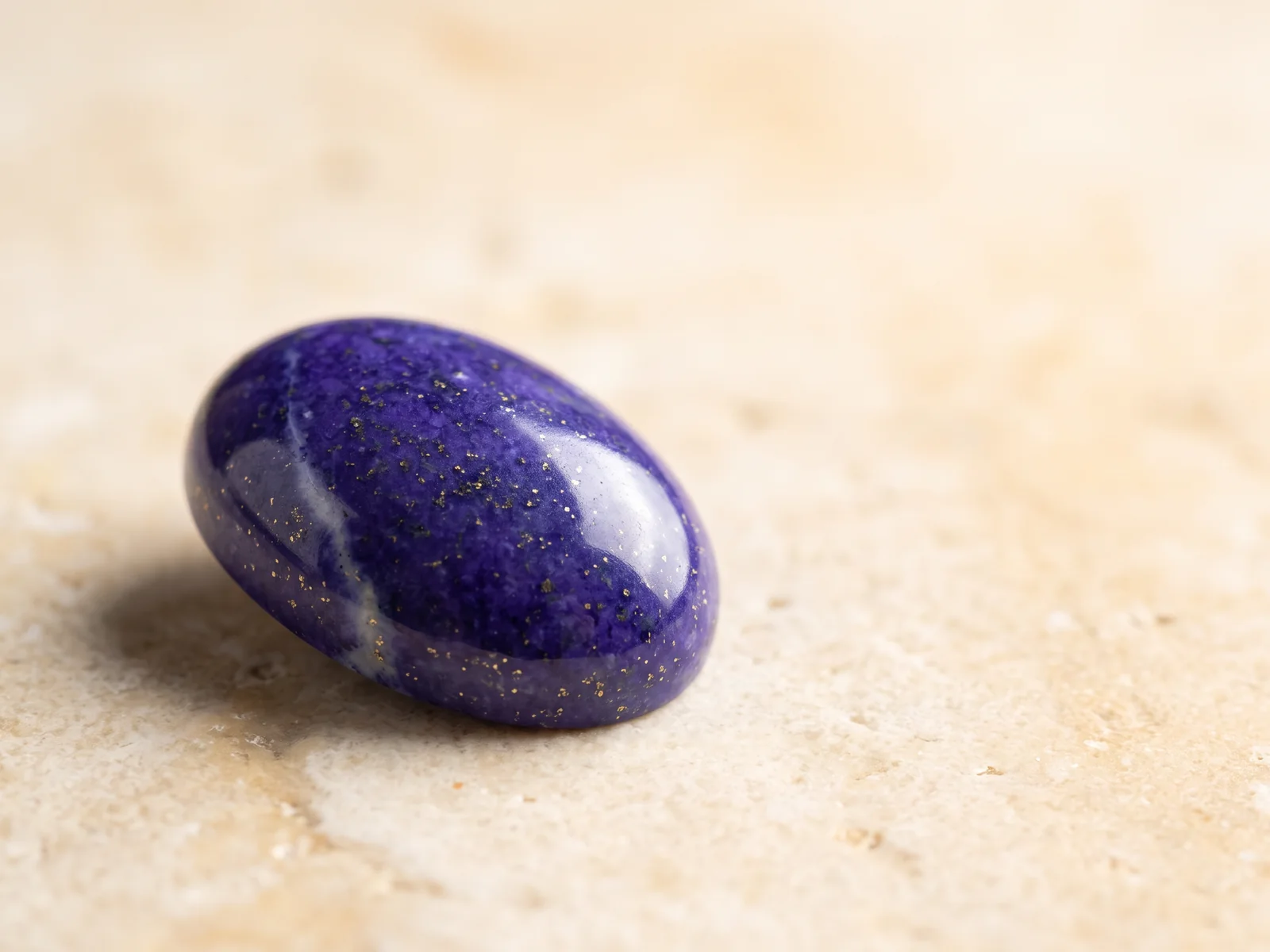
Lapis lazuli has been treasured for more than 6,000 years, yet much of what is sold today is dyed, reconstituted or not lapis at all. Here is how a gemmologist reads its colour, checks for treatments and decides whether it will survive life in a ring.
 Reviewed by Raj Sood, Graduate Gemologist (GIA), AJP (GIA)Master jeweller and Graduate Gemologist (GIA) · reviewed 4 November 2026
Quick answer
Lapis lazuli is a deep blue rock, not a single mineral, made mostly of lazurite with golden flecks of pyrite and white calcite. It rates about 5–5.5 on the Mohs scale, so it suits pendants and earrings better than everyday rings. The finest is even, intense violet-blue from Afghanistan; dyed and reconstituted lapis is common.
What is lapis lazuli?
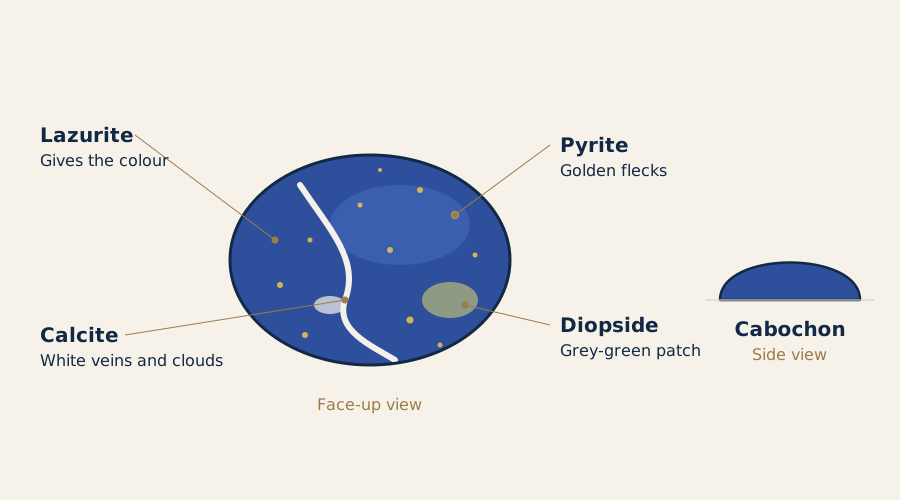
Lapis lazuli is a rock, not a single mineral. Most gems, such as sapphire or quartz, are single crystals of one mineral. Lapis is an aggregate, meaning a mass of many tiny mineral grains locked together. The blue comes from lazurite, a mineral in the sodalite group that owes its colour to sulphur held inside its crystal structure. The golden specks are pyrite (iron sulphide, often called fool's gold), the white streaks and clouds are calcite, and many stones also hold grey-green diopside and a little blue sodalite.
The name joins the Latin 'lapis', meaning stone, with the medieval Latin 'lazulum', borrowed from the Persian 'lāzhward', a word for blue that also gave English the word azure. Lapis was inlaid in Tutankhamun's funerary mask, carved into seals across Mesopotamia and ground into the pigment ultramarine, which painters such as Vermeer used for their richest blues.
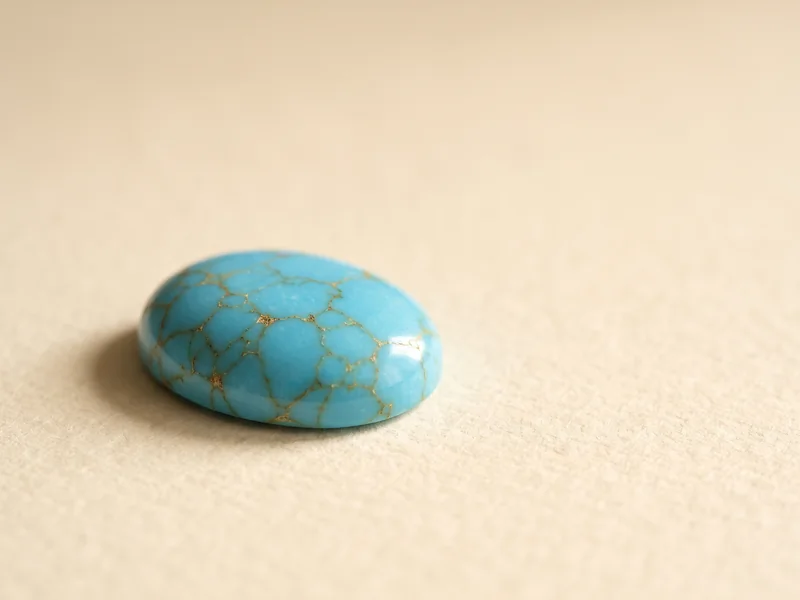
Because it is opaque (light does not pass through it), lapis is cut as cabochons (smooth, domed stones with no facets), flat inlays, beads and carvings rather than sparkling faceted stones. In that sense it sits beside turquoise, the other classic opaque blue more than beside sapphire. You will find it with every other coloured stone in our guide to coloured gemstones and birthstones, and any unfamiliar term here is explained in our plain-English jewellery glossary.
What colour is lapis lazuli, and what do the gold flecks mean?
Lapis runs from a pale, washed-out denim blue through to a deep royal blue with a slight violet tint. The colour most people prize is an intense, even, medium-dark violet-blue that looks the same across the whole stone. Greenish or greyish blues, and stones where the blue is broken up by white, are valued less.
Because lapis is a mix of minerals, its look depends on the proportions of each:
- Lazurite: the more lazurite, the deeper and more saturated the blue.
- Pyrite: small, evenly scattered golden flecks are part of the traditional appeal and help separate lapis from imitations. Large brassy patches, or so much pyrite that it dominates the blue, lower the value. Pyrite can also tarnish slowly over the years.
- Calcite: white veins or cloudy areas dilute the colour. Stones with lots of calcite and a lighter, mottled blue are sold as denim lapis, an attractive and affordable trade grade.
- Diopside and other minerals: grey or greenish patches that dull the overall colour.
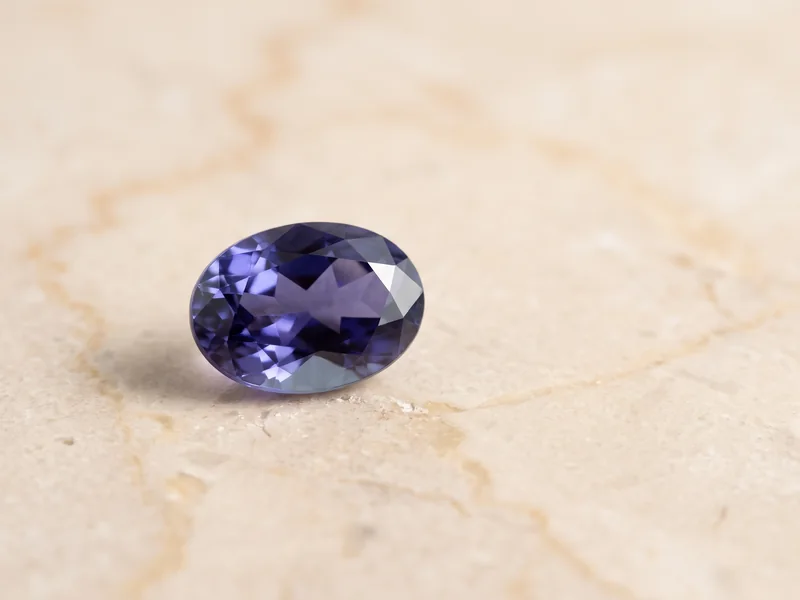
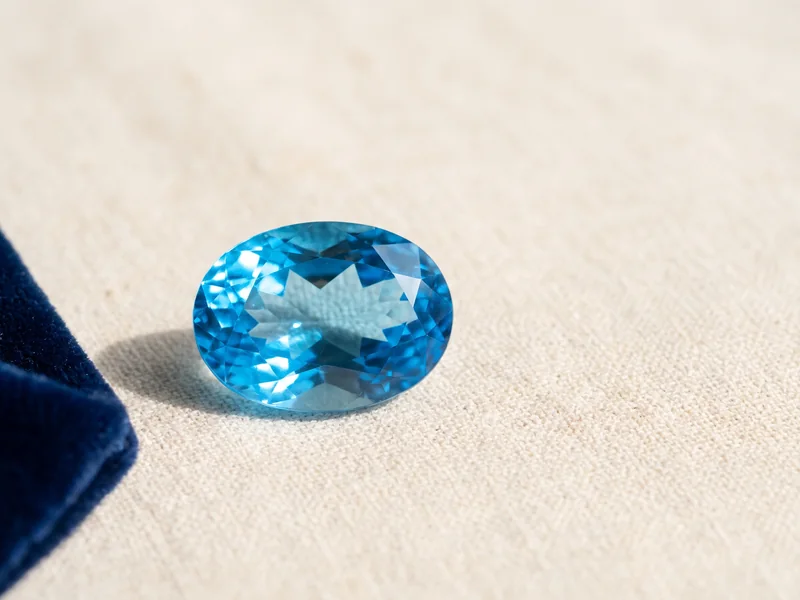
If you love the violet-blue but want a transparent stone with sparkle, iolite shows a comparable violet-blue in faceted form. For a lighter, brighter blue, compare the sky to London blue tones of blue topaz.
Is lapis lazuli good for rings? Hardness and toughness
Lapis lazuli hardness is about 5–5.5 on the Mohs scale, the 1-to-10 scale of scratch resistance. Calcite-rich areas are softer still, at about Mohs 3. Everyday dust contains quartz at Mohs 7, so a lapis ring worn daily will slowly lose its polish and pick up fine scratches, especially on a high dome.
Toughness is different: it describes how well a stone resists chipping and breaking. Because lapis is a mass of interlocking grains with no single cleavage plane (a direction along which a crystal splits easily), its toughness is fair to good. It is less likely to crack in two than a stone with cleavage, but thin edges can still chip if knocked.
| Gem | Mohs hardness | Toughness | Everyday ring? |
|---|---|---|---|
| Lapis lazuli | 5–5.5 | Fair to good | Occasional wear, protective setting |
| Turquoise | 5–6 | Fair; porous | Occasional wear |
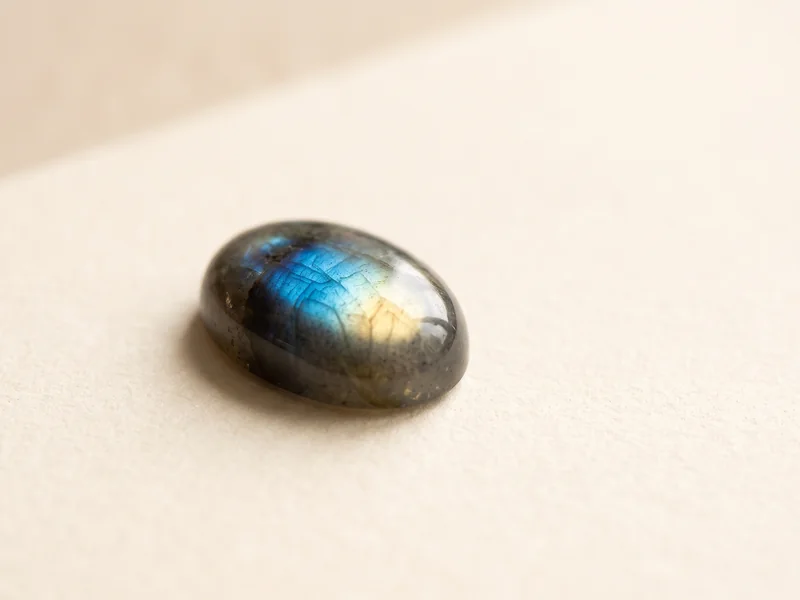
| Labradorite | 6–6.5 | Fair; has cleavage | Occasional wear |
| Nephrite jade | 6–6.5 | Exceptional | Yes, with care for polish |
| Jadeite jade | 6.5–7 | Exceptional | Yes |
| Amethyst (quartz) | 7 | Good | Yes |
| Iolite | 7–7.5 | Fair; has cleavage | With a protective setting |
| Blue topaz | 8 | Poor; perfect cleavage | With a protective setting |
| Sapphire | 9 | Excellent | Yes |
| Moissanite (lab-created) | 9.25 | Excellent | Yes |
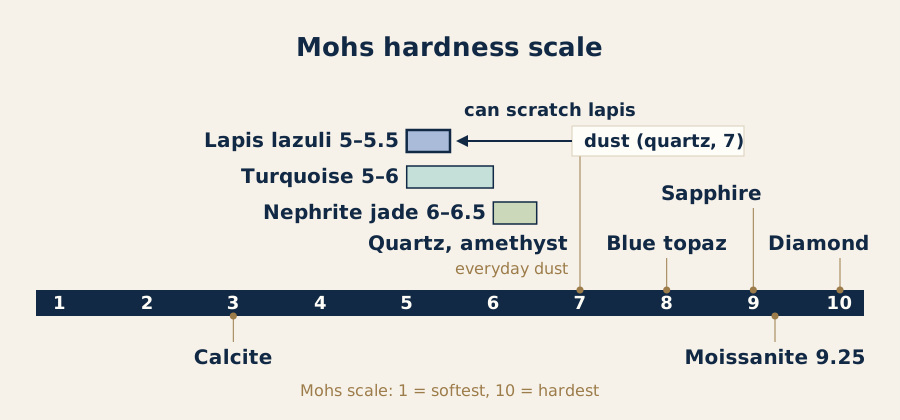
So is lapis lazuli good for rings? It is fine for a ring worn for evenings and weekends, or a ring you take off for hands-on work, and it works very well in pendants, earrings, cufflinks and brooches. Men's signet rings with a flat lapis inlay are a long tradition; expect to have the surface re-polished every few years. For contrast, jadeite and nephrite jade are only a little harder but far tougher, labradorite, with its cleavage planes is more prone to splitting, amethyst at Mohs 7 shrugs off dust, and lab-created moissanite at Mohs 9.25 is close to diamond for everyday wear.
Where does lapis lazuli come from?
The classic source is Sar-e-Sang in the Badakhshan province of north-eastern Afghanistan, worked for more than 6,000 years. Afghan lapis lazuli is the benchmark for deep violet-blue with fine pyrite. Other important sources have their own typical look:
| Origin | Typical appearance | Notes |
|---|---|---|
| Afghanistan (Badakhshan) | Deep, even violet-blue, fine pyrite, little calcite in top material | The historic and benchmark source; quality still varies widely |
| Chile (Coquimbo region, Andes) | Lighter or greenish-grey blue, often with plenty of white calcite | Common in beads and commercial jewellery; often dyed |
| Russia (Lake Baikal, Siberia) | Medium to deep blue, varying amounts of pyrite and calcite | Historically used in Russian palace decoration |
| Pakistan, Tajikistan, Myanmar, Canada, USA | Variable | Smaller or intermittent production |
Australia is not a commercial source of lapis. Almost all lapis in Australian jewellery is imported, mostly from Afghanistan and Chile, which sets it apart from zircon, a gem Australia does produce. Origin is rarely tested on lapis, so treat labels such as 'Afghan' or 'Persian' (an old trade term for the deepest blue) as descriptions of the look unless a laboratory report says otherwise.
Not sure which one is right?
Send us the stones you are looking at and our gemologist will tell you which to choose and why.
Is lapis lazuli dyed or treated?
Often, yes. Treatments are not a problem in themselves, but they should always be disclosed and reflected in the price. The common ones:
- Waxing or oiling: a thin coat of colourless wax or oil improves the polish and deepens the colour slightly. Very common and widely accepted, but it can wear off or soften with heat.
- Dyeing: blue dye is pushed into pale or calcite-rich lapis to hide the white and even out the colour. Dyed lapis lazuli can look convincing but the colour may rub off over time, especially with sweat or solvents.
- Stabilisation (impregnation): a colourless plastic resin fills the pores of soft, porous material so it can be cut and worn. Usually combined with dyeing.
- Reconstituted lapis: powdered lapis bonded with resin and pressed into blocks. It is real lapis material, but it is not a natural stone and should be sold as reconstituted.
Lapis is not unusual here. Just as most citrine on the market is heat-treated amethyst, a large share of commercial lapis is waxed, dyed or both. Ask the seller to state any treatment in writing, and expect a natural, untreated stone of fine colour to cost noticeably more.
How can you tell if lapis lazuli is real?
Several cheaper materials are sold as lapis, sometimes under misleading trade names such as 'Swiss lapis' or 'German lapis', which are actually dyed jasper. The comparison below covers the main ones, including the common question of lapis lazuli vs sodalite.
| Material | What it looks like | Gemmological clues |
|---|---|---|
| Lapis lazuli (natural) | Violet-blue, golden pyrite flecks, white calcite | RI about 1.50; SG 2.50–3.00; Mohs 5–5.5 |
| Sodalite (natural) | Darker royal or greyish blue with white veins, sometimes orange patches; pyrite rare | RI about 1.48; SG about 2.15–2.35, so it feels lighter; Mohs 5.5–6 |
| Dyed howlite or magnesite | Blue with grey web-like veins; dye pools in cracks | Mohs 3.5–4; dye shows on an acetone swab |
| Dyed jasper ('Swiss lapis') | Uneven blue, tiny colourless quartz specks, no pyrite | Mohs about 7; RI about 1.54 |
| Lab-created imitation (Gilson) | Very even blue, evenly sprinkled pyrite, little or no calcite | Lower SG; more porous; uniform texture under magnification |
| Reconstituted lapis | Uniform, slightly granular blue | Bonded fragments and resin visible under magnification; lower SG |
| Glass | Uniform colour, sometimes gas bubbles or swirls | Glassy, shell-shaped chips; no grain structure |
A gemmologist confirms identity with a refractive index spot reading (a single approximate reading taken on a curved surface), specific gravity (weight compared with an equal volume of water), magnification and ultraviolet light, under which calcite patches in lapis may fluoresce. A drop of dilute acid gives off a sulphur smell from lazurite, but it damages the polish, so it is not used on finished jewellery.
What affects lapis lazuli value?
Lapis lazuli value comes down mainly to colour, then to how cleanly that colour is presented. In order of importance:
- Colour: intense, even violet-blue is worth the most; pale, greenish or patchy blue the least.
- Calcite: the less white showing, the higher the value, unless you are deliberately choosing denim lapis.
- Pyrite: fine, even flecks add appeal; heavy or tarnished pyrite lowers it.
- Treatment: untreated or waxed-only stones are valued above dyed, stabilised or reconstituted material.
- Cut, polish and size: a symmetrical cabochon with a glassy polish and no pits; large, clean pieces of top colour are scarce.
- Craftsmanship: for carvings, inlay work and antique pieces, the work often matters more than the material.
| Quality | What you see | Approximate price, loose cabochon about 14 × 10 mm (AUD) |
|---|---|---|
| Commercial or dyed | Patchy or dyed blue, plenty of white | about $10–$40 |
| Good | Medium blue, some calcite, scattered pyrite | about $40–$150 |
| Fine | Intense, even violet-blue, little or no calcite, fine pyrite | about $150–$500 or more |
These are broad ranges only and move with size, source and finish. Lapis is affordable next to most transparent coloured gems, so it is best chosen for the colour you love rather than for resale. As with sunstone, where included copper or hematite platelets create the glitter, the inclusions here are part of the character: the question is whether they are in balance with the blue. You can compare it with other coloured stones across our full range of coloured gemstone guides.
Shop natural gemstones
How should a lapis lazuli ring or pendant be set?
Because lapis is softer than most ring stones, the setting does much of the protecting. The usual options:
- Bezel: a rim of metal around the whole stone. The most protective choice for a lapis lazuli ring, because it guards the edge against knocks.
- Flat inlay: lapis set level with, or slightly below, the surrounding metal, as in a signet ring or cufflinks. The metal takes the wear before the stone does.
- Low cabochon: a lower dome is less exposed to scratches than a tall one.
- Claws: fine for pendants and earrings, where knocks are rare; in a ring, use at least four sturdy claws and check them regularly.
- Avoid: tension settings and very thin edges, which put pressure on a stone that can chip.
Lapis looks particularly rich against yellow gold, which echoes the pyrite, and it pairs well with small diamonds or a contrasting accent such as green peridot. White metals give it a cooler, more modern look.
Related guideTurquoiseHow do you clean and care for lapis lazuli?
Lapis is sensitive to acids, ammonia, chlorine, heat and pressure, and its calcite and any wax or dye are easily affected by harsh cleaners. Its colour is stable in normal light, unlike kunzite, which can fade in strong sunlight, though dyed lapis may lighten over time. Here is how to clean lapis lazuli safely:
- Take it off first. Remove lapis jewellery before the gym, gardening, cleaning, swimming and applying perfume, sunscreen or hand cream.
- Wash gently. Use lukewarm water with a drop of mild dishwashing liquid and a soft cloth or very soft brush. Do not soak it, as lapis is slightly porous.
- Rinse and dry straight away. Rinse quickly in clean water and pat dry with a lint-free cloth.
- Skip the machines. Never use ultrasonic cleaners, steam cleaners or jewellery dips; they can strip wax, loosen dye and dull calcite.
- Store it separately. Keep lapis in a soft pouch away from harder gems such as diamond, sapphire and quartz, which will scratch it.
- Plan maintenance. Have a jeweller check the setting and, every few years for rings, re-polish or re-wax the surface.
Free consultation
Talk to a gemologist
Compare stones in person or online with Raj Sood, Graduate Gemologist (GIA), AJP (GIA).
Book a consultationShop this shape
FAQ
Common questions
Is lapis lazuli expensive?
Generally no. Commercial lapis costs very little, and even fine, even violet-blue stones are affordable compared with most transparent coloured gems. Large, untreated pieces of top colour and fine carvings are the exceptions.
Can you wear a lapis lazuli ring every day?
You can, but at Mohs 5–5.5 it will slowly scratch and lose its polish. A bezel or flat inlay setting, taking it off for hands-on work and occasional re-polishing keep it looking good.
How do you know if lapis lazuli is dyed?
Dye often collects in cracks and around white calcite areas. With the seller's permission, a cotton bud dampened with acetone wiped on a hidden spot will pick up blue if the stone is dyed.
Is lapis lazuli the same as sodalite?
No. Sodalite is a separate, cheaper mineral that is also one of lapis's minor ingredients. Sodalite is usually a darker, greyer blue with white veins, rarely shows pyrite and feels lighter in the hand.
Does lapis lazuli fade?
Natural lapis colour is stable in normal light. Dyed lapis can fade or rub off over time, and wax coatings can wear, which makes the stone look duller until it is re-waxed.
Can lapis lazuli get wet?
A quick wash in lukewarm, mildly soapy water is fine, but do not soak it or swim in it. Chlorine, salt water and household chemicals can damage the surface, calcite and any treatment.
Terms in this guide

Ask a gemologist
Not sure which diamond to choose?
Raj Sood is a Graduate Gemologist (GIA) and master jeweller. Bring the stones you are considering, or send the reports, and he will tell you honestly which one is better and why.
Keep learning
Related guides
Explore more
More guides on this topic
Education