
Gemstones
Turquoise Gemstone Guide: Colour, Hardness, Treatments and Care
A turquoise gemstone is soft, porous and almost always treated, which makes it one of the easiest stones to buy badly. Here is what a gemmologist checks: colour, matrix, treatment, origin and whether it will survive the way you plan to wear it.
 Reviewed by Raj Sood, Graduate Gemologist (GIA), AJP (GIA)Master jeweller and Graduate Gemologist (GIA) · reviewed 4 November 2026
Quick answer
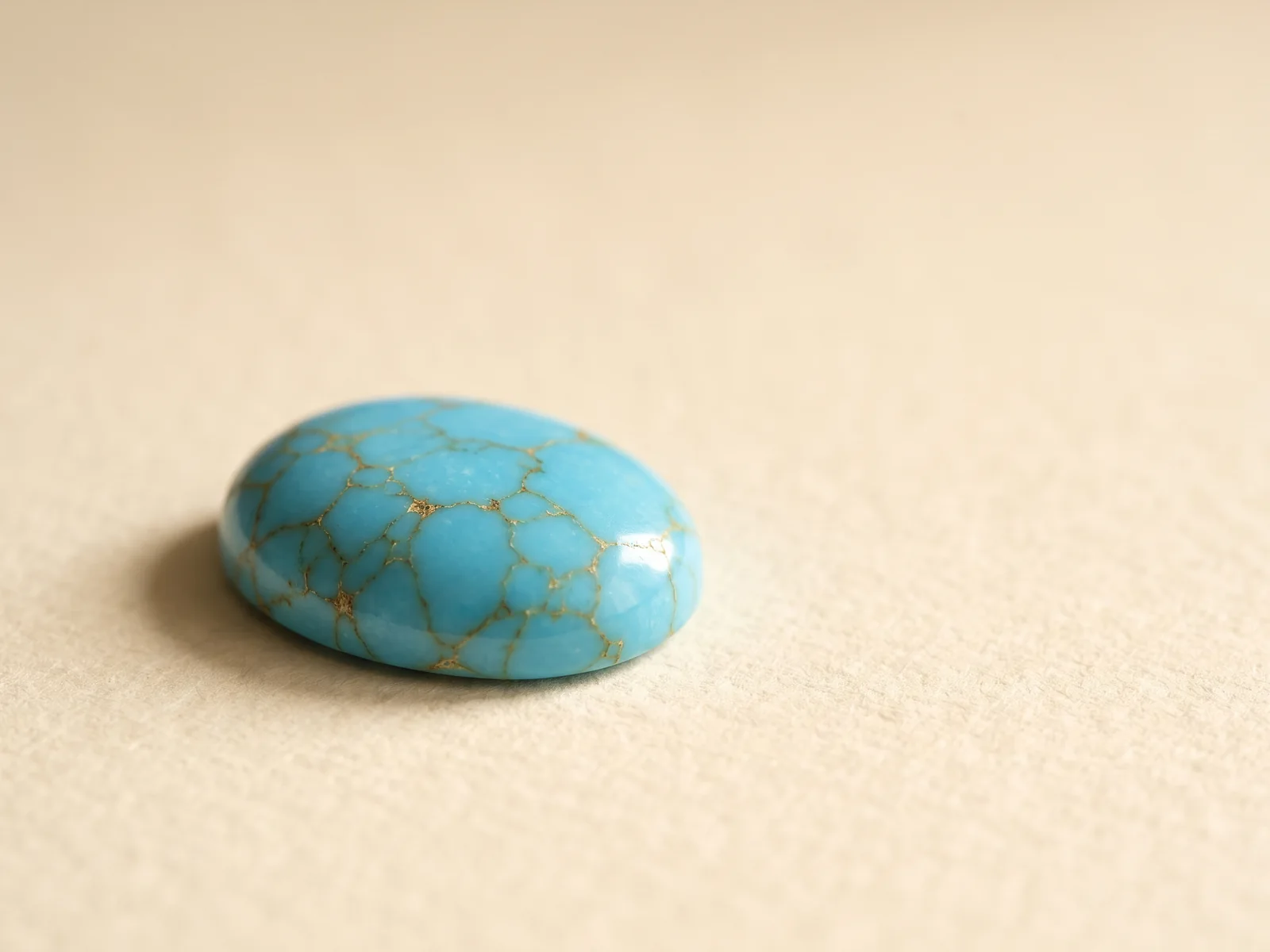
A turquoise gemstone is an opaque, sky-blue to green copper aluminium phosphate rated 5–6 on the Mohs scale. It is porous, so most turquoise on the market is stabilised with resin. Value depends on even colour, compact hardness, matrix pattern and treatment status. It suits pendants and earrings; rings need a bezel and gentle wear.
What is a turquoise gemstone?
Turquoise is a hydrated copper aluminium phosphate, with the formula CuAl6(PO4)4(OH)8·4H2O. "Hydrated" means water is locked into its structure, which matters later when we talk about heat. Technically it is triclinic, but you will almost never see a crystal. Gem turquoise is a microcrystalline aggregate: millions of tiny crystals packed together into a solid mass, a little like compressed powder.
That structure explains nearly everything about it. Turquoise is opaque (light does not pass through), it has a waxy to dull lustre rather than a glassy one, and it is porous, meaning it has microscopic gaps between the crystals that soak up oils, water and dyes. How tightly those crystals are packed decides whether a piece is hard and glossy or soft and chalky.
Because it is opaque, turquoise is almost always cut as a cabochon (a smooth, domed stone with no facets), as beads, or carved into inlay and flat shapes. It is one of the oldest gem materials in human use and is the traditional modern birthstone for December. To see how it sits alongside transparent coloured stones, start with our overview of coloured gemstones, and any unfamiliar term here is explained in our plain-English jewellery glossary.
| Property | Turquoise |
|---|---|
| Chemistry | Hydrated copper aluminium phosphate |
| Mohs hardness | 5–6 (compact material); chalky material can be below 5 |
| Toughness | Fair to good, depending on compactness |
| Refractive index | about 1.61–1.65, usually read as a spot near 1.61 |
| Specific gravity | about 2.6–2.9 |
| Transparency | Opaque |
| Lustre | Waxy to dull; glossy when well compacted and polished |
| Usual cut | Cabochon, beads, inlay, carving |
What colours does turquoise come in, and what is matrix?
Turquoise ranges from a pale, almost white blue through sky blue and robin's-egg blue to blue-green, green and yellowish green. Copper is responsible for the blue. When iron replaces some of the aluminium in the structure, the colour shifts towards green. The most traditionally prized colour is an even, intense, medium sky blue, often called "Persian blue" in the trade, though that is a colour description and not proof the stone came from Iran.
Matrix is the remnant of the host rock that the turquoise formed in, showing as brown, black, gold or grey veins and patches. It is not a flaw. A fine, even network of thin dark lines is called spiderweb matrix and can add value, especially from well-known mines. Heavy, blotchy matrix or soft brown areas that dent with a fingernail usually lower the value, because matrix is often softer than the turquoise around it.
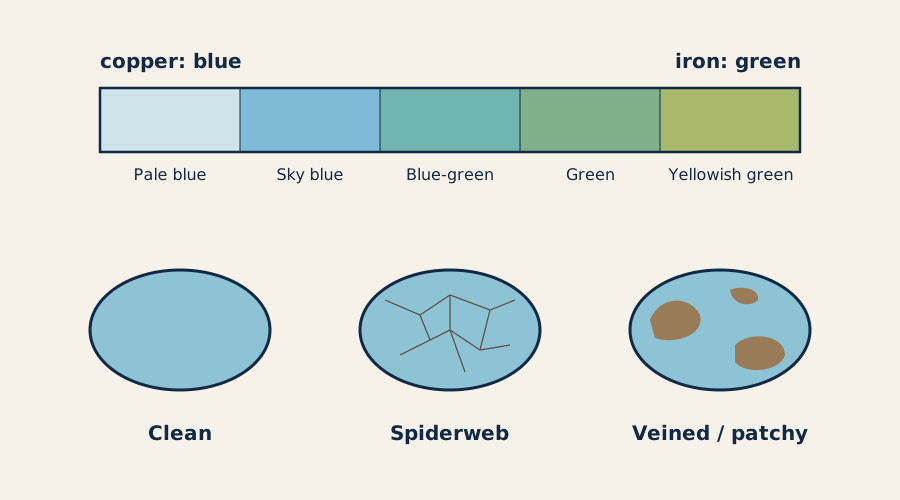
- Clean (no matrix): even colour across the whole face; the classic look for fine sky-blue stones.
- Spiderweb: a fine, connected web of thin dark lines; valued when the lines are tight and the stone is hard.
- Veined or patchy: larger areas of host rock; usually lower value unless the pattern is striking and the material is compact.
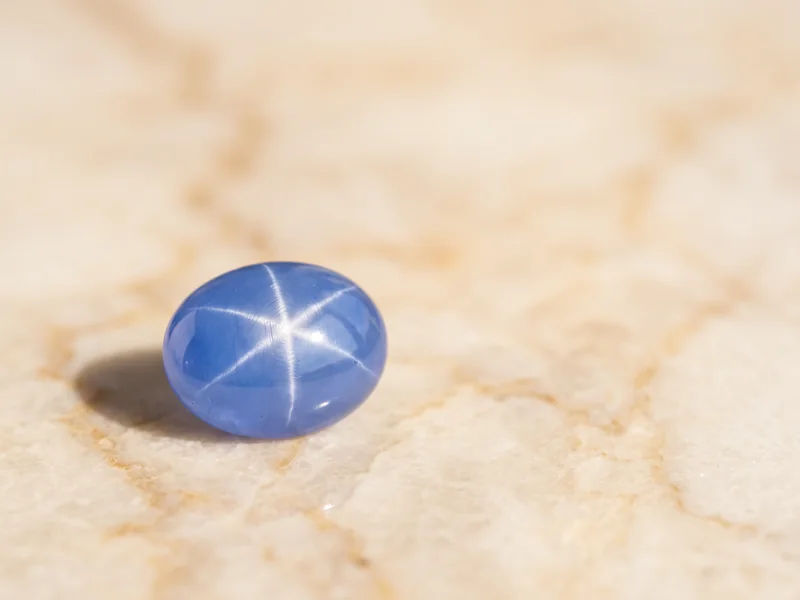
If you want blue in a transparent, faceted stone instead, blue topaz, the faceted sky-blue alternative covers a similar colour range with much more brilliance. Turquoise is closer in spirit to other opaque or cabochon-cut gems, such as star sapphires and star rubies, where the polish and dome shape do the work facets do in clear stones.
How hard is turquoise, and is it tough enough for a ring?
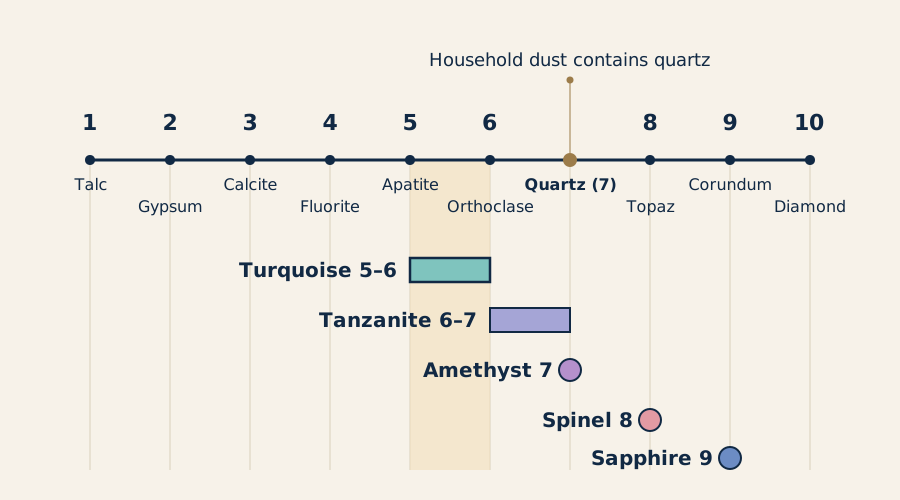
Hardness is resistance to scratching, measured on the Mohs scale from 1 (talc) to 10 (diamond). Toughness is resistance to chipping and breaking. Turquoise sits at 5–6 for hardness, which is below quartz (7). That matters because ordinary household dust contains quartz, so a turquoise stone worn every day will slowly lose its polish and pick up fine scratches. Its toughness is fair to good: compact turquoise is not especially brittle, but softer, chalky material can crack or crumble.
| Gemstone | Mohs hardness | Toughness | Everyday ring? |
|---|---|---|---|
| Sapphire (all colours) | 9 | Excellent | Yes |
| Spinel | 8 | Good | Yes |
| Topaz (blue, imperial) | 8 | Poor (perfect cleavage) | With a protective setting |
| Morganite | 7.5–8 | Fair to good | Yes, with some care |
| Tsavorite garnet | 7–7.5 | Good | Yes, with some care |
| Amethyst | 7 | Good | Yes, with some care |
| Peridot | 6.5–7 | Fair to good | Occasional wear |
| Zircon | 6–7.5 | Poor (brittle edges) | Occasional wear |
| Tanzanite | 6–7 | Fair to poor | Occasional wear, protective setting |
| Turquoise | 5–6 | Fair to good (compact material) | Occasional wear, bezel setting |
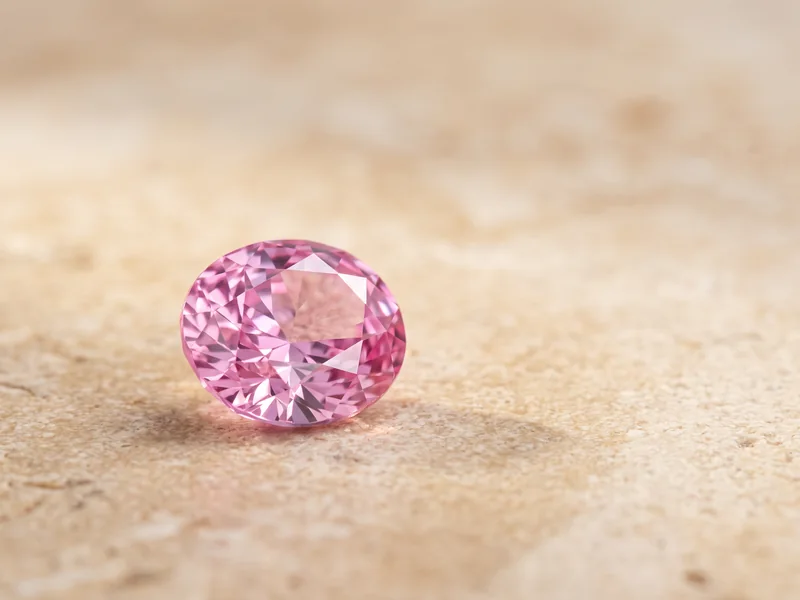
Compare that with the hardest coloured stones: pink sapphire at 9 on the Mohs scale and spinel, a hard and tough everyday stone will handle daily knocks far better. Turquoise has more in common with tanzanite and its care needs or zircon, which is brittle along its facet edges: lovely, but best treated as something you take off before gardening, gym or washing up. Note that topaz scores 8 for hardness yet still has poor toughness, as covered in our guide to imperial topaz and its cleavage, which is why the two properties are always read together.
How is a turquoise gemstone treated?
Only a small share of turquoise is hard and compact enough to cut and wear untreated. The rest is porous, and if left alone it would absorb skin oil and slowly turn greenish. So most turquoise on the market has been treated in some way. Treatment is normal and acceptable, but it must be disclosed, because it changes both durability and value.
| Treatment | What it does | How common | Effect on value |
|---|---|---|---|
| Stabilisation | Resin or polymer is forced into the pores, hardening the stone and fixing the colour | Very common; most commercial turquoise | Much lower than fine natural; more durable than untreated chalky material |
| Waxing or oiling | Surface wax or oil improves lustre and slightly deepens colour | Common, traditional | Small; can wear off over time |
| Dyeing | Colour is added, often to pale or chalky material | Common in lower grades | Lowers value; colour can fade or rub off |
| Zachery treatment | An electrochemical process that improves colour and reduces porosity | Less common | Lower than untreated; hard to detect without lab testing |
| Reconstitution | Turquoise powder or chips are bonded with resin into blocks | Common in cheap jewellery | Low; not a solid natural stone |
| Backing | A resin or epoxy backing supports a thin slice | Common in thin cabochons | Neutral to lower; mainly structural |
Turquoise is also widely imitated. The most common imitations are dyed howlite and dyed magnesite (white minerals coloured blue, often with grey veins that mimic matrix), glass, ceramic and plastic. There are also lab-created (synthetic) turquoise products, such as those made by Gilson from the 1970s, though some of these are better described as simulants because their makeup differs from natural turquoise. An honest description will say "natural", "stabilised", "dyed", "reconstituted", "lab-created" or "imitation", not just "turquoise".
Not sure which one is right?
Send us the stones you are looking at and our gemologist will tell you which to choose and why.
How do you tell real turquoise from fakes?
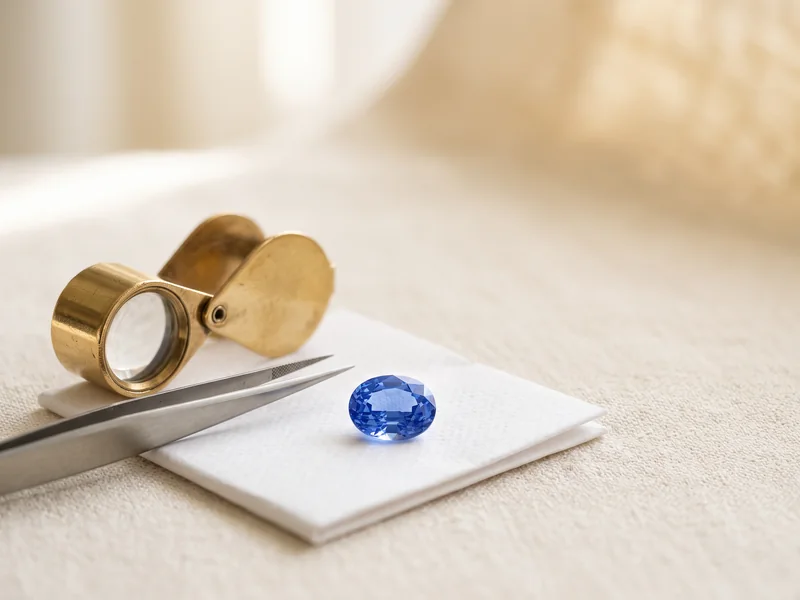
Telling natural turquoise from imitations takes a few standard tests, and telling untreated from treated turquoise often needs a laboratory. Here is how a gemmologist approaches it, using the refractometer, loupe and other gemmological instruments found in any gem lab.
- Magnification (10× loupe or microscope): dyed material shows colour concentrated in cracks and along matrix lines; glass may show gas bubbles; reconstituted material shows a grainy, chip-like texture.
- Refractive index: on a refractometer, turquoise gives a spot reading near 1.61. Howlite reads lower, around 1.59, and plastic usually lower still.
- Specific gravity: natural turquoise is about 2.6–2.9. Plastic is far lighter, around 1.2, and howlite is usually below 2.6.
- Feel and temperature: plastic feels warm and light in the hand compared with stone, though this is only a clue.
- Laboratory tests: FTIR spectroscopy (which measures how a material absorbs infrared light) can detect polymer from stabilisation; chemical analysis can flag Zachery-treated stones.
Some traditional tests, such as touching a hot needle to the back to smell for burning plastic or rubbing with an acetone swab to see if dye lifts, damage the stone. They belong in a lab on a piece the owner agrees to test, never on jewellery you have not bought. For a valuable untreated stone, ask for a report from an independent laboratory that states the treatment status.
Where does turquoise come from, and is there Australian turquoise?
Turquoise forms near the surface in dry climates, where water trickling through copper-bearing rock deposits it in veins and nodules. That is why the main sources are arid regions.
- Iran: the Nishapur district has been mined for many centuries and is the origin of the "Persian" name.
- Egypt: the Sinai Peninsula was mined in ancient Egypt, making it one of the oldest recorded sources.
- United States: Arizona and Nevada are important sources. Arizona's Sleeping Beauty mine, known for clean, even sky-blue material, stopped turquoise mining in 2012, so its stones now come from existing stock.
- China: Hubei province is now one of the largest producers, supplying much of the world's commercial turquoise.
- Mexico, Tibet and other regions: smaller but steady sources.
Australia has no major commercial turquoise mine. Small occurrences have been recorded, but much of the green material sold locally as "Australian turquoise" is actually variscite, an aluminium phosphate found in Western Australia. Variscite looks similar, especially in its green forms, but it is a different mineral with a lower refractive index (about 1.56–1.59). It is a lovely stone in its own right; it just should be sold under its real name.
Origin can add value when it is documented, particularly for named American mines and fine old Iranian material, but a mine name on a tag is not proof. Without paperwork or lab analysis, treat origin claims as a story, not a fact.
What affects the value of turquoise, and what does it cost in Australia?
Four things drive turquoise value, roughly in this order: colour, compactness (how hard and dense the material is), treatment status and matrix. Size, cutting quality and documented origin come next. An even, saturated sky blue in hard, untreated material sits at the top; pale, chalky, dyed or reconstituted material sits at the bottom.
| Type (about 10 × 8 mm cabochon) | What you get | Approximate price range (AUD) |
|---|---|---|
| Imitation or reconstituted | Dyed howlite, plastic or bonded powder | under about $20 |
| Stabilised commercial grade | Solid natural turquoise with resin, even colour | about $20–$150 |
| Natural untreated, good grade | Hard, compact, good colour, no resin | about $150–$600 |
| Natural untreated, fine grade or named mine | Intense even blue or tight spiderweb, documented origin | about $500–$2,000 or more |
These are broad ranges for loose stones only, and the market varies widely. Finished jewellery adds the cost of metal and making. The key point is that the price gap between untreated and stabilised turquoise is large, so the treatment disclosure is worth more attention than the size.
Shop natural gemstones
Is a turquoise gemstone ring good for everyday wear?
A turquoise ring can be worn regularly, but it will need more care than a sapphire or spinel ring. The stone will slowly dull and can absorb oils and lotions, and a hard knock can chip the edge. For most people, turquoise works best in pendants, earrings and occasional-wear rings. If you want a coloured stone for a ring you never take off, harder choices such as yellow sapphire for daily wear or green tsavorite garnet are more practical, while amethyst in purple, soft pink morganite and lime-green peridot sit in between.
- Bezel setting: a rim of metal around the whole edge. This is the classic setting for turquoise, because it protects the girdle and the dome's edge.
- Low profile: keep the stone close to the finger so it takes fewer knocks.
- Stabilised or hard natural stone: choose compact material for any ring; soft, chalky turquoise is not suitable.
- Protected design: a raised metal edge or a design that sits the stone slightly below the surrounding metal helps prevent chips.
Repairs and resizing need care. Turquoise contains water and resin, so heat from a jeweller's torch can discolour it, crack it or burn the stabilising resin. A jeweller will usually remove the stone before soldering. Mention it is turquoise when you hand a piece in for repair. If you are choosing turquoise as a December birthstone, our guide to the three December birthstones compared sets it beside tanzanite and zircon.
Related guideDecember Birthstone: Tanzanite, Zircon and TurquoiseHow do you clean and care for turquoise jewellery?
Turquoise care is mostly about keeping things out of the pores: oil, chemicals, heat and grit. Even stabilised stones benefit from gentle handling, because resin can still be scratched or dulled.
- Put it on last. Apply perfume, sunscreen, hair spray and moisturiser first, and let them dry before wearing turquoise.
- Take it off for hard work. Remove rings before gardening, gym, cleaning, cooking and swimming in pools or the sea.
- Wipe after wearing. Use a soft, dry or slightly damp cloth to remove skin oils and sweat.
- Clean gently. If needed, use lukewarm water with a drop of mild soap, a soft brush on the metal only, then rinse and dry straight away. Never soak it.
- Skip machines and chemicals. Do not use ultrasonic cleaners, steam cleaners, jewellery dips, bleach or ammonia.
- Store it separately. Keep turquoise in a soft pouch away from harder gems, which can scratch it, and away from heat and strong sunlight.
- Have it checked. Ask a jeweller to check the bezel or claws about once a year, and to repolish a dulled stone if it is untreated and compact enough.
Free consultation
Talk to a gemologist
Compare stones in person or online with Raj Sood, Graduate Gemologist (GIA), AJP (GIA).
Book a consultationShop this shape
FAQ
Common questions
Is turquoise a precious gemstone?
Turquoise is usually classed as a semi-precious or coloured gemstone rather than one of the traditional precious stones. Fine, untreated turquoise from known mines can still command high prices.
Is stabilised turquoise real turquoise?
Yes. Stabilised turquoise is natural turquoise that has been impregnated with resin to harden it and fix the colour. It is worth less than untreated turquoise of similar colour, and the treatment should always be disclosed.
Can you wear a turquoise ring every day?
You can, but at 5–6 on the Mohs scale it will scratch and dull over time and can absorb oils. A bezel setting, compact or stabilised material and taking it off for hard work all help.
Why has my turquoise turned green?
Porous turquoise absorbs skin oils, cosmetics and water, which can shift the colour towards green. Heat can also change it. Stabilised stones resist this better, but the change in untreated stones is usually permanent.
How can I tell if turquoise is fake?
Look for dye concentrated in cracks, a plastic or resin back, or a very light weight. Dyed howlite and plastic are common imitations, and a gemmologist can confirm with refractive index and specific gravity readings.
Is turquoise found in Australia?
Australia has no major commercial turquoise mine, though small occurrences are recorded. Much green material sold as Australian turquoise is variscite from Western Australia, a different mineral.

Ask a gemologist
Not sure which diamond to choose?
Raj Sood is a Graduate Gemologist (GIA) and master jeweller. Bring the stones you are considering, or send the reports, and he will tell you honestly which one is better and why.
Keep learning
Related guides
Explore more
More guides on this topic
Education