
- Education
- Diamond Shapes
- Old European Cut Diamond Guide: Facets, Proportions, Colour and Settings
Diamond shapes
Old European Cut Diamond Guide: Facets, Proportions, Colour and Settings
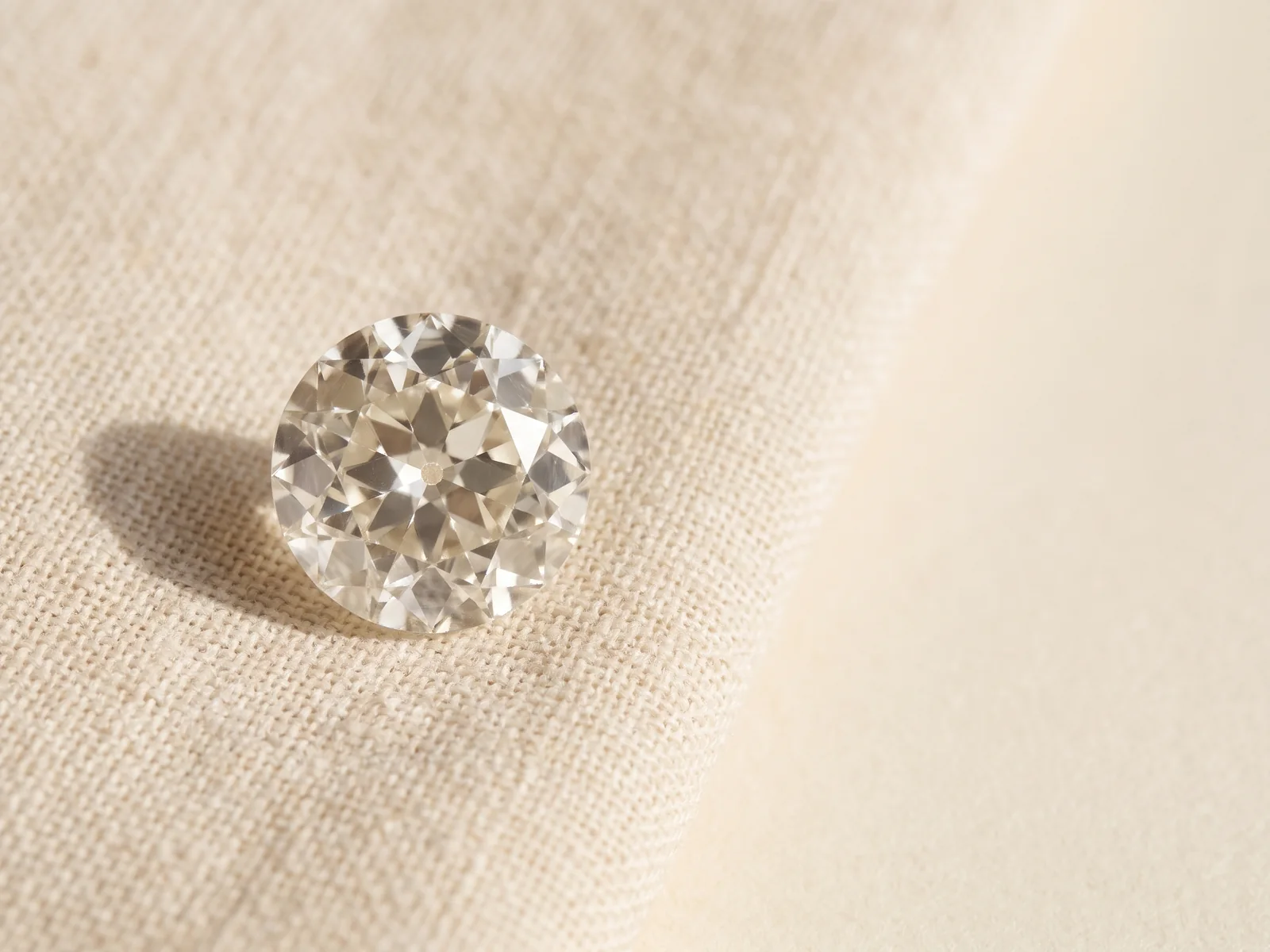
An Old European cut diamond is the round brilliant of the Edwardian and Art Deco years, cut by eye for fire rather than brightness. Here is how to recognise one, what proportions to look for and how to set it so its character shows.
 Reviewed by Raj Sood, Graduate Gemologist (GIA), AJP (GIA)Master jeweller and Graduate Gemologist (GIA) · reviewed 4 November 2026
Quick answer
An Old European cut diamond is a round, 58-facet brilliant cut from about 1890 to the 1930s, with a small table, tall crown and open culet. It gives broad, slow flashes of colour rather than modern brightness. Look for a round outline (ratio 1.00–1.05), an eye-clean centre, H–K colour and a protective claw or bezel setting.
What is an Old European cut diamond?
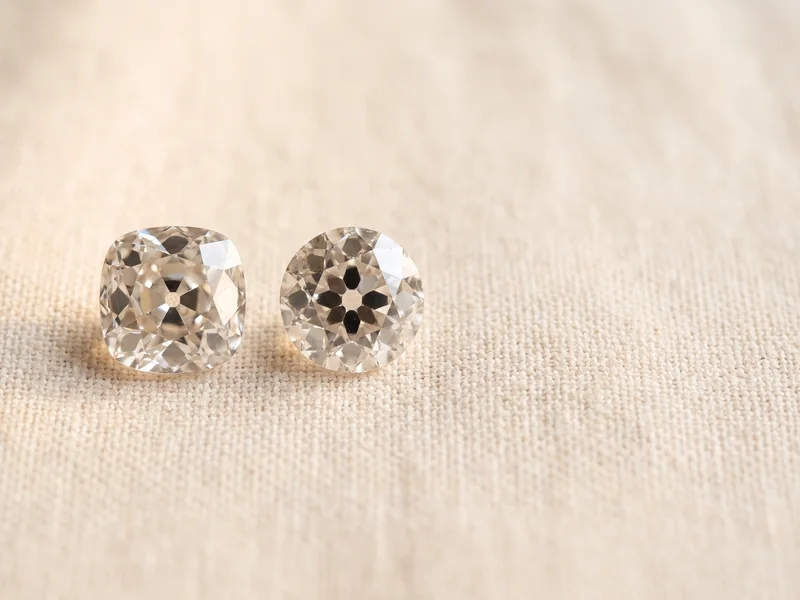
An Old European cut is the round brilliant of the late 1800s and early 1900s. It has a circular outline, 58 facets, a small table, a tall crown and an open culet, a small flat facet at the very bottom that you can often see as a tiny circle in the centre of the stone. It is the direct ancestor of today's round brilliant, and our page on how the Old European cut differs from a modern round sets the two side by side.
A few terms first. The table is the large flat facet on top. The crown is the faceted section above the girdle (the thin outer edge), and the pavilion is the cone-shaped section below it. In an Old European cut the table is small, the crown is high and the pavilion is deep, so the stone looks chunkier in profile than a modern round.
Diamond is 10 on the Mohs hardness scale, with a refractive index of about 2.42 and a dispersion of about 0.044. Dispersion is what splits white light into spectral colour, which jewellers call fire. The Old European cut's tall crown and small table favour fire over brightness, which is why these stones flash orange, blue and green in candlelight or a softly lit room.
The Old European cut sits within the family of antique diamond cuts, from old mine to rose, and it appears in our guide to all 34 diamond cuts compared. Any term you have not met before is explained in our jewellery glossary of cutting and setting terms.
When were Old European cut diamonds made?
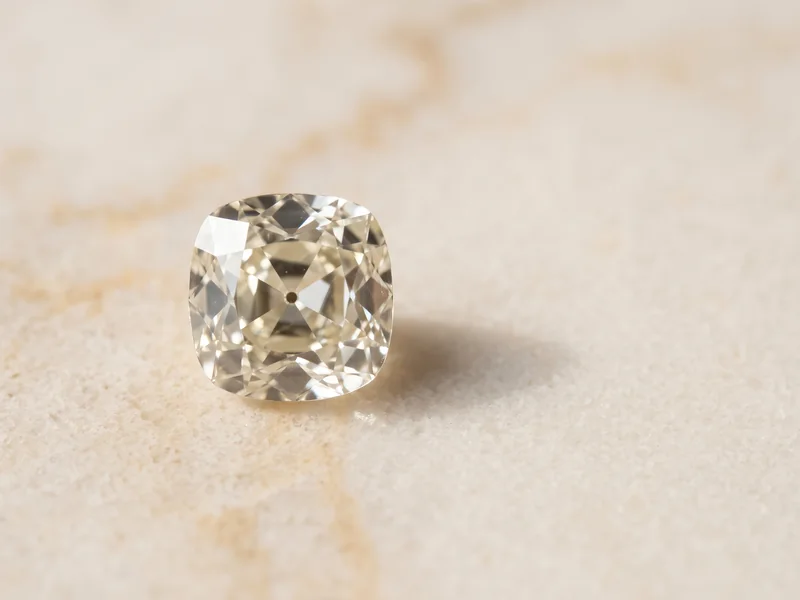
Before the late 1800s, diamonds were rounded by hand, rubbing one diamond against another in a process called bruting. That produced the softly square, cushion-like outline of old mine cut diamonds, the main brilliant style of the 1700s and most of the 1800s. Earlier again, cutters used the flat-based, domed rose cut with its triangular facets.
Mechanical bruting machines, developed from around the 1870s, let cutters turn a diamond on a lathe and produce a much rounder girdle. Combined with the large supply of rough from the new South African mines, this gave rise to the Old European cut. It was the dominant brilliant from roughly 1890 to the 1930s, so you will find it in Victorian, Edwardian and Art Deco jewellery.
Cutters still worked largely by eye, judging the stone under daylight, gaslight and candlelight rather than to calculated angles. In 1919 Marcel Tolkowsky published his work on diamond proportions, and through the 1930s to 1950s the modern round brilliant, with its larger table and longer lower facets, gradually took over. Many Old European cuts were later recut into modern rounds, losing weight in the process, so the supply of untouched antique stones keeps shrinking.
How do you identify an Old European cut diamond?
Look at the stone face-up and in profile. An Old European cut usually shows most of these features:
- Round, but not perfectly round: hand-finished girdles are often a tenth of a millimetre or more out of round.
- Small table: roughly 38–45% of the diameter, so the crown facets take up more of the face.
- Tall crown: crown angles often around 38–42°, compared with about 34–35° in a modern round.
- Open culet: a visible small circle or octagon at the centre when you look straight down.
- Short lower girdle facets: about half the distance from girdle to culet, compared with about 75–80% in a modern round. This creates broad, wedge-shaped flashes radiating from the centre.
- Thicker girdle: often bruted (frosted-looking) rather than polished, sometimes uneven around the stone.
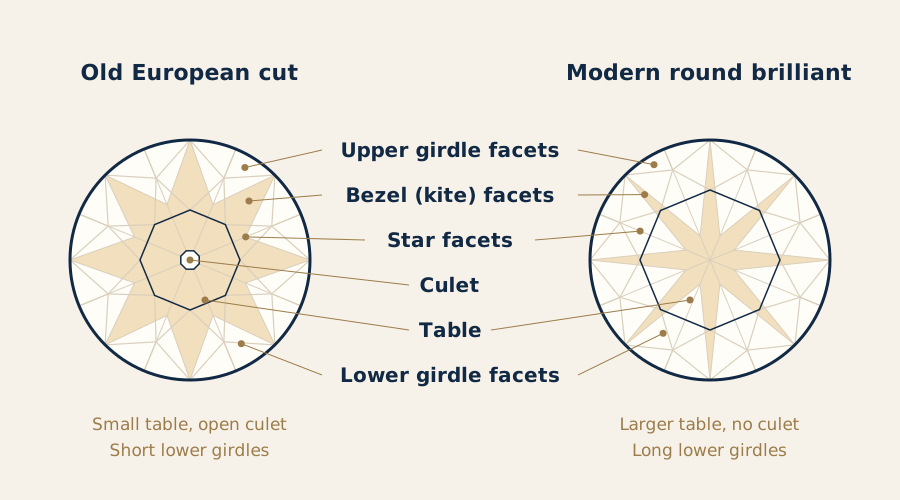
An open culet is a feature of the style, not a flaw. On a grading report it is usually described as medium, slightly large or large. GIA reports can describe these stones as an Old European brilliant cutting style, and they do not receive the standard round brilliant cut grade, because the scale was built for modern proportions. Our explanation of how diamond cut grades are worked out and the page on what ideal and excellent cut really mean show why an Old European cut is judged by eye instead.
What are good Old European cut diamond proportions?
There was never one standard, so proportions vary from stone to stone. The table below shows typical ranges for a well-cut Old European cut next to a modern round brilliant.
| Measure | Old European cut (typical) | Modern round brilliant (typical) |
|---|---|---|
| Table | about 38–45% | about 53–58% |
| Crown angle | about 38–42° | about 34–35° |
| Pavilion angle | about 40–42° | about 40.6–41° |
| Lower girdle facets | about 50% of pavilion | about 75–80% of pavilion |
| Culet | open: medium to large | none or very small |
| Total depth | about 58–66% | about 59–63% |
| Length-to-width ratio | about 1.00–1.05 | 1.00–1.01 |
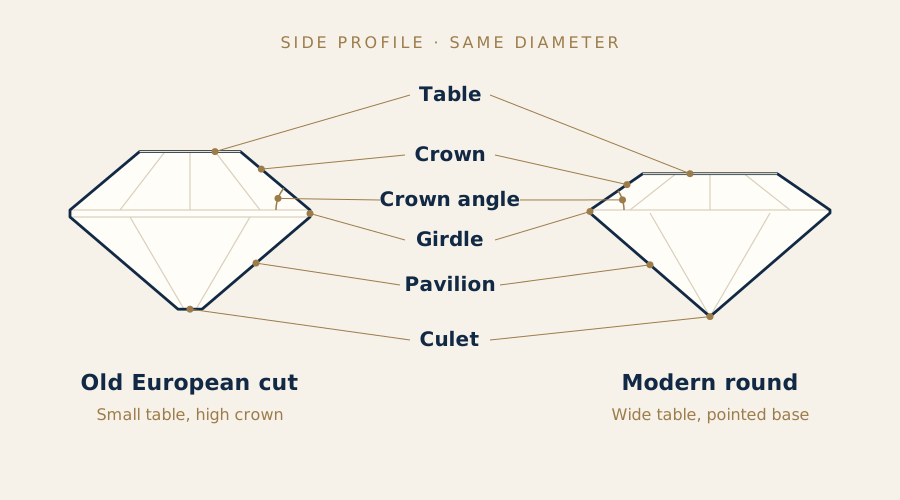
For the length-to-width ratio, divide the larger diameter by the smaller one on the report. Under 1.02 the stone looks round to the eye. Between 1.02 and 1.05 it is slightly out of round, which is normal for hand-bruted stones and rarely noticed in claws, though a close-fitting bezel can make it more obvious.
Two cutting faults are worth knowing. A stone with a very shallow pavilion shows a fisheye, a grey ring where the girdle reflects in the table, or a glassy centre you can almost read through. A very deep pavilion leaks light and looks dark in the middle. A good Old European cut sits between the two: lively broad flashes, with the open culet a neat, small dot rather than a large dark hole.
Not sure which one is right?
Send us the stones you are looking at and our gemologist will tell you which to choose and why.
How big does an Old European cut look for its carat weight?
Because of the tall crown, deep pavilion and often thick girdle, an Old European cut carries more of its weight below the surface. It faces up (the size you see from above) a little smaller than a modern round of the same carat weight.
| Carat weight | Old European cut (approx. diameter) | Modern round (approx. diameter) |
|---|---|---|
| 0.50 ct | 4.9–5.1 mm | about 5.1–5.2 mm |
| 0.75 ct | 5.6–5.8 mm | about 5.8–5.9 mm |
| 1.00 ct | 6.1–6.3 mm | about 6.4–6.5 mm |
| 1.50 ct | 7.0–7.3 mm | about 7.3–7.4 mm |
| 2.00 ct | 7.7–8.0 mm | about 8.1–8.2 mm |
These figures are approximate; antique stones vary more than modern ones. Always compare the millimetre measurements on the report, not just the carat weight. A 1.10 ct Old European cut can face up the same size as a 1.00 ct modern round.
What colour and clarity suit an Old European cut?
Many Old European cuts are warmer in colour than most modern stones, often J to M on the GIA D-to-Z scale. Much of the South African rough of the time was faintly tinted, and buyers lit their jewellery with warm light. The strong fire of the cut also helps mask a faint tint. Some antique stones show blue fluorescence (a glow under ultraviolet light), which can make a warm stone look slightly whiter in daylight.
- Platinum or white gold: H–J colour keeps a white look while staying true to the era.
- Yellow or rose gold: K–M colour gives the warm, candlelit look many people choose these stones for.
- Clarity: aim for eye-clean, usually VS2 to SI1, sometimes a careful SI2.
- Watch the centre: the small table and open culet act like a window, so inclusions under the table are easier to see.
Antique stones have often been worn for a century. Check the girdle and the facet junctions for chips, nicks and abrasions (fine scuffing along facet edges). Small girdle chips can sometimes be hidden under a claw; larger ones may need a light repolish, which a cutter should assess before you commit.
How does an Old European cut compare with old mine, rose and modern round diamonds?
| Old European cut | Old mine cut | Rose cut | Modern round | |
|---|---|---|---|---|
| Main era | c. 1890–1930s | c. 1700s–1890s | from the 1500s | 1930s onwards |
| Outline | Round, slightly irregular | Cushion, softly square | Round or irregular, flat base | Precisely round |
| Facets | 58 | 58 | 3–24 (domed top only) | 57–58 |
| Table | Small | Very small | None | Large |
| Culet | Open | Large, open | None (flat base) | None or very small |
| Look | Broad flashes, strong fire | Chunky, soft flashes | Soft glow, little fire | Brightest, fine sparkle |
The closest relative is the old mine cut, which has the same broad facets in a squarer outline; our page on old mine vs modern cushion cuts explains how its modern descendant differs. The rose cut and the faceted briolette drop cut belong to older traditions with no pavilion in the usual sense. To see every shape at once, start with our overview of diamond shapes and outlines.
Related guideRound vs Old European Cut DiamondsWhat is the best setting and band for an Old European cut diamond ring?
An Old European cut diamond ring needs a setting that allows for the tall crown and deep pavilion, and protects an older, sometimes worn girdle. Common choices:
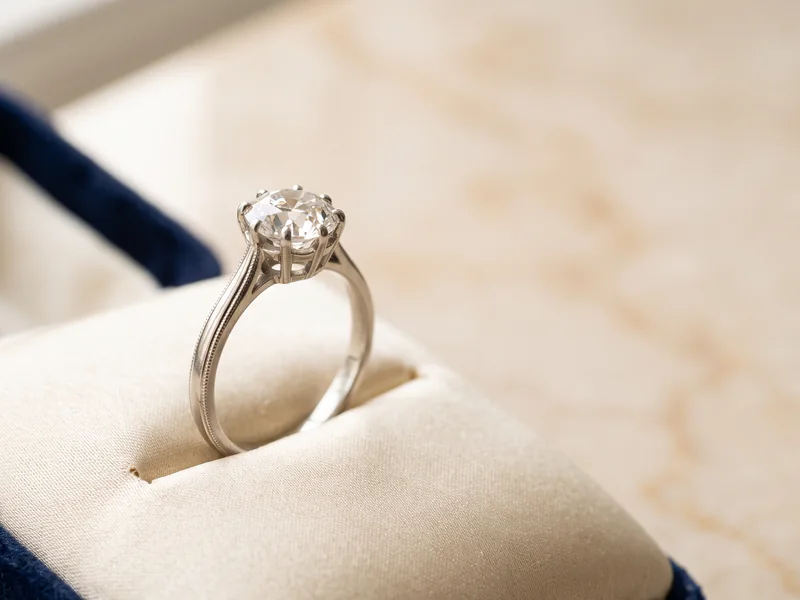
- Six or eight claws: more claws spread the grip around a slightly out-of-round girdle and can cover small edge chips.
- Bezel or half-bezel: a rim of metal around the edge, very protective, and typical of Art Deco designs.
- Milgrain and filigree: fine beaded edges and openwork metal, period details that suit the cut.
- Halo: a ring of small diamonds, often single cuts or small Old European cuts, which frames a warmer centre.
- Side stones: Art Deco rings often pair a round centre with geometric stones, such as trapezoid side stones, shield cut accents, lozenge cut diamonds in a row or the square Flanders cut with its clipped corners.
Because the stone is deep, the setting usually sits a little higher, so plan the wedding band with it. If the setting's underside (the gallery) clears the band, a straight band can sit flush; otherwise a gently curved band is the usual answer. Our guide to vintage-inspired engagement rings with old-world detail shows period styles, and the advice on settings for old mine diamonds applies closely to Old European cuts too.
Many Old European cuts come to us in family rings. Resetting an inherited stone into a new design keeps its history and character, while recutting it into a modern round loses weight and the antique look.
How much does an Old European cut diamond cost in Australia?
There are three kinds of Old European cut on the market. Antique natural stones were cut a century or more ago. New-cut natural stones are recently mined diamonds cut in the old style. Lab-grown Old European cuts are laboratory-grown diamonds cut in the same style; they are real diamond with the same hardness and refractive index, but they are not antique, and the report must say they are lab-grown.
| 1 ct Old European cut, H–K, VS–SI | Approximate price range (AUD) |
|---|---|
| Antique natural | about $6,000–$15,000 |
| New-cut natural | about $7,000–$16,000 |
| Lab-grown | about $1,000–$3,000 |
These are broad ranges only, and they move with the market and with the exact grades. Antique Old European cuts in warmer colours often cost less than a modern round of the same weight and grade, partly because the standard price lists are built around modern proportions. Well-cut, higher-colour antique stones in larger sizes are scarce, though, and can cost as much as or more than a modern round.
Browse all diamonds (no Old European cuts in stock right now)
How do you choose an Old European cut diamond? Step by step
- Read the report. Confirm the cutting style, measurements, colour, clarity and fluorescence, and whether the stone is natural or lab-grown.
- Check the roundness. Divide the larger diameter by the smaller; under 1.02 looks round, up to about 1.05 is normal for antique stones.
- Check the proportions. Look for a table of about 38–45%, a high crown and a total depth within about 58–66%.
- Look at the centre. The open culet should be a neat small dot, with no fisheye ring, dark centre or visible inclusions under the table.
- Inspect the girdle. Ask about chips, abrasions and any past repolishing.
- Watch it in different lights. View a video or the stone itself under soft light and daylight to see the fire.
- Plan the setting. Allow for the stone's depth and choose claws or a bezel that protect the girdle before you commit.
Free consultation
Talk to a gemologist
Compare stones in person or online with Raj Sood, Graduate Gemologist (GIA), AJP (GIA).
Book a consultationShop this shape
FAQ
Common questions
Is an Old European cut diamond the same as a round brilliant?
It is an early form of the round brilliant, with the same 58-facet layout but a smaller table, taller crown, shorter lower facets and an open culet. It gives broader flashes and more fire, while a modern round looks brighter with finer sparkle.
How can I tell if my diamond is an Old European cut?
Look straight down at the stone: an Old European cut shows a small table, broad wedge-shaped flashes and usually a tiny circle at the centre, which is the open culet. A jeweller or gemmologist can confirm it with a loupe and by measuring the proportions.
Are Old European cut diamonds still being cut today?
Yes. Some cutters now cut newly mined natural diamonds and lab-grown diamonds in the Old European style. These are not antique, and a lab-grown stone must always be described as lab-grown.
Should I recut an Old European cut diamond?
Usually not. Recutting into a modern round loses weight, often a noticeable share of the carat, and removes the antique character. Resetting the stone in a new design is the more common choice.
Why do Old European cut diamonds look yellow?
Many were cut from warmer South African rough, often J to M colour, at a time when buyers valued size and fire over a colourless look. The strong fire hides some warmth, and setting the stone in yellow or rose gold makes the tint look natural.
Do Old European cut diamonds have a cut grade?
Not in the usual sense. GIA reports can describe the cutting style but do not give these stones the standard round brilliant cut grade, so the cut is judged by its proportions and how it looks.

Ask a gemologist
Not sure which diamond to choose?
Raj Sood is a Graduate Gemologist (GIA) and master jeweller. Bring the stones you are considering, or send the reports, and he will tell you honestly which one is better and why.
Keep learning
Related guides
 Diamond ShapesRound vs Old European Cut Diamonds
 Diamond ShapesAntique Diamond Cuts: Old Mine, Old European and Rose
 Diamond ShapesOld Mine Cut Diamonds
 Engagement Rings & SettingsVintage-Inspired Engagement Rings with Old-World Detail and Custom CharacterDiamond ShapesUnderstanding Diamond Shapes
 Diamond ShapesAll 34 Diamond Cuts: Every Shape Explained and Compared
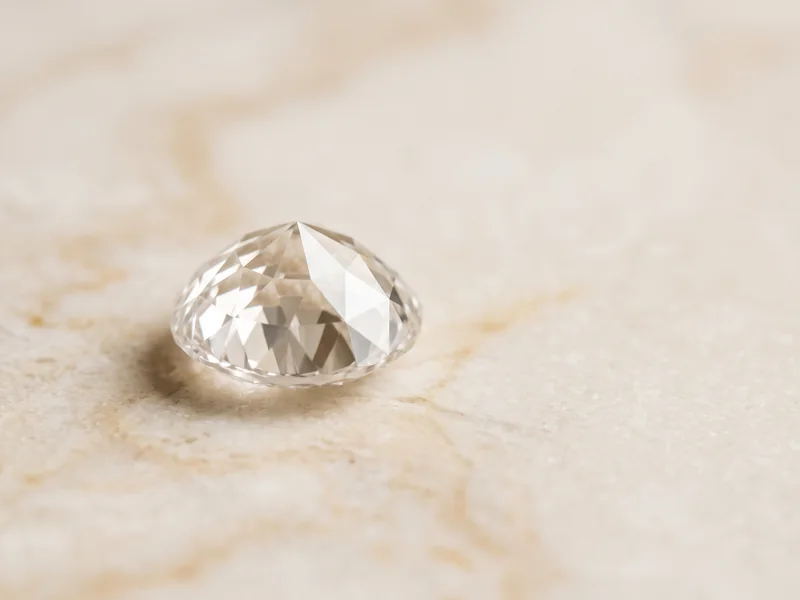 Diamond ShapesRose Cut Diamonds
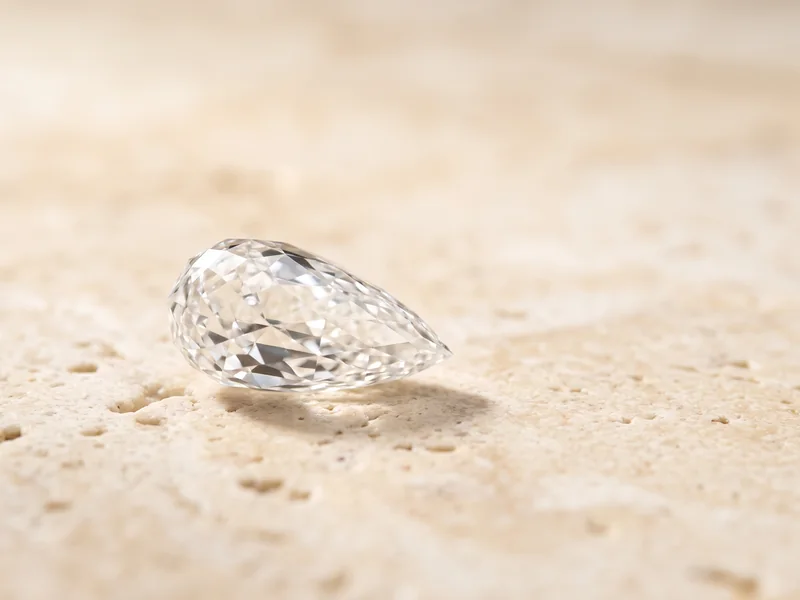 Diamond ShapesBriolette Cut Diamonds
Explore more
More guides on this topic
Education