
Gemstones
Hessonite Garnet Guide: Colour, Hardness, Origins and Value
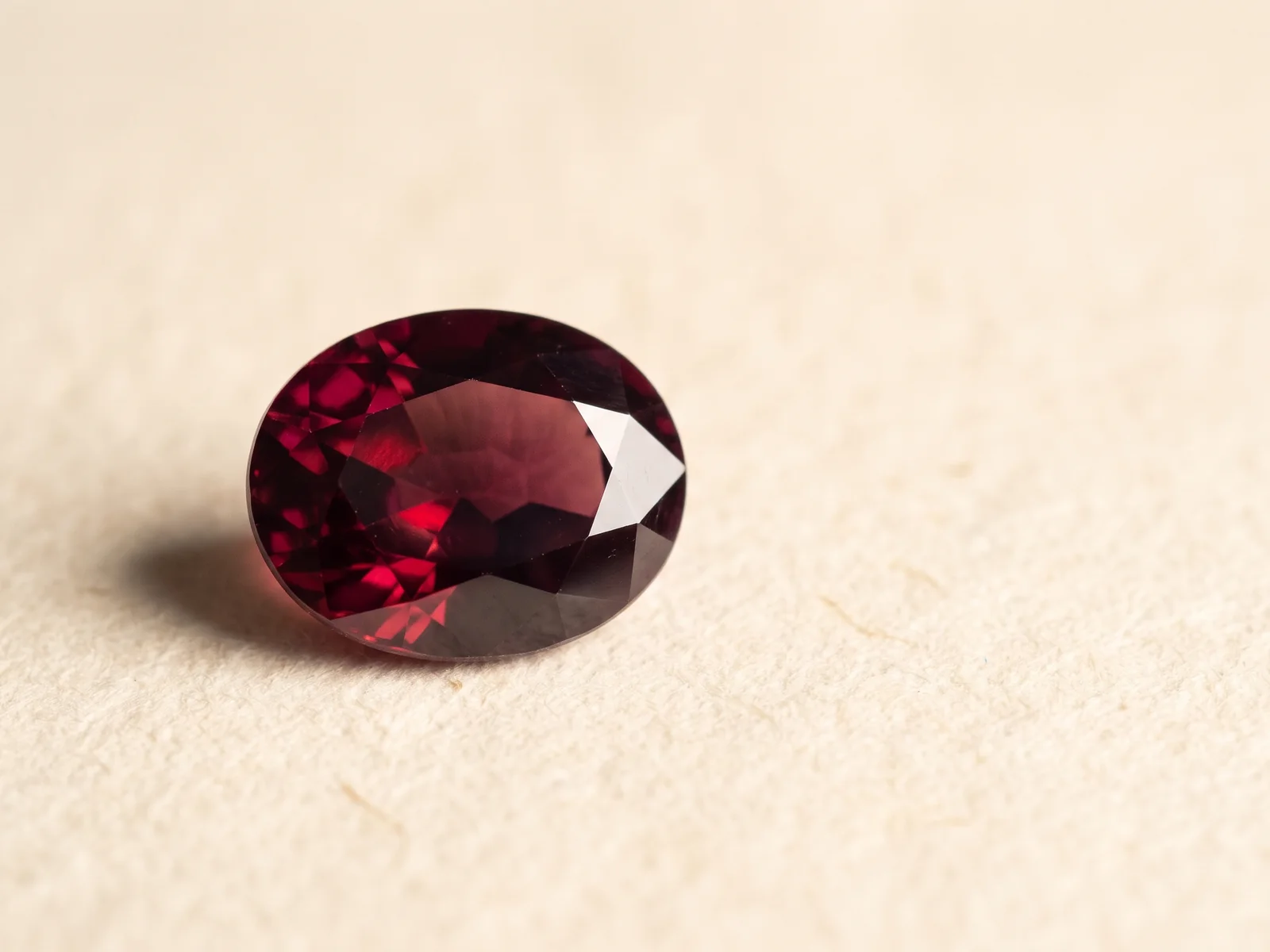
Hessonite garnet gives you a warm cinnamon-to-orange colour that is almost never treated, at a price well below most orange gems. Here is how to judge its colour, spot its tell-tale inclusions and decide whether it suits a ring you will wear every day.
 Reviewed by Raj Sood, Graduate Gemologist (GIA), AJP (GIA)Master jeweller and Graduate Gemologist (GIA) · reviewed 4 November 2026
Quick answer
Hessonite garnet is the orange to cinnamon-brown variety of grossular garnet, a calcium aluminium silicate. It rates about 6.5–7.5 on the Mohs scale with fair to good toughness, is almost never treated, and comes mainly from Sri Lanka. Value rests on a lively, saturated orange, the typical swirly 'heat wave' inclusions kept subtle, and good cutting.
What is hessonite garnet?
Hessonite garnet is the yellow-orange to reddish-brown variety of grossular, one of the main species in the garnet group. Chemically it is a calcium aluminium silicate, Ca3Al2(SiO4)3, with a little iron and manganese that give it its warm colour. Pure grossular is colourless; add traces of chromium or vanadium instead and you get tsavorite, the green grossular. If you are new to the family, our garnet family overview explains how the species relate.
The old trade name is cinnamon stone, which describes the colour well. The word hessonite is usually traced to the Greek 'hēssōn', meaning 'inferior', because it is a little softer and lighter than other garnets. That is a comparison, not a judgement of quality: a clean, bright hessonite is a lovely gem in its own right.
Hessonite is a natural gemstone. It is singly refractive, meaning light travels through it at one speed in every direction, unlike quartz or tourmaline, which split light into two rays. It is a different species from demantoid, an andradite garnet, although both belong to the calcium-rich branch of the garnet group. You will find it alongside the other warm-coloured stones in our coloured gemstone guides, and any unfamiliar word on this page is in our plain-English jewellery glossary.
| Property | Hessonite garnet |
|---|---|
| Species | Grossular garnet |
| Chemistry | Ca3Al2(SiO4)3 with traces of iron and manganese |
| Crystal system | Cubic (isometric) |
| Mohs hardness | about 6.5–7.5 |
| Toughness | Fair to good; no cleavage |
| Refractive index | about 1.73–1.75 (single value) |
| Specific gravity | about 3.57–3.73 |
| Optic character | Singly refractive, often with weak anomalous double refraction |
| Typical treatments | None known to be in common use |
What colours does hessonite garnet come in?
Hessonite garnet colour runs from honey yellow through orange and cinnamon to a deep reddish brown. The colour comes mainly from iron, with manganese adding orange. Most of the market sits in the brownish orange zone; the stones people pay more for are a clean, saturated orange to reddish orange with little brown.
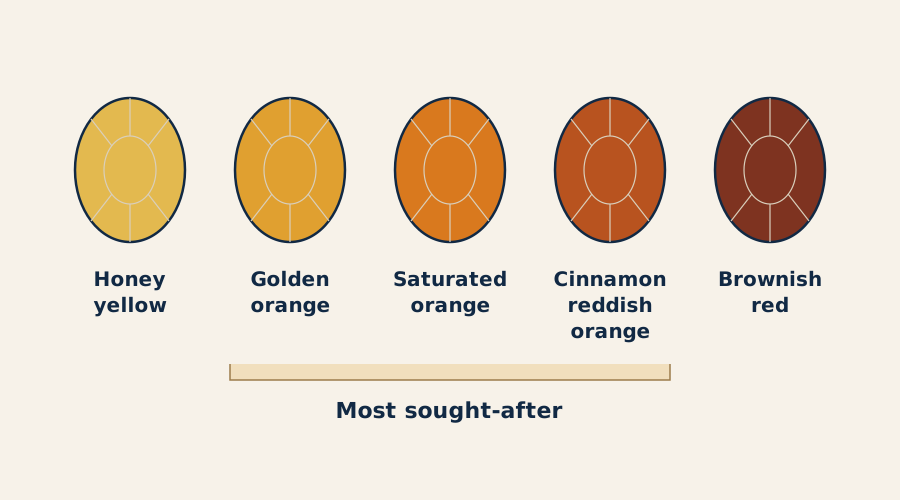
- Honey to golden yellow: lighter and brighter, but can look washed out in small sizes.
- Orange to tangerine: the most sought-after colour, lively under both daylight and warm indoor light.
- Cinnamon to reddish orange: rich and warm; the classic 'cinnamon stone' look.
- Brownish red to brown: darker and more muted, usually the most affordable.
The colour that people often compare hessonite with is spessartine's brighter orange. Spessartine is a manganese garnet and tends towards a purer, more fluorescent-looking orange, while hessonite is softer and warmer. At the other end of the garnet family, purplish-red rhodolite shows how wide the garnet colour range really is.
Related guideSpessartine GarnetHow do gemmologists identify hessonite garnet?
The classic sign of hessonite is its inside. Under a 10× loupe or a microscope, most stones show a swirly, oily look often called the heat wave or treacle effect, like the shimmer above a hot road. It is caused by many tiny included crystals (often apatite, calcite or diopside) and by uneven growth zones that bend the light. Small rounded crystals with a 'roiled' look around them are typical too.
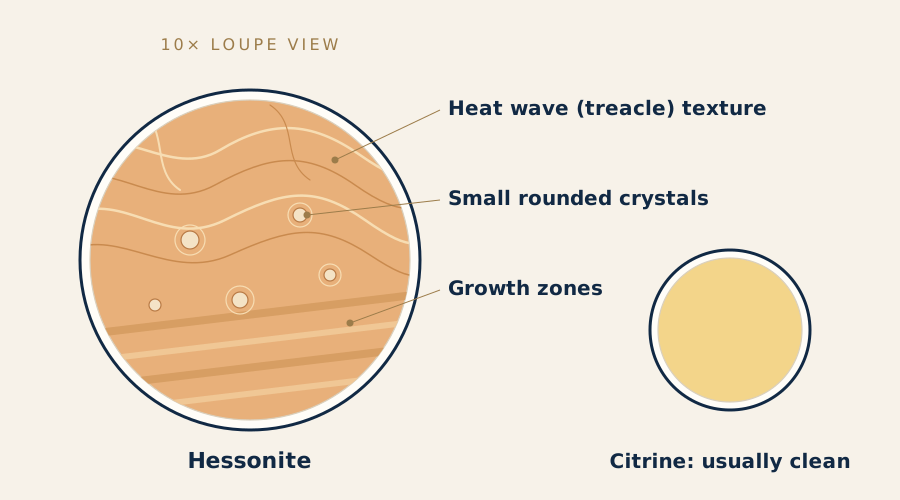
At the counter, a gemmologist will confirm the identity with a refractometer and a polariscope. A single refractive index reading of about 1.74 rules out most lookalikes straight away: quartz reads around 1.54–1.55 and topaz around 1.61–1.64, and both show two readings because they are doubly refractive. Spessartine reads higher, about 1.79–1.81, and is noticeably heavier.
| Gem | Refractive index | Optic character | Mohs | Key difference from hessonite |
|---|---|---|---|---|
| Hessonite garnet | about 1.73–1.75 | Single (often weak strain) | 6.5–7.5 | Heat wave inclusions |
| Spessartine garnet | about 1.79–1.81 | Single | 7–7.5 | Brighter orange, higher RI and density |
| Citrine (quartz) | about 1.54–1.55 | Double | 7 | Lower RI, usually very clean |
| Imperial topaz | about 1.61–1.64 | Double | 8 | Pleochroic; perfect cleavage |
| Orange sapphire | about 1.76–1.77 | Double | 9 | Harder; silk and colour banding |
Two stones that are easily mistaken for hessonite by eye are citrine, the yellow-orange quartz, and golden-orange imperial topaz. Both are usually cleaner than hessonite, and both are doubly refractive, which a polariscope shows quickly. In India and Sri Lanka, hessonite is also sold as gomed (or gomedh), the stone linked with Rahu in Vedic astrology, and many gomed buyers ask for an identification report to be sure they have genuine grossular.
How hard is hessonite garnet, and is it tough enough for a ring?
Hardness is how well a gem resists scratching, measured on the Mohs scale from 1 (talc) to 10 (diamond). Toughness is how well it resists chipping and breaking. Hessonite garnet hardness sits at about 6.5–7.5, around the same as quartz. Everyday dust contains quartz grains (Mohs 7), so over years of daily wear the facet edges of a hessonite can slowly wear and round off.
Its toughness is fair to good. Garnets have no cleavage (a natural plane of weakness along which a crystal splits), which helps, but heavily included hessonite can be more brittle because each inclusion is a small point of strain. Here is how it compares with other ring stones:
| Gem | Mohs hardness | Toughness | Daily-wear ring? |
|---|---|---|---|
| Diamond | 10 | Good (has cleavage) | Yes |
| Sapphire and ruby | 9 | Excellent | Yes |
| Spinel | 8 | Good | Yes |
| Imperial topaz | 8 | Poor (perfect cleavage) | With a protective setting |
| Tsavorite garnet | 7–7.5 | Good | With care |
| Tourmaline | 7–7.5 | Fair | With care |
| Citrine and ametrine (quartz) | 7 | Good | With care |
| Hessonite garnet | 6.5–7.5 | Fair to good | Occasional wear, or daily with a protective setting |
| Peridot | 6.5–7 | Fair | Occasional wear |
So hessonite is a touch tougher in practice than peridot, with its softer surface, and similar in day-to-day behaviour to red rubellite tourmaline. Tourmalines such as blue-green indicolite and pink-and-green watermelon tourmaline make a useful reference: if you would be comfortable wearing one of those daily, the same habits suit hessonite.
Not sure which one is right?
Send us the stones you are looking at and our gemologist will tell you which to choose and why.
Is hessonite garnet treated or lab-created?
This is one of hessonite's real strengths. Hessonite garnet is generally sold untreated: it is not routinely heated, dyed or filled, because its natural colour does not respond usefully to the common treatments. That is unusual among coloured gems. Much commercial citrine, for example, is heated amethyst, and most sapphire on the market has been heated.
Very occasionally, surface-reaching fractures in lower-grade stones may be filled with oil or resin to improve their look. A reputable laboratory report will mention this if present, so it is worth asking for one on any stone above a few carats.
Lab-created hessonite is not something you meet in jewellery. Synthetic garnet-structure materials such as YAG (yttrium aluminium garnet) and GGG (gadolinium gallium garnet) exist, but they are used mainly as diamond simulants, not as hessonite copies, and they have very different properties. The imitations you are more likely to see are orange glass and other natural gems sold under the wrong name. Compare that with quartz, where lab-created citrine and even lab-created ametrine alongside the natural Bolivian stone are both on the market.
Where does hessonite garnet come from?
Hessonite forms where limestone has been changed by heat and pressure (contact metamorphism), and it is often found as waterworn pebbles in gem gravels. The main sources:
- Sri Lanka: the classic source, mostly from the gem gravels around Ratnapura and Elahera. Sri Lankan stones are known for a warm cinnamon-orange.
- India: large production, much of it cut for the gomed market.
- Madagascar, Tanzania and Kenya: East African deposits supply orange to reddish stones, some notably bright.
- Canada: Quebec's Jeffrey mine at Asbestos (now Val-des-Sources) produced fine orange grossular crystals, prized by mineral collectors.
- Brazil, Mexico and the USA: smaller amounts, often as crystals rather than cutting rough.
What about Australia? Australia produces a lot of garnet, but most of it is almandine used as an industrial abrasive (for sandblasting and waterjet cutting), particularly from Western Australia's coastal sands. Gem-quality hessonite is not a significant Australian product, so almost every hessonite you see in Australian jewellery has been imported, usually from Sri Lanka or East Africa. Origin is rarely stated on hessonite reports and has little effect on price; colour and clarity matter far more.
Because hessonite is a garnet, it is one of the stones you can choose as garnet as January's birthstone, a warm orange alternative to the traditional dark red.
What affects hessonite garnet value and price in Australia?
Hessonite is one of the more affordable orange gems, and good stones in sizes over 5 carats are not hard to find. Value comes down to four things, in roughly this order:
- Colour: a saturated orange to reddish orange with minimal brown is worth the most. Very dark or brownish stones sit at the bottom of the range.
- Clarity and transparency: a light heat wave is expected. A stone that looks bright and transparent rather than sleepy or hazy is worth more. Fully clean hessonite is rare.
- Cut: much hessonite is cut in its country of origin to keep weight, which can leave a deep, dark belly or a window (a washed-out centre). A well-proportioned stone looks noticeably livelier.
- Size: price per carat rises with size, but more gently than for sapphire or spinel.
| Quality | Typical look | Approximate price per carat (AUD) |
|---|---|---|
| Commercial | Brownish orange, visible heat wave, a little hazy | about $20–$80 |
| Good | Orange to cinnamon, moderate heat wave, bright | about $80–$250 |
| Fine | Saturated orange, eye-clean or near, well cut, 3 ct+ | about $250–$600 |
These are broad guide ranges for loose natural stones only, and they move with supply and with individual stones. Setting, metal and labour add to the cost of finished jewellery. Hessonite is not sold as a store of value; choose it because you like the colour.
Browse natural gemstones
Is hessonite garnet good for an engagement ring?
It can be, with the right design and realistic expectations. A hessonite garnet ring worn every day will slowly show wear on its facet edges, and it may need repolishing after many years. Worn occasionally, or as a pendant or earrings, it will keep its polish far longer. Our guide to garnet engagement rings beyond dark red looks at the whole family for this purpose.
- Bezel or half-bezel: a metal rim around the stone protects the girdle, the most exposed edge.
- Four or six claws, set low: fine for occasional wear; keep the stone below the height that catches on clothes.
- Halo: a ring of small diamonds frames the orange and shields the edge.
- Metal: yellow and rose gold flatter hessonite's warmth; white gold and platinum give a cooler contrast that makes the orange look brighter.
Ovals and cushions are the most common shapes because they suit how hessonite rough is shaped and hide the heat wave well. Avoid sharp points, as on marquise or pear shapes, unless they are protected by V-claws.
How do you choose and care for hessonite garnet? Step by step
- Look at the colour in two lights. Check the stone in daylight and under warm indoor light; aim for orange with as little brown as you can.
- Check transparency. The heat wave should look like a soft shimmer, not a haze that dulls the stone.
- Inspect the girdle and edges. Use a loupe to look for feathers or chips, especially near the girdle.
- Judge the cut face-up. Tilt the stone; avoid a dark belly or a washed-out window in the centre.
- Ask for identification. For larger or higher-priced stones, ask for a laboratory report confirming natural grossular and noting any treatment.
- Choose a protective setting. For daily wear, a bezel or low claws keep the edges safe.
- Clean it gently. Use warm water, mild soap and a soft brush. Avoid steam cleaners and sudden temperature changes, and skip ultrasonic cleaning if the stone has fractures.
- Store it apart. Keep it away from diamonds and sapphires, which can scratch it, and have the claws checked about once a year.
Free consultation
Talk to a gemologist
Compare stones in person or online with Raj Sood, Graduate Gemologist (GIA), AJP (GIA).
Book a consultationShop this shape
FAQ
Common questions
Is hessonite garnet a real garnet?
Yes. Hessonite is a natural variety of grossular, one of the main garnet species. It is the orange to cinnamon-brown colour of grossular, while tsavorite is the green colour of the same species.
Can I wear a hessonite garnet ring every day?
You can with a protective setting such as a bezel, but at about 6.5–7.5 on the Mohs scale it will slowly wear on its facet edges. Many people keep hessonite for occasional rings, pendants and earrings.
Is hessonite garnet treated?
Almost never. Hessonite is usually sold untreated; rarely, lower-grade stones may have fractures filled, which a laboratory report would note.
What is the difference between hessonite and spessartine?
Hessonite is a calcium garnet (grossular) with a warm cinnamon-orange and swirly heat wave inclusions. Spessartine is a manganese garnet with a brighter orange, a higher refractive index and a higher price for fine stones.
Why does my hessonite look oily or swirly inside?
That is the heat wave or treacle effect, caused by many tiny included crystals and growth zones. It is normal and is one of the signs gemmologists use to identify hessonite.
Is hessonite the same as gomed?
Yes. Gomed or gomedh is the name used in India and Sri Lanka for hessonite garnet, the stone linked with Rahu in Vedic astrology.

Ask a gemologist
Not sure which diamond to choose?
Raj Sood is a Graduate Gemologist (GIA) and master jeweller. Bring the stones you are considering, or send the reports, and he will tell you honestly which one is better and why.
Keep learning
Related guides
 GemstonesNatural Garnet Gemstones and Custom Garnet Jewellery
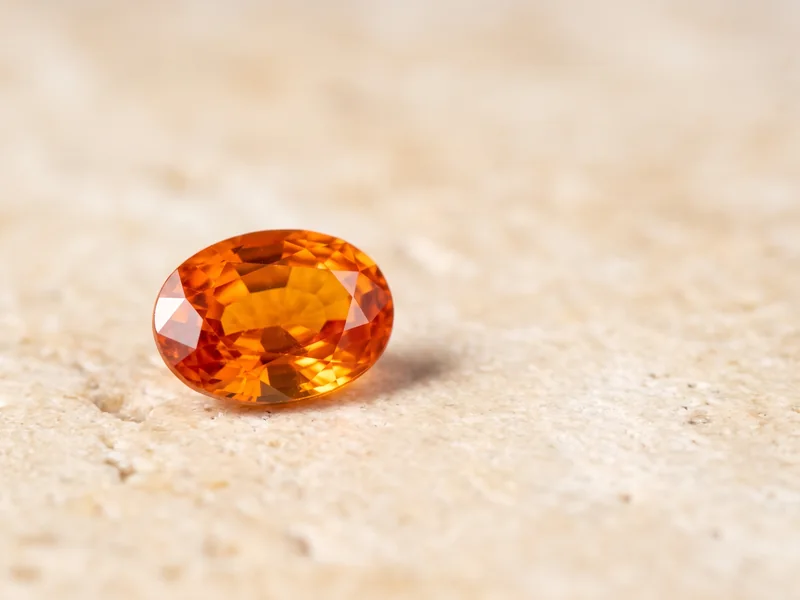 GemstonesSpessartine Garnet
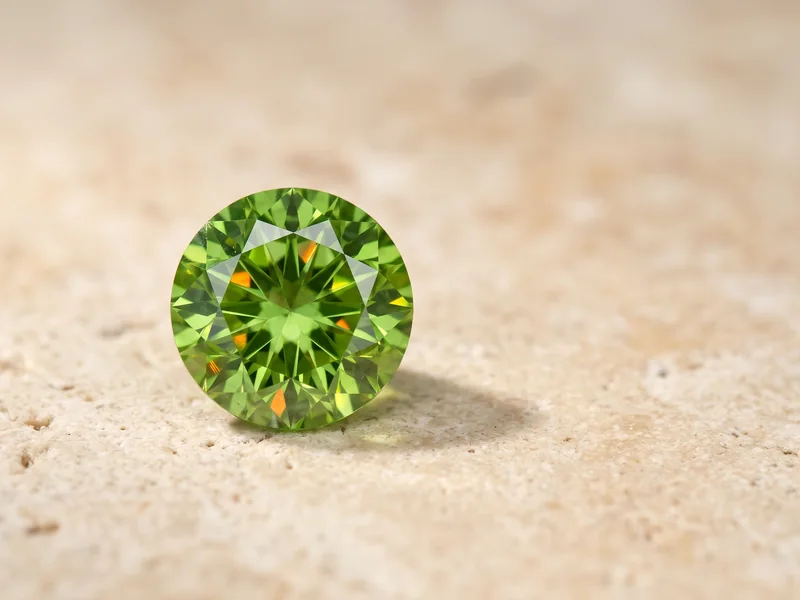 GemstonesTsavorite Garnet
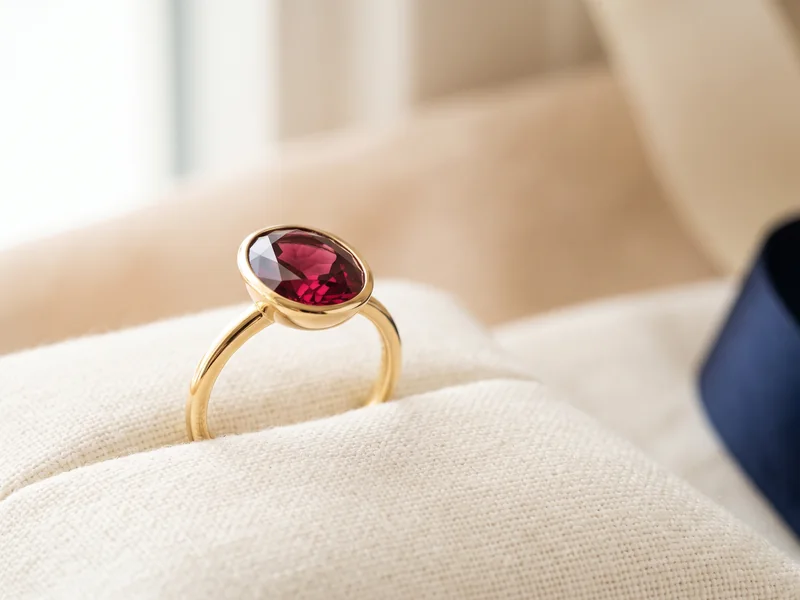 GemstonesGarnet Engagement Rings: More Than Dark RedGemstonesGemstones | Coloured Gemstones, Birthstones and Custom JewelleryGemstonesDemantoid GarnetGemstonesRhodolite GarnetGemstonesJanuary Birthstone: Garnet
Explore more
More guides on this topic
Education