
- Education
- Lab-Grown Diamonds
- Lab-Grown Diamond vs White Sapphire: Which Colourless Stone Suits You?
Lab-Grown Diamonds
Lab-Grown Diamond vs White Sapphire: Which Colourless Stone Suits You?
Lab-grown diamond vs white sapphire is the choice many Australians weigh when they want a colourless centre stone without a natural-diamond price. Both are genuine gem materials, but they look, wear and cost very differently.
 Reviewed by Raj Sood, Graduate Gemologist (GIA), AJP (GIA)Master jeweller and Graduate Gemologist (GIA) · reviewed 4 November 2026
Quick answer
A lab-grown diamond is real diamond (carbon, Mohs 10, refractive index 2.42) grown in a laboratory; a white sapphire is colourless corundum (Mohs 9, refractive index about 1.76). The diamond is brighter, shows more fire and keeps crisp facet edges for decades. White sapphire costs far less but looks glassier and shows grime sooner.
What is the difference between a lab-grown diamond and white sapphire?
They are two completely different minerals that happen to share one thing: no colour. A lab-grown diamond is crystallised carbon, the same material, crystal structure and properties as a mined diamond, but grown in a laboratory over weeks rather than formed underground over millions of years. Our complete lab-grown diamonds guide covers how they are graded and priced in detail.
A white sapphire is colourless corundum, which is aluminium oxide (Al2O3). It is the same mineral as blue sapphire and ruby, just without the trace elements (iron, titanium, chromium) that give those stones their colour. White sapphire can be natural, usually mined in Sri Lanka and often heated to clear a faint tint, or lab-created (also called synthetic), which is cheap to make in large clean crystals. We cover the natural material on its own merits in our page on white sapphire as a gemstone in its own right.
So this is not a question of real versus fake. A lab-grown diamond is real diamond, and a white sapphire is real sapphire. The question is which material suits the way you will wear it and what you want it to look like after ten years on your hand.
A few terms come up again and again below. The refractive index (RI) measures how strongly a material bends light, and drives brightness. Dispersion measures how much it splits white light into rainbow colours, which jewellers call fire. The Mohs scale ranks scratch resistance from 1 (talc) to 10 (diamond). If you meet a word you do not know, our plain-English jewellery glossary has it.
How are lab-grown diamonds and white sapphires made?
Lab-grown diamonds are made by two methods. HPHT (high pressure, high temperature) recreates the conditions deep in the earth: roughly 5–6 gigapascals of pressure and about 1,300–1,600 °C, with carbon dissolving in a metal flux and crystallising onto a small diamond seed. CVD (chemical vapour deposition) works the other way, at low pressure: a gas of methane and hydrogen is broken up by microwaves into a plasma, and carbon atoms settle layer by layer onto thin diamond seed plates. Many CVD diamonds are then HPHT-treated after growth to improve their colour, and a good report says so.
Lab-created sapphire has a much longer history. The Verneuil or flame-fusion method, announced in the early 1900s, drips powdered aluminium oxide through a hot flame onto a rotating rod, building a pear-shaped crystal called a boule in a matter of hours. The Czochralski method pulls a crystal slowly from molten corundum and gives very clean material. Both are inexpensive at scale, which is why lab-created white sapphire costs so little. Our page on how lab-created sapphire, ruby and emerald are grown explains each process.
Natural white sapphire is rarer than you might expect. Truly colourless corundum is uncommon, and much natural material has a faint yellow, grey or blue cast that is reduced by heating. Heat treatment is standard and stable, but it should still be disclosed.
Both types of lab-grown material use significant energy, and the footprint depends heavily on the power source. Rather than taking a general claim on trust, use our list of questions to ask about lab-grown sustainability claims.
Lab-grown diamond vs white sapphire: how do they compare side by side?
Here are the measurable differences. The figures for lab-grown diamond are the same as for natural diamond, because the material is identical.
| Lab-grown diamond | White sapphire | |
|---|---|---|
| Material | Carbon (diamond) | Aluminium oxide (corundum) |
| Origin | Laboratory-grown (HPHT or CVD) | Natural (often heated) or lab-created |
| Mohs hardness | 10 | 9 |
| Cleavage | Yes, along four directions; a sharp knock on a thin edge can chip it | None; breaks irregularly, good toughness |
| Refractive index | 2.42 | about 1.76–1.77 |
| Dispersion (fire) | 0.044 | 0.018 |
| Double refraction | No (singly refractive) | Yes, weak (about 0.008) |
| Specific gravity | 3.52 | about 4.00 |
| Colour grading | D–Z scale on most reports | Usually not graded on D–Z |
| Diamond tester result | Passes as diamond | Fails |
| Approx. price, 1 ct size (AUD) | about $900–$3,000 | about $50–$1,500 depending on origin |
Two rows matter most for everyday life. Hardness decides how sharp the facet edges stay, and refractive index decides how bright the stone looks. A diamond wins both, which is why it costs more. White sapphire wins on price and has no cleavage, so it is less likely to chip on a hard knock, but it scratches and scuffs sooner than diamond.
Lab-grown diamond and white sapphire are not the only colourless choices. Moissanite sits between the two on hardness (9.25) and has even more fire than diamond; see how a lab-grown diamond stacks up against moissanite if that is on your list too.
Related guideLab-Grown Diamond vs MoissaniteDoes white sapphire sparkle like a diamond?
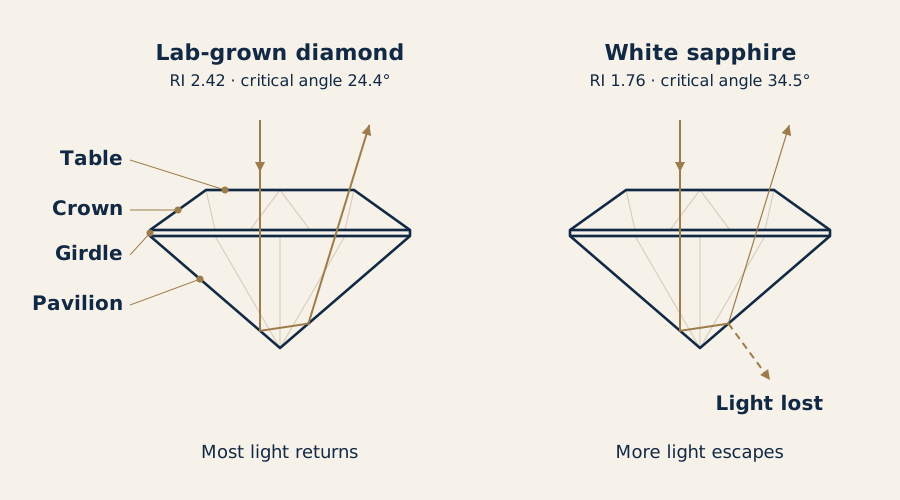
Not quite, and the reason is physics rather than cutting. Light that enters a gem bounces off the inside of the pavilion (the lower half) and back out through the top. Whether it reflects or leaks out depends on the critical angle, set by the refractive index. Diamond's is about 24.4°, so almost any well-cut diamond returns most light to your eye. Sapphire's is about 34.5°, so more light escapes through the back, and the stone looks less bright.
Fire tells the same story. With dispersion of 0.044, a diamond splits light into flashes of colour you can see across a room in sunlight. White sapphire's 0.018 gives a softer, whiter, more glassy sparkle. Some people prefer that calm look, especially in vintage-style or bezel settings; others find it reads as flat next to diamond.
Dirt makes the gap wider. Every gem picks up a film of skin oil, soap and hand cream. Because sapphire starts with less brightness, that film dulls it more noticeably, and a white sapphire that is not cleaned often can look milky within weeks. A clean lab-grown diamond and a clean white sapphire look closer together than a day-old pair.
Fluorescence, a glow under ultraviolet light, rarely affects the look of either stone in normal light. For the diamond side, see what fluorescence does in lab-grown stones.
Not sure which one is right?
Send us the stones you are looking at and our gemologist will tell you which to choose and why.
Is white sapphire durable enough for an engagement ring?
Yes, with realistic expectations. At 9 on the Mohs scale, sapphire is one of the hardest gems after diamond, and much harder than household dust (quartz is 7), so it will not scratch from normal grit. But the Mohs scale is a ranking, not an even ladder: diamond is several times harder than sapphire in absolute terms. Over years of daily wear, a white sapphire's facet edges tend to round off and pick up fine scuffs from knocks against harder surfaces, and the stone may need repolishing.
- Lab-grown diamond: keeps crisp facet edges for decades with ordinary care. Its weak point is cleavage, so a sharp blow on a thin girdle or a point can chip it.
- White sapphire: no cleavage and good toughness, so chips are less likely, but surface wear shows sooner, especially on the table (top facet).
- Both: fine for daily wear in a protective setting; take rings off for gym weights, gardening and heavy cleaning.
For an everyday white sapphire engagement ring, plan on a professional clean and check every 6–12 months and a possible repolish after many years. For pieces that take fewer knocks, such as studs, pendants and drop earrings, white sapphire durability is rarely a concern. The same thinking applies to lab-grown stones in earrings and tennis bracelets, where a bracelet takes far more knocks than a stud.
What should the report say for a lab-grown diamond or white sapphire?
A grading report is your evidence of what you are buying. A lab-grown diamond report and a white sapphire report look quite different, because diamonds are graded on quality and sapphires are mainly identified.
| Check | Lab-grown diamond report | White sapphire report |
|---|---|---|
| Typical labs | IGI, GIA, GCAL and others | Gemmological identification report from an independent lab |
| Origin statement | Must say laboratory-grown | Natural or synthetic (lab-created) |
| Growth method | Often stated: CVD or HPHT | Rarely stated |
| Treatments | Post-growth treatment noted (e.g. HPHT colour treatment) | Heat treatment noted for natural stones where detectable |
| Colour and clarity | D–Z colour, FL–I3 clarity | Usually described, not graded |
| Cut grade | Given for rounds (Excellent, Ideal etc.) | Not given |
| Measurements | Millimetres and carat | Millimetres and carat |
| Inscription | Report number and a lab-grown note laser-inscribed on the girdle | Usually none |
On a lab-grown diamond, match the laser inscription (tiny writing on the girdle, the thin outer edge) to the report number with a loupe. Check the words laboratory-grown appear on the report itself, not just on the shop tag. Report formats have been changing; some labs now use descriptive quality terms for lab-grown stones rather than the full D–Z scale, so read the whole document.
On a white sapphire, the most important line is natural or synthetic. A lab-created white sapphire should be sold and priced as one. Many inexpensive white sapphires come with no independent report at all, which is fine at low prices as long as the seller states clearly whether the stone is lab-created. Being able to check these details in person is one of the trade-offs we cover in buying online versus seeing stones in a showroom.
How should lab-grown diamonds and white sapphires be described in Australia?
Under the Australian Consumer Law, a business must not mislead you about what a product is, and the ACCC enforces that. For gems, it comes down to clear words about origin. Here is the wording to expect, and the wording that should make you ask questions.
- Clear for lab-grown diamond: lab-grown diamond, laboratory-grown diamond, laboratory-created diamond.
- Not enough: just diamond on the tag, or vague terms such as cultured or eco diamond without the word lab-grown.
- Clear for natural white sapphire: natural white sapphire, with any heat treatment disclosed.
- Clear for lab-created white sapphire: lab-created white sapphire or synthetic white sapphire.
- Not enough: white sapphire alone for a lab-created stone, or diamond-like and similar phrases that blur what it is.
Honest wording also cuts both ways. A lab-grown diamond is not a fake or imitation; it is diamond. A white sapphire used in place of a diamond can fairly be called a diamond simulant (something that imitates diamond's look), but it is still genuine sapphire. And neither a lab-grown diamond nor a white sapphire should be sold as something that will hold or grow in value.
At GemTrove, founded in 2008 and part of a family jewellery trade since 1984, we sell both lab-grown and natural stones, so we label each one by origin on the tag, the invoice and the report.
Lab-grown diamond vs white sapphire price: what does each cost in Australia?
Compare by millimetre size, not carat. Sapphire is about 14% denser than diamond (specific gravity about 4.00 against 3.52), so a white sapphire the same width as a 1 carat diamond weighs roughly 1.1–1.2 carats. Sapphires are also often cut deeper, which adds more weight again.
| Face-up size (round) | Lab-grown diamond (AUD) | Lab-created white sapphire (AUD) | Natural white sapphire (AUD) |
|---|---|---|---|
| 5.2 mm (about 0.50 ct diamond) | about $400–$1,200 | about $30–$150 | about $150–$600 |
| 6.5 mm (about 1 ct diamond) | about $900–$3,000 | about $50–$300 | about $300–$1,500 |
| 8.2 mm (about 2 ct diamond) | about $2,000–$6,000 | about $100–$500 | about $1,000–$4,000 |
These are broad ranges for loose stones only, and lab-grown diamond prices in particular have fallen quickly in recent years. The setting, metal and labour are usually a bigger share of the total when the centre is a white sapphire. What moves lab-grown prices within a size is colour, clarity, cut quality and the growth and treatment history; our page on the factors behind lab-grown diamond pricing breaks it down.
If you are working to a particular size, see choosing a 1 carat lab-grown centre stone, what to look for at 2 carats and 3 carat lab-grown sizing and grades. At larger sizes lab-grown diamonds stay relatively affordable, because lab-grown prices per carat rise more slowly with size than natural diamond prices.
Browse lab-grown diamonds
Which setting and care suits each stone?
Both stones suit the same settings: claws, bezels, halos and side stones. A few differences are worth knowing. A white sapphire's lower brightness can be lifted by a halo of small diamonds, though the contrast can also make the centre look whiter and glassier beside them. A bezel protects a sapphire's girdle from wear and a diamond's girdle from chips. If you are setting a pair of studs, matching two stones by size and tone matters with either material; see matching a pair of lab-grown diamonds.
Care is simple for both. Soak in warm water with a drop of dishwashing liquid, brush gently behind the stone with a soft toothbrush, rinse and dry. Both handle ultrasonic cleaners when the stone has no surface-reaching fractures, but ask first for any stone with inclusions near the surface. White sapphire needs cleaning more often to look its brightest. Our page on cleaning and care for lab-grown diamonds covers the details.
Insurance follows replacement cost. A lab-grown diamond ring is usually worth insuring for loss and theft, while a lower-value white sapphire ring may be covered under general contents; check whether to insure a lab-grown diamond and your policy's item limits.
How do you choose between a lab-grown diamond and white sapphire? Step by step
- Decide how it will be worn. Daily engagement ring or occasional piece? Daily wear favours the harder lab-grown diamond; occasional wear suits white sapphire well.
- Set your total budget. Include the setting and metal, then see which centre size each stone gives you.
- Compare at the same face-up size. Use millimetre measurements; a white sapphire will weigh more for the same width.
- Look at them together, slightly dirty. Check brightness and fire under shop light and daylight.
- Read the report or written description. Confirm laboratory-grown for the diamond, and natural or lab-created plus any treatment for the sapphire.
- Plan the upkeep. Budget for regular cleans and possible repolishing with white sapphire, and for insurance with a lab-grown diamond.
Free consultation
Talk to a gemologist
Compare stones in person or online with Raj Sood, Graduate Gemologist (GIA), AJP (GIA).
Book a consultationShop this shape
FAQ
Common questions
Is white sapphire a good diamond alternative?
It is a durable, affordable colourless stone at 9 on the Mohs scale. It looks less bright and shows less fire than diamond, and it shows dirt and wear sooner, so it suits people who value price and a soft, glassy look.
Can you tell white sapphire from a lab-grown diamond by eye?
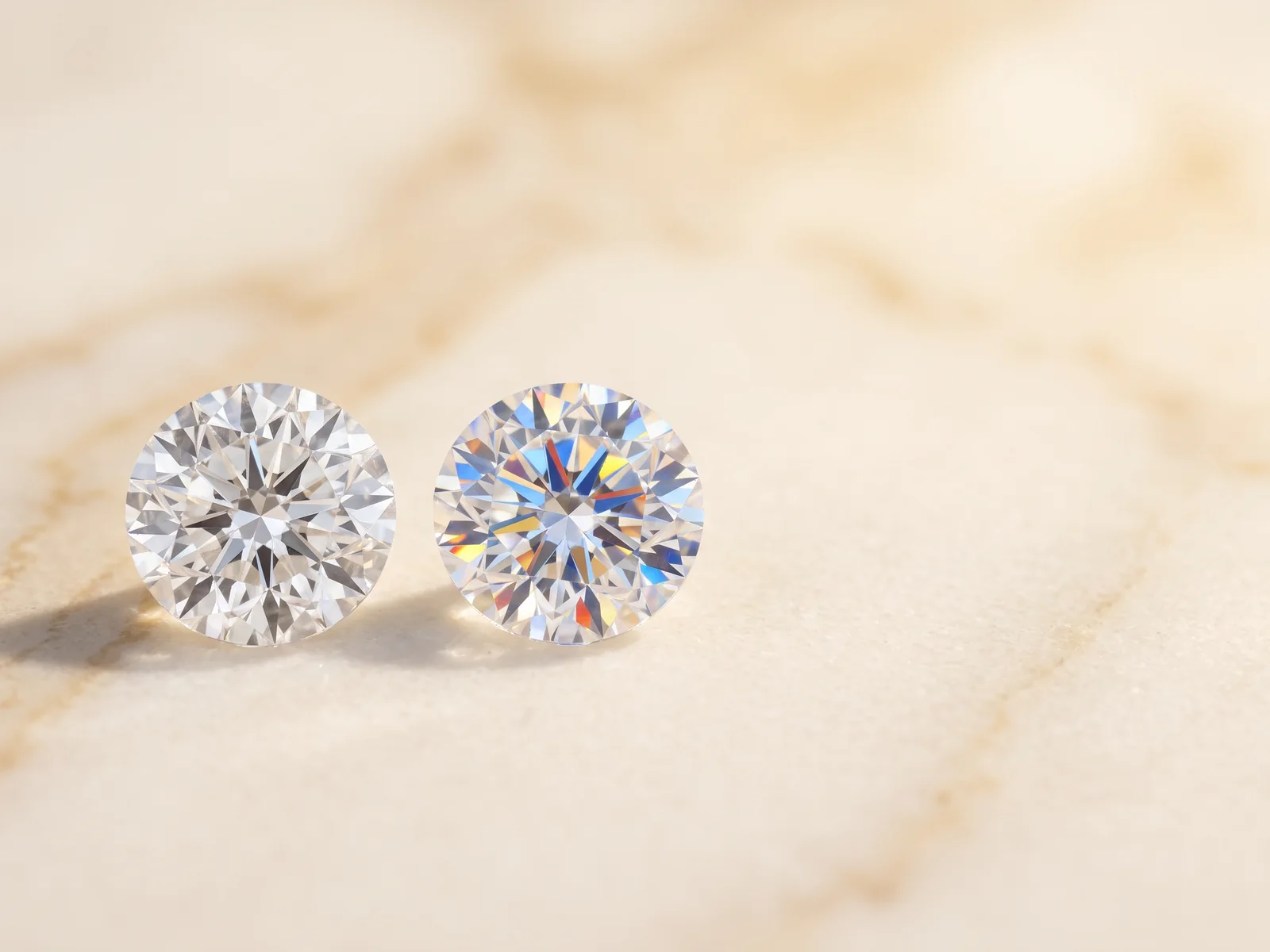
Side by side, usually yes: the lab-grown diamond looks brighter with more coloured flashes, and the sapphire looks whiter and glassier. A jeweller's diamond tester confirms it instantly, because sapphire fails the thermal test.
Will a white sapphire go cloudy?
The stone itself does not change, but a film of skin oil and soap dulls it quickly because of its lower refractive index. A regular clean brings it back; long-term surface scuffs may need repolishing.
Is a lab-grown diamond a real diamond?
Yes. It has the same chemistry, crystal structure, hardness and refractive index as a mined diamond. It must always be described as lab-grown or laboratory-grown.
Which is cheaper, white sapphire or a lab-grown diamond?
White sapphire, especially lab-created white sapphire, costs much less than a lab-grown diamond of the same size. Natural white sapphire sits between the two.
Do lab-grown diamonds and white sapphires hold their value?
Neither should be bought expecting to hold or grow in value. Choose either for how it looks and wears, and insure it for replacement cost.
Terms in this guide

Ask a gemologist
Not sure which diamond to choose?
Raj Sood is a Graduate Gemologist (GIA) and master jeweller. Bring the stones you are considering, or send the reports, and he will tell you honestly which one is better and why.
Keep learning
Related guides
 GemstonesWhite Sapphire
 Lab-Grown DiamondsLab-Grown Diamond vs Moissanite
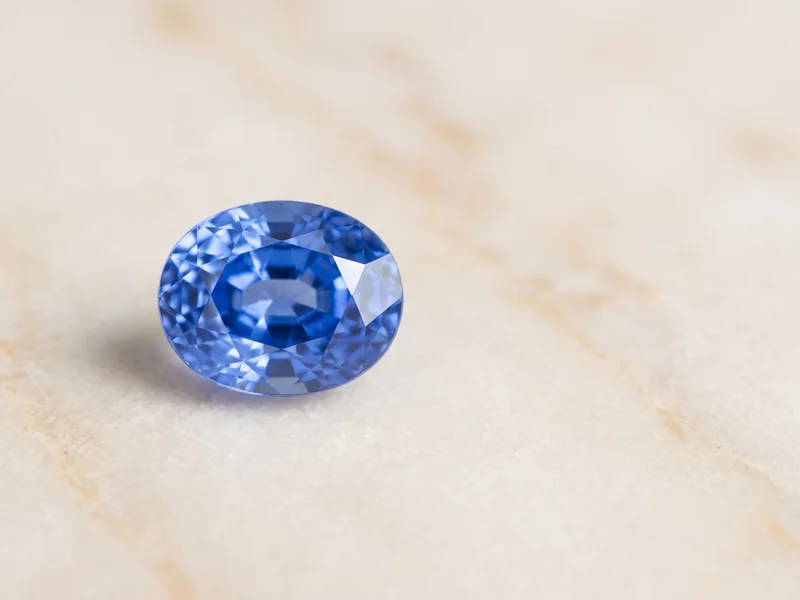 Lab-Grown DiamondsLab-Grown Sapphire, Ruby and Emerald
 Lab-Grown DiamondsShould a Lab-Grown Diamond Be Insured?
 Lab-Grown DiamondsAre Lab-Grown Diamonds More Sustainable? Questions to Ask
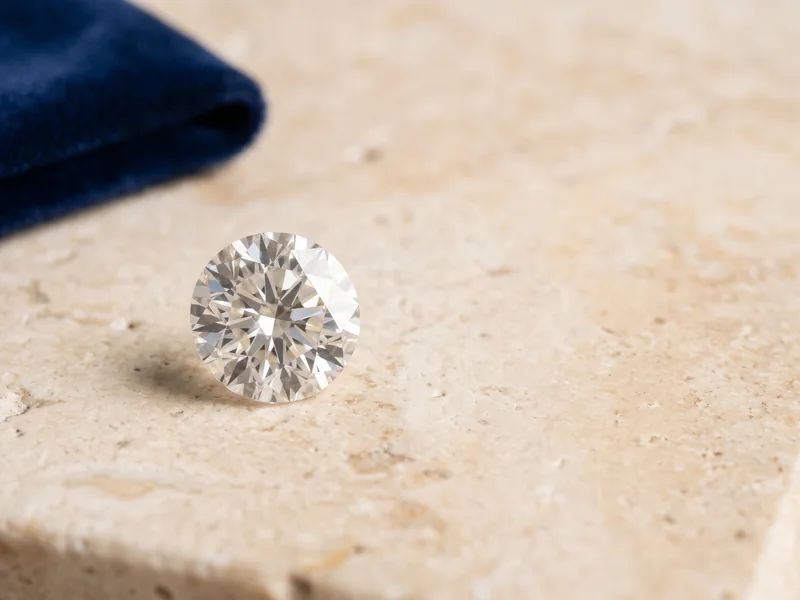 Lab-Grown DiamondsLab-Grown Diamond Fluorescence ExplainedLab-Grown DiamondsWhat Actually Drives Lab-Grown Diamond Prices?
Explore more
More guides on this topic
Education