
- Education
- Diamond Shapes
- Marquise Diamond Points: How to Protect Them from Chips and Wear
Diamond shapes
Marquise Diamond Points: How to Protect Them from Chips and Wear
The two marquise diamond points give the shape its long, elegant outline, and they are also the parts most likely to chip. Here is what makes them vulnerable and how the stone, the setting and your habits can keep them intact.
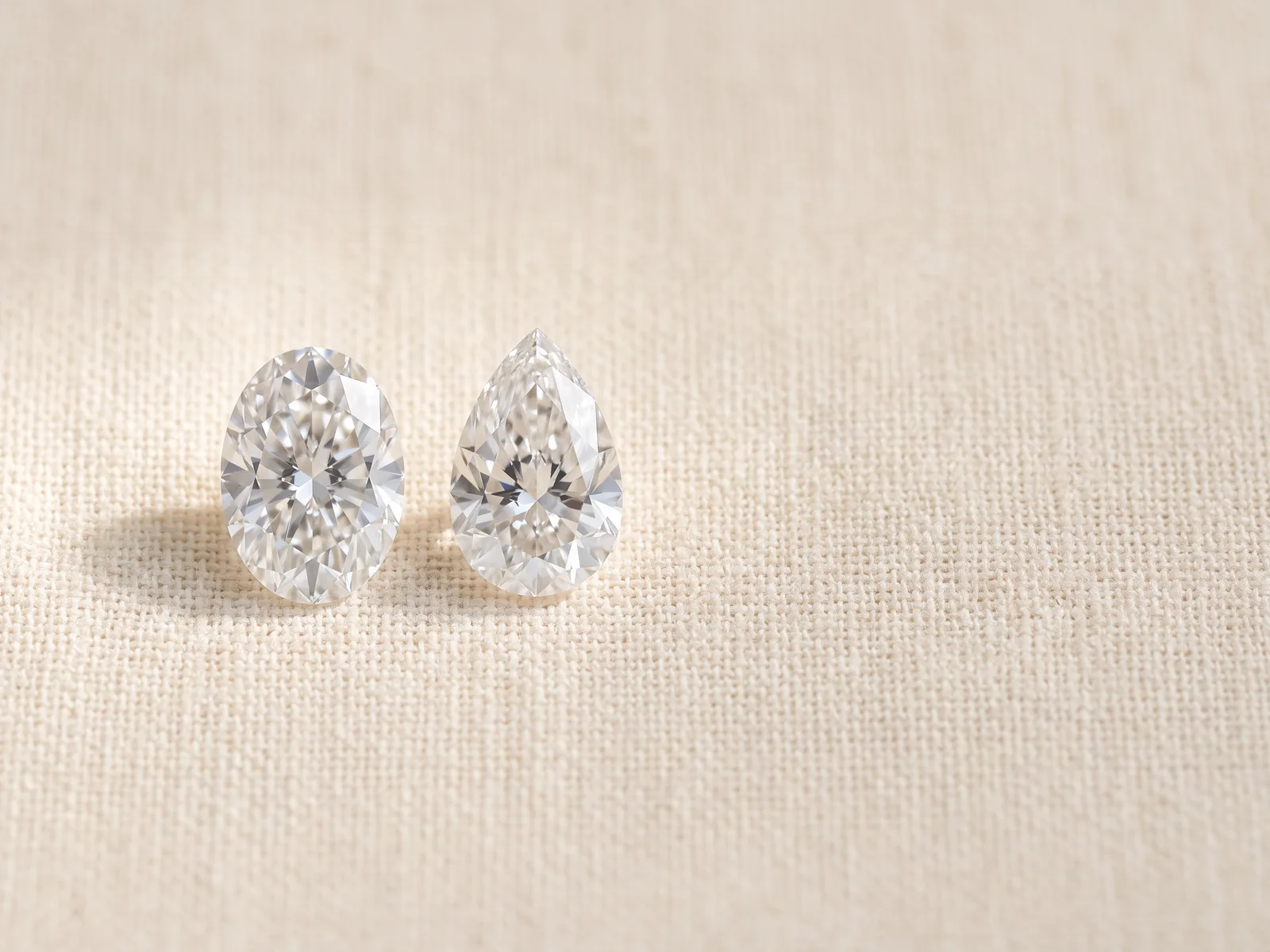
 Reviewed by Raj Sood, Graduate Gemologist (GIA), AJP (GIA)Master jeweller and Graduate Gemologist (GIA) · reviewed 4 November 2026
Quick answer
Marquise diamond points are the thinnest, most exposed parts of the stone, so they chip more easily than a round's edge. Protect them with V-claws or a bezel at each tip, choose a thin-to-medium or thicker (not knife-edge) girdle at the points, avoid inclusions near the tips, and have the claws checked every six to twelve months.
What are the points of a marquise diamond?
A marquise is a long, boat-shaped modified brilliant: it uses the same triangular and kite-shaped facets as a round brilliant, arranged around an outline with two curved sides that meet in a sharp point at each end. Those two ends are the marquise diamond points, often simply called the tips. Most marquises carry 56 to 58 facets. For the shape's history, proportions and how it looks on the hand, start with our full marquise cut diamond guide.
It helps to know the parts before talking about protection. The points sit at each end. The belly is the widest part across the middle, and the wings are the curved sides running from the belly to each tip. The girdle is the thin outer edge where the top half (the crown) meets the bottom half (the pavilion). Underneath, many marquises have a keel line: instead of the pavilion facets meeting at a single point, as they do in a round, they meet along a short ridge running lengthwise under the stone.
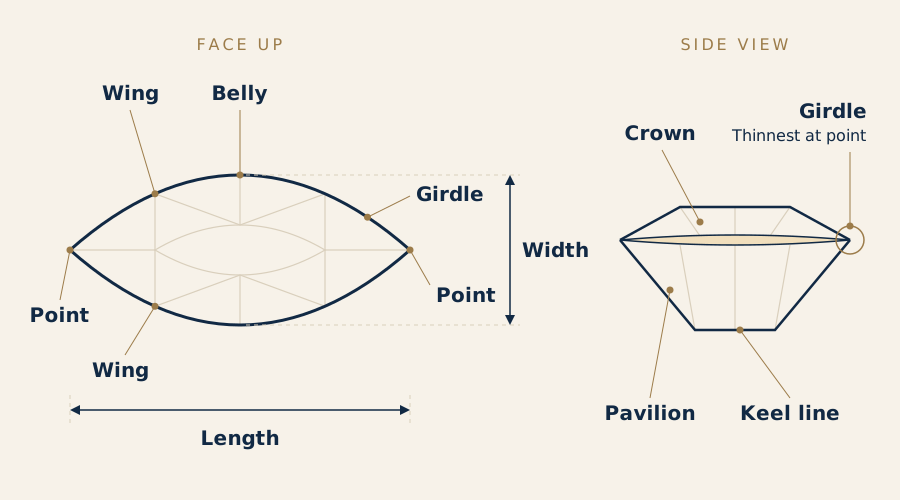
Because the marquise has two sharp ends rather than one, it has more edge to look after than almost any other popular shape. It belongs to the elongated family of fancy diamond cuts, alongside the pear, oval and moval, and it is one of the shapes in our guide to all 34 diamond cuts, from round to rose. If you are still deciding on a shape, see how the marquise fits among the main diamond shapes. Any term on this page you have not met before is explained in our jewellery terms explained in plain English.
Why are marquise diamond points so fragile?
Diamond is 10 on the Mohs scale, the hardest natural material, with a refractive index of about 2.42. But hardness only measures resistance to scratching. Toughness, the resistance to chipping and breaking, is a different property, and diamond's is rated good rather than exceptional. The reason is cleavage: diamond has four directions, parallel to the faces of its octahedral crystal, along which it can split cleanly if struck hard at the right angle.
At a marquise tip, the crown and pavilion close together into a narrow wedge, so there is very little diamond to absorb a knock. The girdle is often at its thinnest there, sometimes only a fraction of a millimetre. A sharp blow against a stone benchtop, a car door or a gym weight can take a small flake off the very end, even though the same knock would leave the belly untouched.
Several things make a chipped point more likely:
- A very thin or knife-edge girdle at the tips, sometimes left by cutters to keep the stone's weight or outline.
- Inclusions near the tips, especially feathers (small internal cracks) that reach the surface, which weaken an already thin area.
- Uneven points: if one tip is off-centre, a claw may not sit squarely over it. Our guide to checking that both marquise tips line up shows what to look for.
- An exposed setting, such as four claws on the sides that leave both tips bare.
- Loose storage: diamonds scratch and chip each other, so a marquise thrown in a drawer with other jewellery is at risk.
What should you check on a marquise before it is set?
Protection starts with the stone itself. The grading report describes the girdle as a range, such as thin to medium or medium to slightly thick, because thickness varies around the outline. On a marquise the thinner figure usually applies at the points, so read the first word carefully.
| Girdle on report | What it means at the points | Risk for the tips |
|---|---|---|
| Extremely thin | Almost a knife edge | High; usually best avoided for a ring |
| Very thin | A narrow edge | Higher; only with full V-claws or a bezel |
| Thin to medium | A sound edge without hidden weight | A good balance for most rings |
| Slightly thick to thick | Sturdy edge | Low; a little weight carried in the girdle |
| Very thick to extremely thick | Heavy edge | Low risk, but the stone faces up smaller for its weight |
The shape of the points matters too. Most marquises sit between a length-to-width ratio of about 1.85 and 2.10, meaning the stone is roughly twice as long as it is wide. A longer, slimmer stone above about 2.10 has sharper, more acute tips; a stubbier stone below about 1.75 has blunter ones. Neither is wrong, but a slim marquise needs especially good claw work. Our page on marquise length-to-width ratios from slim to full shows how each ratio looks.
Next, check the plotting diagram on the report, the map of where each inclusion sits. A feather within a millimetre or two of a tip is worth questioning, because it may grow if the point takes a knock. Many well-cut marquises have a total depth of about 58–64% and a table of about 53–63%, but the girdle, the tips and the inclusions tell you more about durability than those numbers. Finally, confirm that both points line up on the long axis, so each claw can sit squarely over its tip.
How do you protect marquise diamond points in a setting?
The rule is simple: metal should cover each tip. The setting takes the knock so the diamond does not. These are the common choices and what each does for the points:
| Setting | How the points are protected | Trade-offs |
|---|---|---|
| Two V-claws plus side claws | A V-shaped claw wraps each tip; two or four side claws hold the belly | The most common choice; shows the full outline; claws need regular checks |
| Full bezel | A thin rim of metal surrounds the whole girdle | The most enclosed option; hides a sliver of outline and a little edge light |
| Tip bezels (half-bezel) | Metal caps cover only the two ends; the sides stay open | Protects the points while keeping the belly open to light |
| Halo with V-claws | Small diamonds frame the marquise and take side knocks | Looks larger; the small halo stones also need checking |
| Four claws on the sides only | Points left bare | Exposes both tips; not suited to an everyday ring |
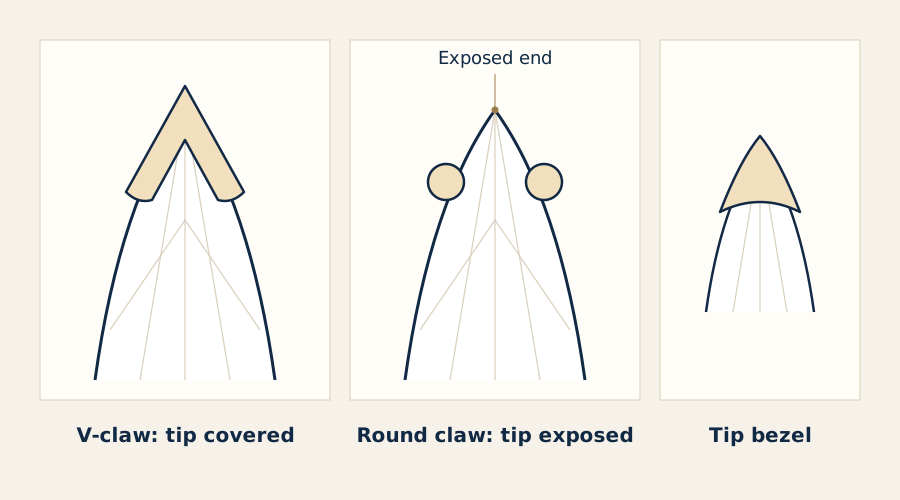
A V-claw (also called a V-prong) is shaped to fit over the point like the toe of a boot. It should sit snugly against both sloping edges and reach slightly past the tip. A round claw placed beside the point protects far less, because the end still sticks out. Setting height matters too: a lower head sits closer to the finger and takes fewer direct knocks, while a tall cathedral setting shows more of the stone but is more exposed.
An east-west setting, with the marquise turned sideways across the finger, keeps the points away from the front edge of the hand but turns them towards your neighbouring fingers, so it still needs V-claws or tip bezels. You can compare real examples in our photos of protective marquise settings.
Not sure which one is right?
Send us the stones you are looking at and our gemologist will tell you which to choose and why.
Which metal is best for marquise diamond claws?
V-claws wear over years of contact with benches, fabric and other rings, so the metal you choose changes how long they last before they need rebuilding.
- Platinum (950): dense and tough. When it wears, the metal tends to move rather than be lost, so claws keep their bulk for longer. A popular choice for V-claws, even on a gold band.
- 18ct white gold: firm and holds a sharp V shape well. It is usually rhodium plated (a thin bright white coating) that wears and needs redoing, often every 12 to 24 months.
- 18ct yellow or rose gold: a rich colour but a little softer, so claws wear faster. Many people choose a white metal head on a yellow or rose band for this reason.
- 9ct and 14ct gold: harder alloys that resist denting, but claws can become brittle with age and should be inspected rather than simply bent back.
Whatever the metal, a slightly thicker V-claw gives more material to wear through before the point is exposed. When a claw thins, a jeweller can retip it, adding new metal to the top, rather than replacing the whole setting.
Can you wear a marquise engagement ring every day?
Yes. In a protective setting and with sensible habits, a marquise is a practical everyday engagement ring. Most chipped points come from a handful of avoidable situations.
- Take the ring off for the gym, gardening, moving furniture, contact sport and heavy cleaning.
- Put it in a lined box or its own pouch, not loose with other rings or in a bag pocket.
- Avoid ultrasonic cleaning at home if the report shows a feather near a tip; warm water, mild detergent and a soft brush are enough.
- Run a fingertip over each V-claw now and then. If a claw catches on fabric or feels sharp, it has worn or lifted.
- Have the claws checked professionally every six to twelve months.
The wedding band matters as well. A straight band pressed against the points rubs both metal and diamond every day. A contoured or notched band, or one set slightly apart, avoids that contact. See our guide to wedding bands that curve around a marquise.
Do marquise diamonds chip more easily than pear or princess diamonds?
| Shape | Sharp points | Usual protection | Relative exposure |
|---|---|---|---|
| Marquise | Two acute tips | Two V-claws, tip bezels or full bezel | Highest of the popular shapes |
| Pear | One acute tip | One V-claw at the point | Moderate; one tip to protect |
| Heart | One tip, plus the cleft | V-claw at the point | Moderate |
| Princess | Four right-angle corners | V-claws or corner claws | Moderate; corners less acute than a marquise tip |
| Moval | No sharp points (softened ends) | Standard claws | Low |
| Round or oval | None | Standard claws | Lowest |
The pear is the marquise's closest relative, with one rounded end and one point; our marquise vs pear comparison, side by side covers the look, the pear cut diamond guide covers its grades, and the principles for protecting a pear diamond's single point mirror everything on this page, just at one end. A heart shaped diamond has the same single point to guard, plus a cleft.
If you love the long outline but would rather not worry about tips at all, consider the moval, a marquise with softened ends. It keeps much of the length while removing the acute points, and our moval cut diamond guide explains how it is proportioned.
Related guideProtecting the Point of a Pear DiamondWhat happens if a marquise diamond point chips?
A chipped tip is common and usually fixable. Stop wearing the ring until it has been inspected, because a chip can leave a feather that spreads with the next knock, and a damaged claw may no longer hold the stone. A jeweller will look at the chip under magnification and suggest one of three options.
- Cover it: a small chip right at the tip can often be hidden under a new or rebuilt V-claw. This is the least invasive option, typically about AUD $80–$250 per claw depending on the metal.
- Recut the point: a diamond cutter polishes the chip away. The stone loses some weight, often a few per cent, and the ratio shortens slightly; see how recutting shifts the ratio. Costs vary widely, roughly AUD $300–$1,000 or more depending on size. The original report will no longer match, so a regrade may be worthwhile.
- Replace the stone: if the damage is deep or runs into a large feather, a new diamond may be the sensible choice.
Whichever you choose, it is a good moment to ask whether the old setting let the point get hit. Many people move to tip bezels or heavier V-claws after a chip; you can compare options for resetting into a more protective mount.
Does a lab-grown marquise need the same protection as a natural one?
Yes. A lab-grown diamond is real diamond, grown in a laboratory by the HPHT or CVD method rather than mined. It has the same hardness (Mohs 10), the same cleavage and the same toughness as a natural diamond, so its points chip in exactly the same way and need exactly the same claws or bezel.
The difference is cost. Lab-grown marquises cost much less than natural ones of the same size and grades, so after a serious chip, replacing a lab-grown stone can cost less than recutting a natural one. A natural marquise is rarer and many people prefer to recut and keep the original. Either way, ask for an independent grading report, from a lab such as GIA or IGI, that states clearly whether the diamond is natural or laboratory-grown.
Shop marquise diamonds: natural and lab-grown
When comparing stones, read the girdle description and look at each tip in the photos and 360° video. Our page on choosing marquise diamonds in Melbourne covers colour and clarity, and our price differences between diamond shapes page shows where the marquise sits on cost per carat.
How to protect marquise diamond points: step by step
- Read the girdle. On the report, look for thin to medium or thicker; avoid extremely thin at the points.
- Check the tips for inclusions. Use the plotting diagram and reject feathers that reach the surface near either point.
- Confirm symmetry. Both points should line up on the long axis so the claws sit squarely.
- Choose a protective setting. Two V-claws, tip bezels, a full bezel or a halo with V-claws.
- Pick a durable claw metal. Platinum or white gold V-claws hold up well, even on a yellow or rose band.
- Match the wedding band. Choose a contoured or notched band so nothing rubs the points.
- Book regular checks. Have the claws inspected every six to twelve months and retipped when they thin.
Free consultation
Talk to a gemologist
Compare stones in person or online with Raj Sood, Graduate Gemologist (GIA), AJP (GIA).
Book a consultationFAQ
Common questions
Do marquise diamonds chip easily?
Their two points are thinner than any part of a round diamond, so they chip more easily if left exposed. Covered by V-claws or a bezel, a marquise is quite practical for everyday wear.
What is a V-claw on a marquise ring?
A V-claw, or V-prong, is a claw shaped to fold over the pointed end of the diamond. It covers the tip so the metal, not the diamond, takes any knock.
Is a bezel setting better than claws for a marquise?
A full bezel encloses the whole edge and offers the most protection, but it hides a little of the outline. V-claws show more of the stone and protect the tips well if they are checked regularly.
Can a chipped marquise diamond be repaired?
Often, yes. A small chip can be hidden under a V-claw, or the point can be recut, which removes a little weight and slightly shortens the ratio.
How often should marquise ring claws be checked?
Every six to twelve months, or straight away if a claw catches on clothing or looks lifted. Worn claws can be retipped with new metal.
Are lab-grown marquise diamonds less likely to chip?
No. Lab-grown diamonds have the same hardness, cleavage and toughness as natural diamonds, so their points need the same protection.

Ask a gemologist
Not sure which diamond to choose?
Raj Sood is a Graduate Gemologist (GIA) and master jeweller. Bring the stones you are considering, or send the reports, and he will tell you honestly which one is better and why.
Keep learning
Related guides
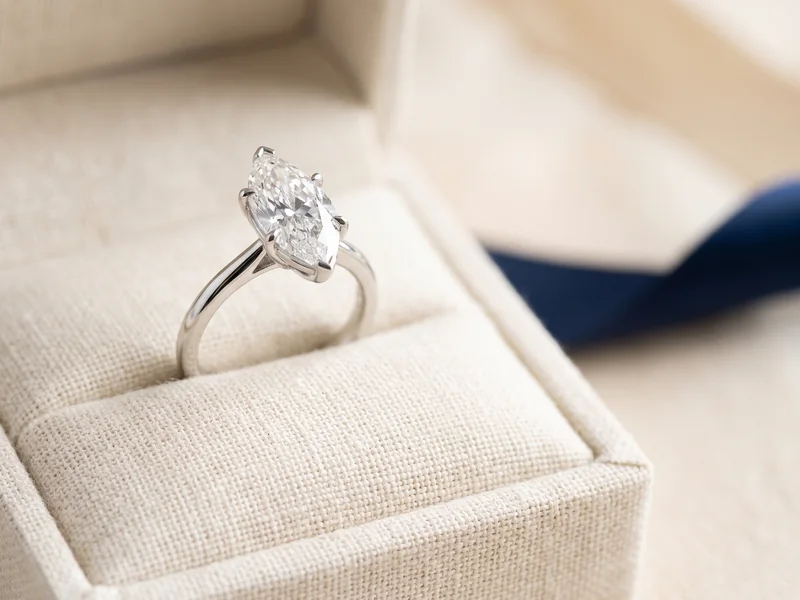
 Engagement Rings & SettingsBest Settings for Marquise Diamonds
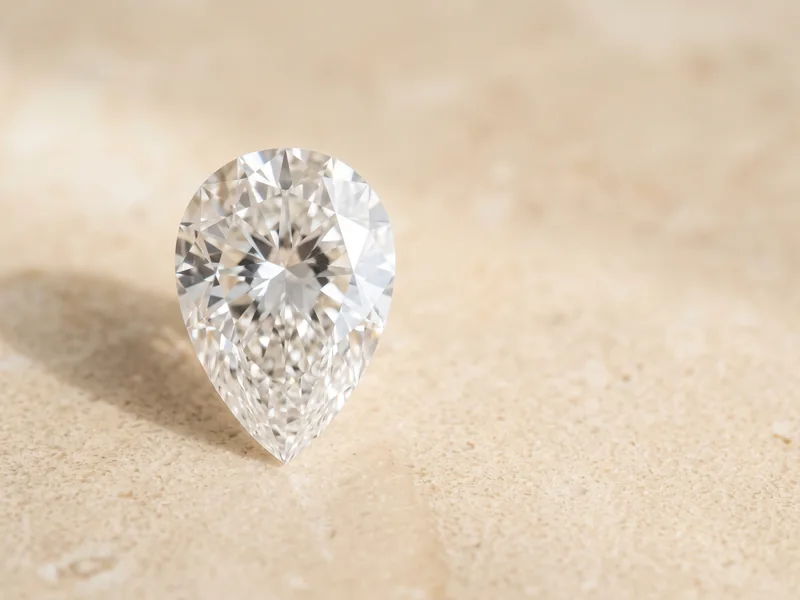 Diamond ShapesProtecting the Point of a Pear Diamond
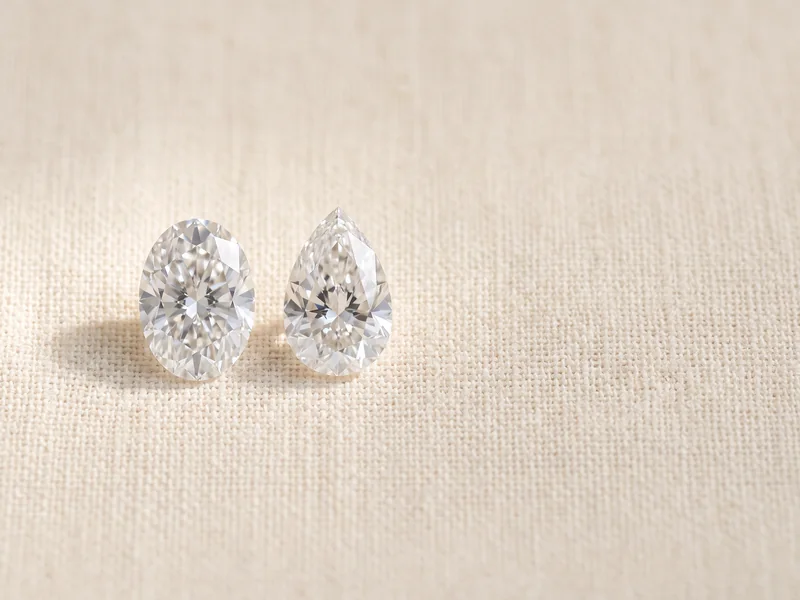
 Diamond ShapesMarquise Cut Diamonds Melbourne
 Diamond ShapesHow to Judge Marquise Diamond SymmetryDiamond ShapesUnderstanding Diamond ShapesDiamond ShapesMarquise vs Pear DiamondsDiamond ShapesMarquise Diamond Length-to-Width RatioDiamond ShapesMarquise vs Moval Diamonds
Explore more
More guides on this topic
Education