
- Education
- Diamond Shapes
- Square Radiant Cut Diamond Guide: Ratio, Facets, Colour and Settings
Diamond shapes
Square Radiant Cut Diamond Guide: Ratio, Facets, Colour and Settings
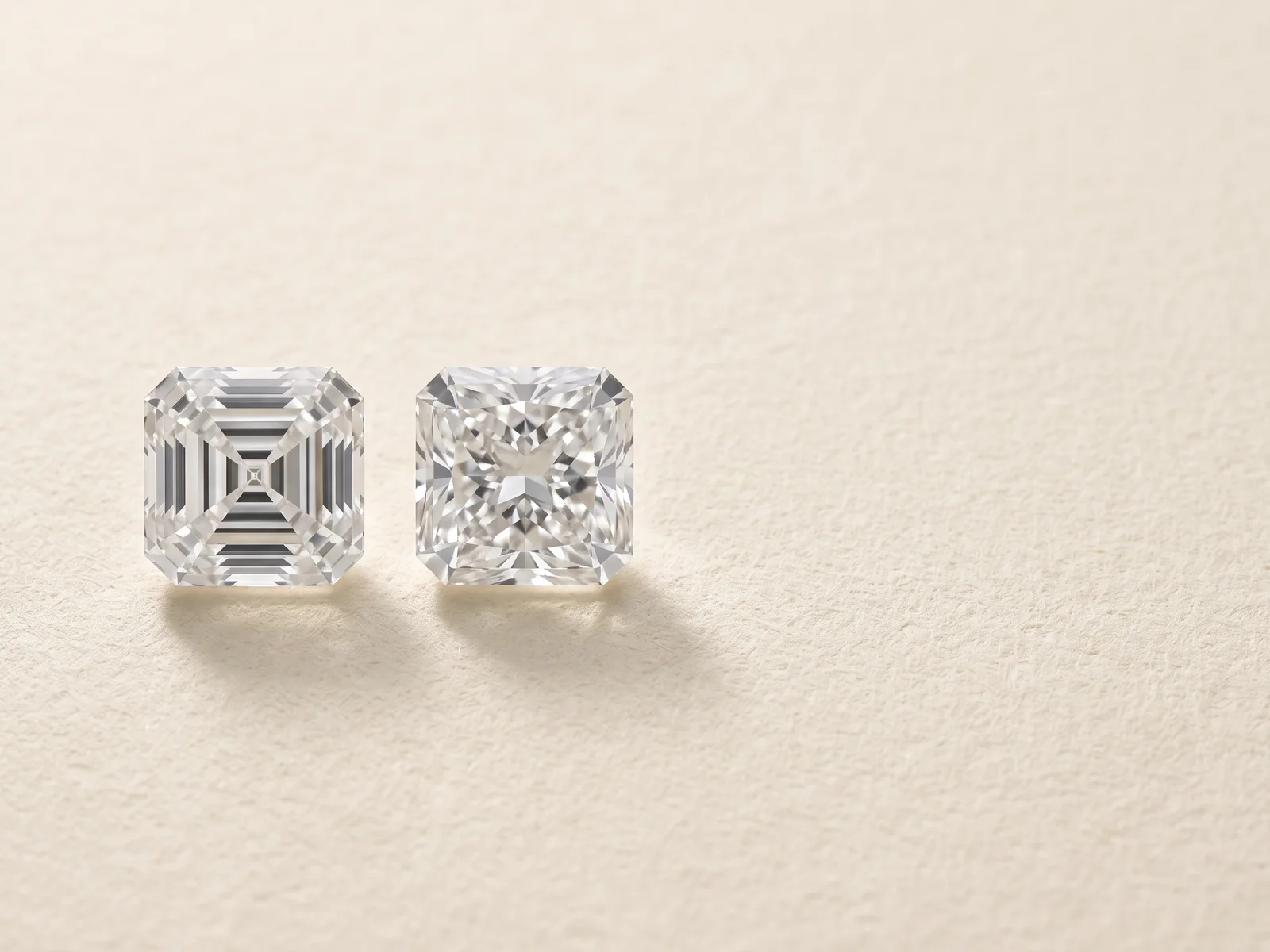
A square radiant cut diamond gives you the clean lines of a square with the sparkle of a brilliant, and its clipped corners make it less likely to chip than a princess. Here is what to check, from ratio and depth to colour, setting and price.
 Reviewed by Raj Sood, Graduate Gemologist (GIA), AJP (GIA)Master jeweller and Graduate Gemologist (GIA) · reviewed 4 November 2026
Quick answer
A square radiant cut diamond is a square diamond with clipped corners and about 70 brilliant-style facets, giving lively, crushed-ice sparkle. Choose a length-to-width ratio of 1.00–1.05, a depth of roughly 60–67%, an eye-clean VS2–SI1 clarity and H colour or better in white metal, set with four claws or a bezel.
What is a square radiant cut diamond?
A square radiant cut diamond is a cut-cornered square modified brilliant, which is how grading labs such as GIA describe it on a report. In plain terms, it has a square outline with its four corners trimmed off, and it is faceted like a brilliant (many small triangular and kite-shaped facets) rather than like a step cut (long, parallel, staircase-like facets). It borrows the tidy outline of step-cut squares such as the carré, a plain step-cut square, then adds the sparkle of a round.
The radiant was introduced in the late 1970s by the cutter Henry Grossbard, who wanted an emerald-style outline with far more brilliance. It comes in two versions: square and rectangular. Our main radiant cut diamond guide covers the whole family, and the square radiant also sits within the square and cushion family of cuts alongside the princess, cushion and Flanders.
Diamond is 10 on the Mohs hardness scale, with a refractive index of about 2.42, which is why brilliant faceting returns so much light. Hardness is not toughness, though. A sharp corner can still chip if it takes a knock, and that is where the radiant's design pays off: the clipped corners remove the most exposed points of a square stone.
If any of the terms here are new to you, our jewellery glossary of gem and setting terms explains them, and you can see where the square radiant fits among all 34 diamond cuts, compared.
How is a square radiant diamond faceted?
Most radiants have about 70 facets, though the exact number varies by cutter. Unlike an emerald cut, both the crown (the top half, above the girdle) and the pavilion (the lower half, below it) carry brilliant-style facets. The girdle is the thin edge around the widest part, and on a radiant it runs in eight straight sections: four long sides and four short clipped corners.
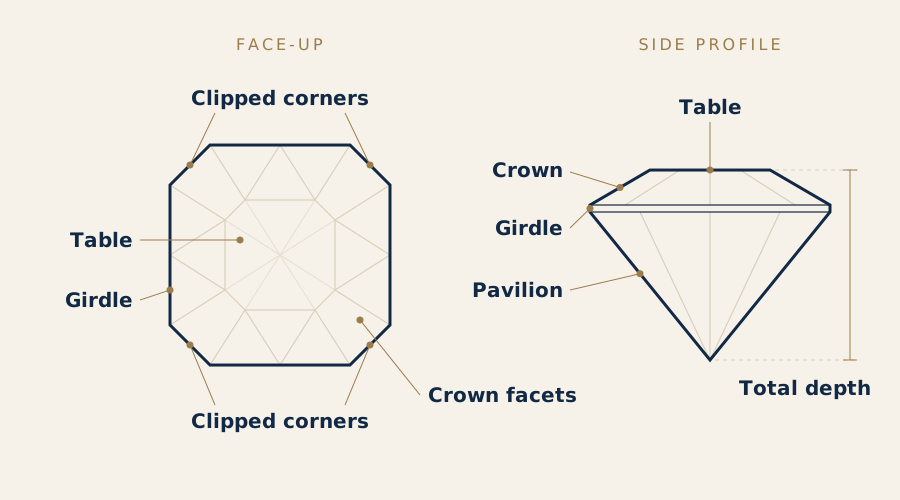
Because the pavilion is divided into many small facets, square radiants often show a crushed-ice look: a sparkle made of lots of tiny, broken-up flashes rather than a few big ones. This is a style, not a flaw. The same effect appears in crushed ice cushion modified cuts, and some people love it while others prefer bolder flashes.
- Crushed-ice radiants: many fine pinpoints of light, a frosty, glittering look. Common in deeper square radiants.
- Bolder-faceted radiants: larger, clearer flashes, closer to the look of a round or princess.
- Hybrid patterns: a mix of both, varying by cutter. Watching a 360° video is the only reliable way to tell which you are looking at.
The corners themselves matter more than most people expect. Their size changes the outline: tiny corners make the stone look almost like a princess, while large corners push it towards an octagon. Our page on why radiant corners are clipped shows how corner size affects both looks and durability. As a rule, the four corners should be the same size, so the outline looks even from every side.
What is the ideal ratio and depth for a square radiant cut diamond?
The length-to-width ratio compares the stone's length with its width. Divide the longer measurement by the shorter one on the grading report. A perfect square is 1.00. Because a few hundredths of a millimetre either way are invisible, most people treat anything up to about 1.05 as square.
| Ratio | How it looks | Notes |
|---|---|---|
| 1.00–1.02 | Perfectly square to the eye | The classic square radiant |
| 1.02–1.05 | Still reads as square | Often a little cheaper; hard to tell apart from 1.00 |
| 1.05–1.10 | Slightly rectangular | Some people see it, some don't; check on the hand |
| Above 1.10 | Clearly rectangular | Sold as an elongated radiant |
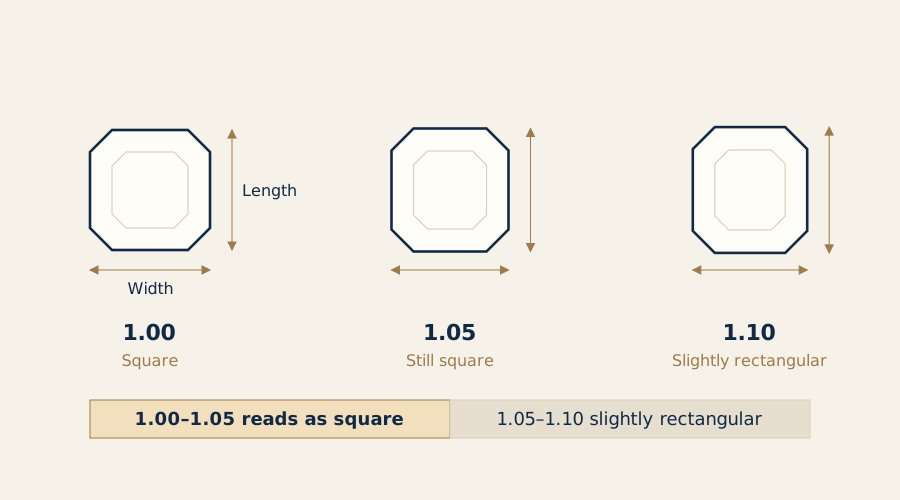
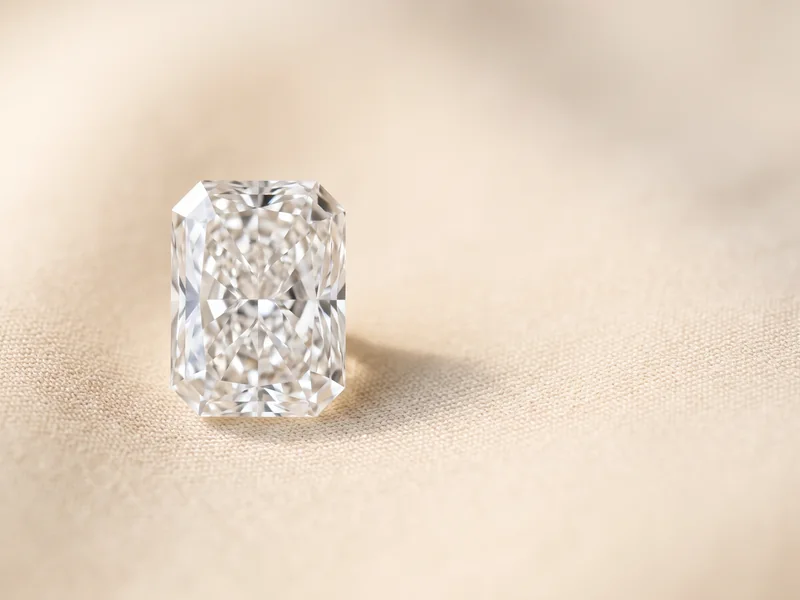
If you are drawn to a longer look, see our guide to elongated radiants, and our radiant ratio guide, from square to long goes through every range in detail.
GIA does not give fancy shapes such as radiants an overall cut grade, so you judge the cut from the proportions, polish, symmetry and, above all, how the stone looks in a video. As a rough guide, many well-cut square radiants sit at a total depth of about 60–67% and a table (the large flat top facet) of about 61–69% of the width. Square radiants are often cut deeper than this to save weight from the rough crystal. A stone above about 70% depth carries a lot of weight underneath, looks smaller face-up and can show a dark centre.
Bow-ties, the dark bands seen across the middle of many elongated shapes, are uncommon in square radiants. What you are more likely to see in a poorly proportioned stone is a dull or dark patch in the centre. If the middle stays dark as the stone turns, move on.
How big does a square radiant diamond look? Size chart
Because square radiants are usually cut deeper than rounds, they tend to face up a little smaller than a round of the same carat weight. A 1 carat round is about 6.4 mm across; a 1 carat square radiant is usually around 5.5 mm per side. The square outline covers slightly more area than its side length suggests, but most of the difference comes down to depth.
| Carat weight | Typical size (length × width) |
|---|---|
| 0.50 ct | about 4.5 × 4.5 mm |
| 0.75 ct | about 5.0 × 5.0 mm |
| 1.00 ct | about 5.5 × 5.5 mm |
| 1.50 ct | about 6.3 × 6.3 mm |
| 2.00 ct | about 6.9 × 6.9 mm |
| 3.00 ct | about 7.9 × 7.9 mm |
These are typical figures at a depth of around 64–66%. Two square radiants of the same weight can differ by 0.3 mm or more per side, which you can see on the hand. Always compare millimetres as well as carats.
Not sure which one is right?
Send us the stones you are looking at and our gemologist will tell you which to choose and why.
What colour and clarity should a square radiant have?
Radiants hold on to body colour more than rounds. Light bounces around the deep pavilion and the corners, which concentrates any warmth, especially in a square radiant where the depth is spread evenly. That is also why radiants are a popular shape for fancy yellow and other coloured diamonds: the cut intensifies colour.
For a colourless look in white gold or platinum, most people are happy at H colour or better; if you are sensitive to warmth, choose G or higher. In yellow or rose gold, I or J often looks white because the metal tints everything around it.
Clarity is where the square radiant is forgiving. The busy, crushed-ice faceting hides small inclusions (internal features) well, much better than step cuts like the Asscher or emerald, where you look straight through a clear table. Aim for an eye-clean stone, meaning nothing visible without magnification at normal distance. VS2 and many SI1 square radiants are eye-clean.
- White metal: G–H colour, VS2–SI1 eye-clean.
- Yellow or rose gold: I–J colour can look white.
- Fancy colour: the radiant deepens colour, so it suits yellow and other coloured diamonds.
- Check the corners: avoid feathers (small internal cracks) that reach the surface at a corner, which can weaken the edge.
What is the best setting for a square radiant diamond ring?
The clipped corners mean a square radiant is less likely to chip than a princess, so you have more freedom with the setting. The common choices for a square radiant engagement ring:
- Four claws: one on each clipped corner. This shows the most diamond and suits the square outline. Claws can be round, flat or shaped to the corner.
- Double claws: two thin claws at each corner, eight in all, for extra security and a softer look.
- Bezel or half-bezel: a thin rim of metal around the edge. Very secure and good for active hands.
- Halo: a square or cut-cornered ring of small diamonds that makes the centre look larger.
- Three-stone: trapezoid, baguette or smaller radiant side stones that echo the straight lines.
For more ring styles, from solitaires to hidden halos, see our page on radiant engagement ring designs.
The straight sides of a square radiant mean a plain straight band can often sit flush against it, especially in a solitaire. A halo or a low basket can push the band away, in which case a contoured or notched band closes the gap. Our guide to wedding bands that sit flush beside a radiant covers the options with examples.
Square radiant vs princess, Asscher and cushion: which is right for you?
| Square radiant | Princess | Asscher | Square cushion | |
|---|---|---|---|---|
| Corners | Clipped | Sharp points | Clipped | Rounded |
| Facet style | Brilliant | Brilliant | Step cut | Brilliant |
| Typical facets | About 70 | About 57–76 | About 58 | About 58–64 |
| Sparkle | Crushed-ice to bold | Bright, crisp flashes | Hall-of-mirrors, glassy | Soft, chunky or crushed-ice |
| Hides inclusions | Well | Well | Poorly | Well |
| Chip risk at corners | Low | Higher | Low | Low |
| Price per carat vs round | Usually lower | Usually lower | Usually lower | Usually lower |
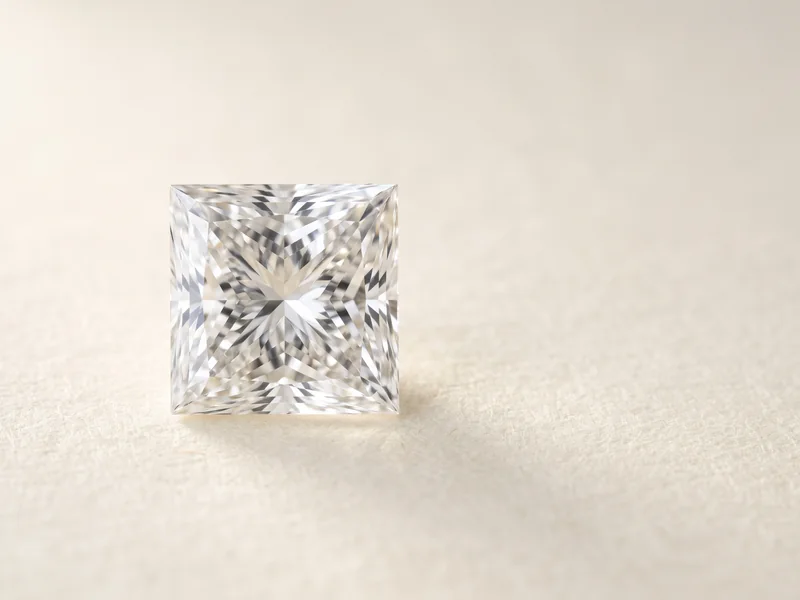
The closest alternative is the princess, which has the same square brilliant look but sharp corners that need protecting. See our princess cut diamond guide and the princess vs radiant breakdown, side by side. If you prefer a softer outline, read our cushion cut buying guide and the radiant vs cushion comparison.
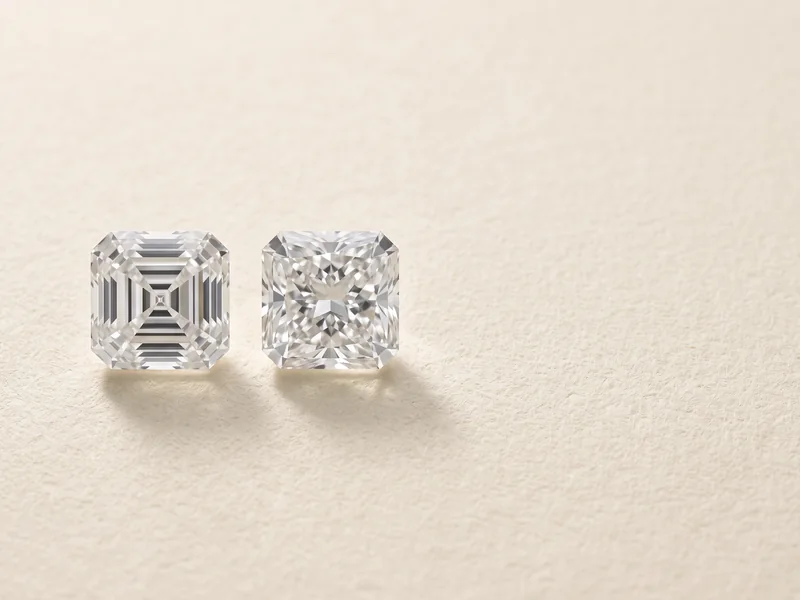
The Asscher has almost the same outline but step-cut facets, so it looks clear and architectural rather than sparkly. Our Asscher vs square radiant comparison shows the difference in photos. The emerald cut is the rectangular step-cut cousin; see emerald cut vs radiant for how the two compare.
Related guideAsscher vs Square Radiant DiamondsLess common square options include the Flanders cut, a square brilliant with clipped corners developed in Antwerp. To compare every outline at once, start with our overview of diamond shapes.
How much does a square radiant cut diamond cost in Australia?
Square radiants are cut from both natural and laboratory-grown diamond. A lab-grown square radiant diamond is real diamond with the same hardness and refractive index, grown in a laboratory rather than mined. It costs much less than a natural stone of the same grades and is easy to find in larger sizes. Natural square radiants are rarer, and square ones are less common than rectangular radiants. Both should come with an independent grading report from a lab such as GIA or IGI.
| 1 ct square radiant, G–H, VS | Approximate price range (AUD) |
|---|---|
| Lab-grown | about $1,000–$3,000 |
| Natural | about $5,000–$12,000 |
These are broad ranges only; prices move with the market and with the exact grades. Radiants usually cost less per carat than rounds, because cutting a radiant keeps more of the rough crystal. Within square radiants, the biggest price drivers are carat, colour, clarity and how square and well proportioned the stone is. A 1.00 ratio can cost a little more than a 1.04, even though most people cannot see the difference.
Shop square radiant diamonds: natural and lab-grown
How do you choose a square radiant cut diamond? Step by step
- Read the report. Confirm it says cut-cornered square modified brilliant, and check measurements, colour, clarity, polish, symmetry and whether the diamond is natural or lab-grown.
- Work out the ratio. Divide length by width; aim for 1.00–1.05 for a square look.
- Check depth and table. Look for roughly 60–67% depth and 61–69% table; be wary above about 70% depth.
- Compare millimetres. Choose the stone that faces up larger, not just the heavier one.
- Watch a 360° video. Decide whether you like crushed-ice or bolder sparkle, and look for a dark centre.
- Check the corners. All four should be even, with no surface-reaching feathers.
- Plan the setting and band. Choose claws or a bezel, and check how a wedding band will sit before you commit.
Free consultation
Talk to a gemologist
Compare stones in person or online with Raj Sood, Graduate Gemologist (GIA), AJP (GIA).
Book a consultationFAQ
Common questions
What is the difference between a square radiant and a princess cut?
Both are square brilliants, but a square radiant has clipped corners while a princess has sharp, pointed ones. The radiant's corners are less likely to chip, and its sparkle is often more crushed-ice in style.
What ratio should a square radiant diamond be?
Most people choose a length-to-width ratio between 1.00 and 1.05, which looks square to the eye. Above about 1.10 the stone is sold as an elongated radiant.
Is a square radiant the same as an Asscher?
No. The outlines are similar, but an Asscher is step cut with long parallel facets and a clear, glassy look, while a square radiant is brilliant cut and much more sparkly.
Do square radiant diamonds look smaller than rounds?
Usually a little, because they are often cut deeper. A 1 carat square radiant is typically about 5.5 mm per side, compared with about 6.4 mm across for a 1 carat round.
Are lab-grown square radiant diamonds real diamonds?
Yes. Lab-grown square radiants are real diamond, grown in a laboratory rather than mined, and cost much less than natural stones of the same grades. The grading report will state that the stone is lab-grown.
What is the best setting for a square radiant diamond?
Four claws on the corners is the most popular, showing the most diamond. Double claws, a bezel or a halo add security, and a straight wedding band often sits flush beside a solitaire.

Ask a gemologist
Not sure which diamond to choose?
Raj Sood is a Graduate Gemologist (GIA) and master jeweller. Bring the stones you are considering, or send the reports, and he will tell you honestly which one is better and why.
Keep learning
Related guides
 Diamond ShapesRadiant Cut Diamonds
 Diamond ShapesAsscher vs Square Radiant DiamondsDiamond ShapesPrincess vs Radiant Cut DiamondsWedding Bands & EternityBest Wedding Band for Radiant Cut Engagement RingsDiamond ShapesUnderstanding Diamond Shapes
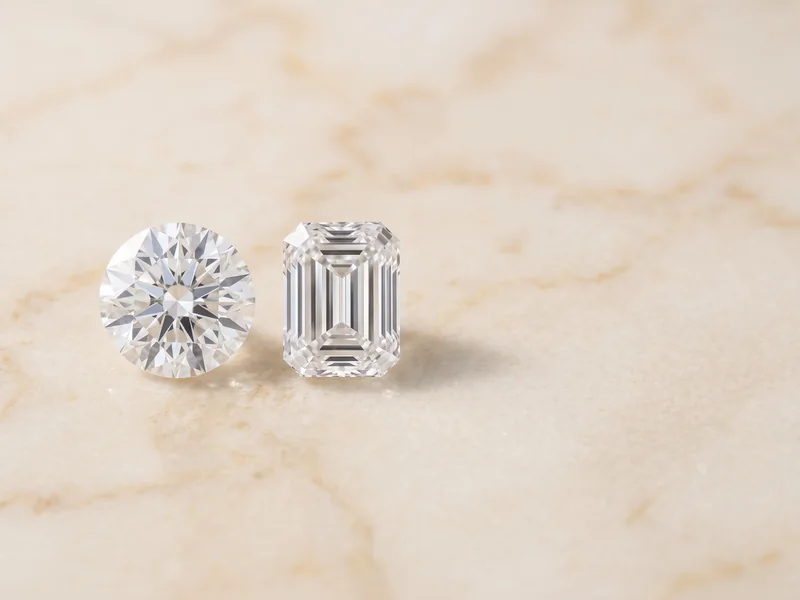 Diamond ShapesAll 34 Diamond Cuts: Every Shape Explained and ComparedDiamond ShapesSquare and Cushion Cuts: Princess, Radiant, Cushion and Flanders
 Diamond ShapesPrincess Cut Diamonds
Explore more
More guides on this topic
Education