
- Education
- Diamond Shapes
- The Radiant Cut Diamond: A Complete Australian Guide
Diamond shapes
The Radiant Cut Diamond: A Complete Australian Guide
A radiant cut diamond gives you the clean lines of a rectangle with the sparkle of a round brilliant. Here is what its facets do, which ratio and depth to look for, and how to set it so it lasts.
 Reviewed by Raj Sood, Graduate Gemologist (GIA), AJP (GIA)Master jeweller and Graduate Gemologist (GIA) · reviewed 4 November 2026
Quick answer
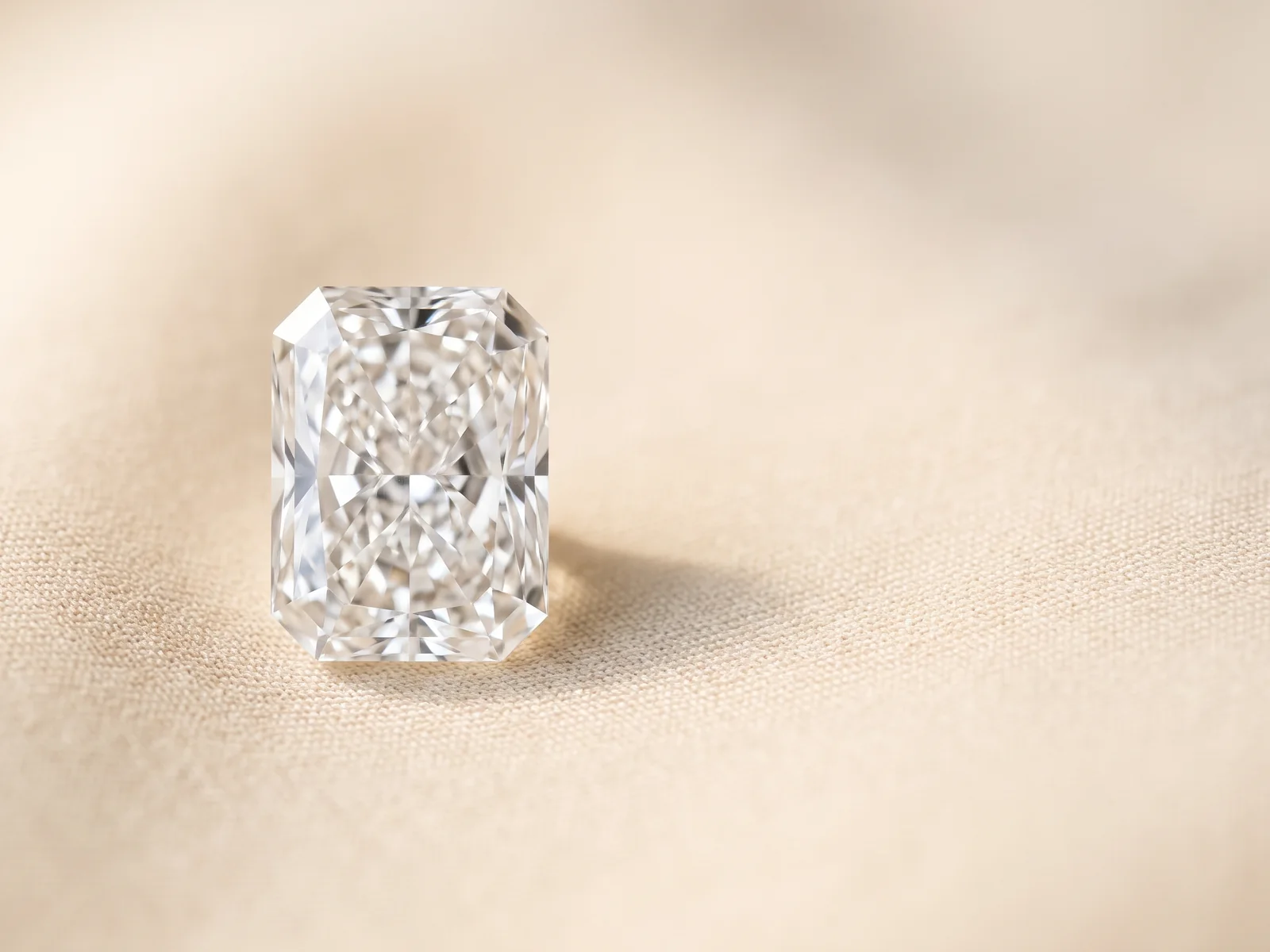
A radiant cut diamond is a square or rectangular stone with clipped corners and brilliant faceting, usually about 70 facets, that blends an emerald cut's outline with a round's sparkle. Look for a ratio of 1.00–1.05 for square or 1.20–1.35 for rectangular, a depth of about 61–67%, even corners and an eye-clean stone.
What is a radiant cut diamond?
A radiant cut diamond is a square or rectangular diamond with clipped corners (small bevels where a sharp corner would be) and brilliant faceting on both the crown (the top) and the pavilion (the underneath). Brilliant faceting means triangular and kite-shaped facets that break light into lots of small flashes, rather than the long parallel steps of an emerald cut. On a grading report it is usually described as a cut-cornered rectangular (or square) modified brilliant.
The shape was introduced by cutter Henry Grossbard in the late 1970s. His idea was simple: take the outline of an emerald cut, which suits modern settings and long fingers, and give it the brightness and fire of a classic round shape. The radiant sits between the princess and the cushion in the square and cushion family, and it is one of the 34 diamond cuts we explain and compare.
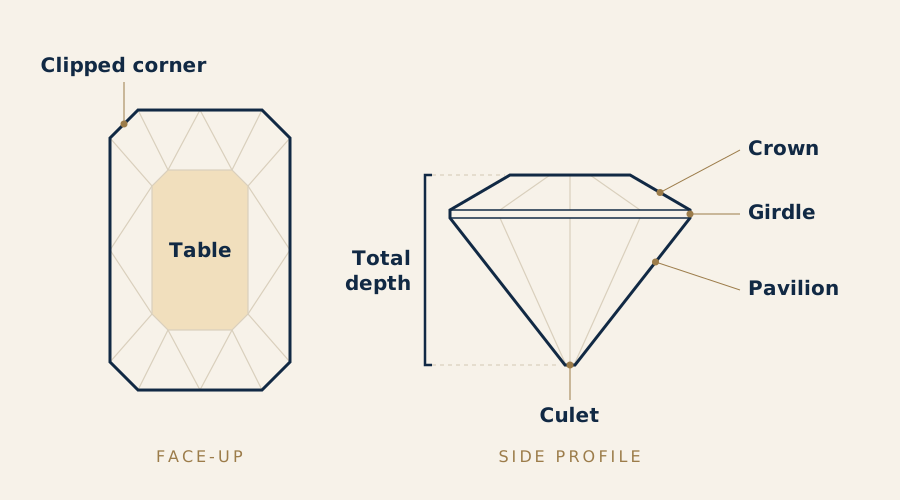
Those clipped corners are more than decoration. A sharp 90° corner, as on a princess, is the thinnest and most exposed part of a stone. Bevelling it off makes a radiant much less prone to chipping, which is a big part of why it suits an everyday ring. Our page on why radiant corners are clipped goes into the geometry and what uneven corners do to the look.
How many facets does a radiant cut diamond have?
Most radiants have about 70 facets, which is why the 70 facet radiant cut diamond is such a common search. Grossbard's original design used 70, but there is no fixed standard. Cutters adjust the pattern to keep as much weight from the rough as possible, so you will see radiants with anywhere from about 62 to 70 facets, and some add a culet (a tiny flat facet at the bottom point). For comparison, a round brilliant has 57 or 58 facets and an emerald cut usually 57.
More facets do not automatically mean more sparkle. What matters is how the radiant diamond facets are arranged on the pavilion, because that decides the kind of light you see coming back.
| Facet look | What you see | Typical in |
|---|---|---|
| Crushed ice | Many fine pinpoints of sparkle, like chipped ice | Deeper and squarer radiants |
| Brilliant (chunky) | Larger, more defined flashes, closer to a round | Shallower radiants with fewer, broader pavilion facets |
| Hybrid | A mix of both, with some visible patterning | Many modern natural and lab-grown radiants |
Neither look is better; it is a matter of taste. Crushed ice is lively and hides small inclusions well, while a brilliant pattern gives bolder, clearer flashes. See crushed-ice vs brilliant patterns in radiants for side-by-side examples, and the crushed-ice cushion for the same effect in a softer outline. Report photos rarely show the difference, so a 360° video is the reliable way to judge.
What is the best ratio for a radiant cut diamond shape?
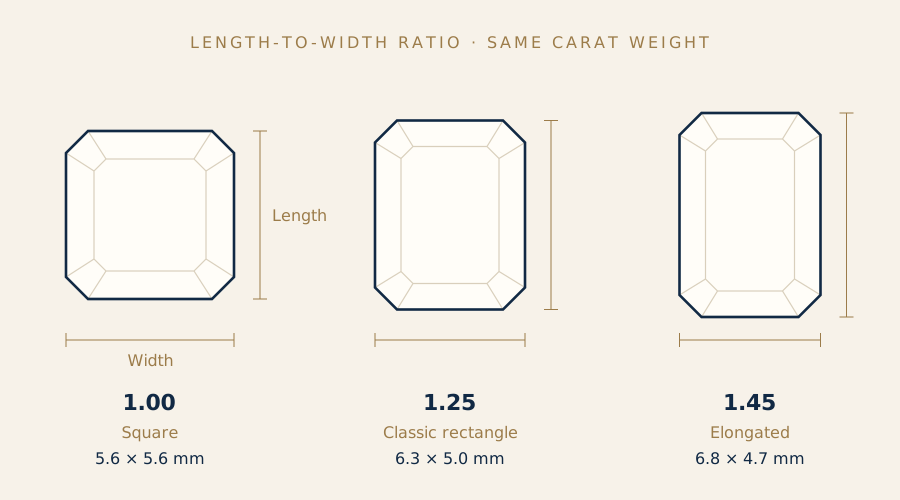
The length-to-width ratio is the length divided by the width, taken from the measurements on the report. A stone measuring 7.00 × 5.60 mm has a ratio of 1.25. Radiants come in a wider range than almost any other shape, from perfectly square to long and slim, so the ratio changes the whole character of the stone.
| Ratio | How it looks | Suits |
|---|---|---|
| 1.00–1.05 | Square; reads like a softened princess | Square solitaires and three-stone rings |
| 1.05–1.15 | Slightly rectangular; can look like an uneven square | Less popular; check it in person |
| 1.20–1.35 | The classic rectangle, the most chosen radiant | Most engagement rings and most hands |
| 1.35–1.50 | Long and slim, close to an emerald outline | Long fingers, east-west and bezel settings |
| Above 1.50 | Very elongated | Personal preference; watch for a bow-tie |
Square stones have their own page, square radiant cut diamonds, and if you are torn between a square radiant and a step-cut square, compare them in Asscher vs square radiant. Longer stones are covered in elongated radiants, and our radiant ratio guide shows real stones at each number.
One caution with longer radiants: like ovals and pears, they can show a mild bow-tie effect, a darker band across the middle where light escapes instead of returning to your eye. In a well-cut radiant it is usually much fainter than in an oval, but look for it on video as the stone turns.
What proportions should a radiant cut diamond have?
GIA does not give radiants an overall cut grade, so you judge them on proportions, polish, symmetry and, above all, how the stone looks. Radiants are naturally deeper than rounds, which helps light travel through all those pavilion facets. Too deep, though, and the stone carries hidden weight underneath and looks small for its carat.
| Measurement | Target range | Why it matters |
|---|---|---|
| Depth % | About 61–67% | Over about 70% often faces up small; under about 58% can look glassy |
| Table % | About 61–69% | Leaves the crown room for brightness and fire |
| Girdle | Thin to slightly thick | Avoids fragile edges and wasted weight |
| Culet | None or very small | A large culet can show as a dark spot in the centre |
| Polish and symmetry | Excellent or Very Good | Keeps facet junctions crisp and corners even |
Our radiant proportions chart breaks these down for square and rectangular stones. Treat the numbers as a starting point, not a pass-or-fail test: two radiants with identical figures can look quite different face-up.
Not sure which one is right?
Send us the stones you are looking at and our gemologist will tell you which to choose and why.
How big does a radiant cut diamond look?
Because radiants are deep, they usually face up smaller than a round or oval of the same carat weight. A 1 carat round is about 6.4 mm across; a 1 carat rectangular radiant is typically about 6.3 × 5.0 mm, and a square one about 5.6 mm each way.
| Carat weight | Square (about 1.00) | Rectangular (about 1.25) |
|---|---|---|
| 0.50 ct | about 4.5 × 4.5 mm | about 5.0 × 4.0 mm |
| 1.00 ct | about 5.6 × 5.6 mm | about 6.3 × 5.0 mm |
| 1.50 ct | about 6.4 × 6.4 mm | about 7.2 × 5.8 mm |
| 2.00 ct | about 7.0 × 7.0 mm | about 7.9 × 6.3 mm |
| 3.00 ct | about 8.0 × 8.0 mm | about 9.0 × 7.2 mm |
These are typical figures for stones near the middle of the depth range. A radiant at 70% depth or more can look a size smaller, so always compare millimetres, not just carats. For a rectangular stone, a ratio of about 1.25–1.35 gives a good balance of length on the finger and a classic rectangular look.
What colour and clarity should a radiant have?
Radiants hold colour more than rounds. Brilliant faceting in a deep, rectangular body concentrates body colour, and any warmth tends to show at the corners. In white gold or platinum, most people are comfortable from G or H colour; if you are sensitive to warmth, choose F or G. In yellow or rose gold, H to J can look white against the metal.
That same habit is why the radiant is a favourite for fancy coloured diamonds. Cutters often choose it for natural yellows and pinks, and for laboratory-grown coloured diamonds, because it deepens the colour that a round would dilute.
Clarity is more forgiving. The busy facet pattern hides small inclusions well, so many VS2 and carefully chosen SI1 radiants are eye-clean (no inclusions visible to the naked eye at a normal viewing distance of about 25–30 cm). Check the corners and the girdle: an inclusion there is easier to spot and, if it reaches the surface, can be a weak point. Diamond is 10 on the Mohs hardness scale, but it can still chip along a flaw if knocked hard.
Radiant vs princess, cushion and emerald: what is the difference?
| Radiant | Princess | Cushion | Emerald | |
|---|---|---|---|---|
| Outline | Square or rectangle, clipped corners | Square, sharp corners | Square or rectangle, rounded corners | Rectangle, clipped corners |
| Faceting | Brilliant | Brilliant | Brilliant, often crushed ice | Step cut (long parallel facets) |
| Typical facets | About 62–70 | About 50–58 | About 58–64 | About 57 |
| Sparkle | High and lively | High and crisp | High, softer | Lower; broad mirror-like flashes |
| Hides inclusions | Well | Well | Well | Poorly; needs higher clarity |
| Corner chip risk | Low | Higher (sharp points) | Low | Low |
| Typical ratio | 1.00–1.50 | 1.00–1.05 | 1.00–1.40 | 1.30–1.50 |
Against the princess cut, the radiant trades sharp corners for durability and often a more rectangular look; our princess vs radiant comparison goes point by point. Against the cushion it is more geometric and modern, which choosing between radiant and cushion explains. The emerald shares the radiant's outline but swaps sparkle for long, clean flashes and shows inclusions more, as covered in emerald vs radiant cut diamonds. For something rarer in the same square family, the Flanders cut is worth a look.
Related guidePrincess vs Radiant Cut DiamondsWhat are the best settings for radiant cut engagement rings?
Because the corners are clipped, a radiant does not need the protective V-claws a princess relies on, which gives you more freedom with radiant cut engagement rings. The usual options:
- Four claws: one at each corner, the classic solitaire. Double claws (two at each corner) add security on stones over about 2 carats.
- Bezel or half-bezel: a thin rim of metal around the edge. Very secure and modern, and it suits elongated radiants well.
- Halo or hidden halo: small diamonds around the stone, or tucked under it, make it look larger and shield the edge.
- Three-stone: a radiant centre with trapezoid, baguette or pear side stones.
- East-west: the stone turned sideways across the finger, a lower-profile modern look.
Our guide to radiant engagement rings shows each style, and wedding bands that sit neatly beside a radiant covers matching bands. A straight band usually sits flush against a claw setting; halos and low bezels may need a curved or notched band.
Is a radiant cut diamond worth it? Natural vs lab-grown
Radiants are cut from both natural and laboratory-grown diamond, and the two look identical to the eye. Both are real diamond, with the same hardness (10) and refractive index (2.42). Lab-grown radiants cost much less and are easy to find at 2 carats and above; natural radiants are rarer, and that rarity is the main reason for the price gap. Both should come with an independent report from a lab such as GIA or IGI, which states clearly whether the stone is natural or laboratory-grown.
Among natural diamonds, a radiant usually costs noticeably less per carat than a round of the same colour and clarity, partly because the shape keeps more of the rough crystal. If you like the look, that makes it a sensible choice in either type.
| Stone | Approximate AUD range |
|---|---|
| 1.00 ct natural radiant, G–H, VS2–SI1 | about $6,000–$11,000 |
| 1.00 ct lab-grown radiant, F–G, VS | about $800–$2,000 |
| 2.00 ct natural radiant, G–H, VS2–SI1 | about $20,000–$40,000 |
| 2.00 ct lab-grown radiant, F–G, VS | about $1,800–$4,500 |
Shop radiant cut diamonds
Prices move with carat, colour, clarity and how well the stone is cut, and lab-grown prices in particular have changed quickly in recent years. Treat these ranges as a rough guide and compare real stones with their measurements and video.
How to choose a radiant cut diamond: step by step
- Decide square or rectangle. Pick a ratio range first: 1.00–1.05 for square, about 1.20–1.35 for a classic rectangle.
- Read the report. Confirm the shape description, measurements, depth, table, colour, clarity, polish and symmetry, and whether the stone is natural or lab-grown.
- Check the depth. Aim for about 61–67%; above 70%, compare millimetres carefully because the stone may face up small.
- Look at the corners. All four should match in length and angle.
- Watch a 360° video. Judge crushed ice vs brilliant sparkle, look for a bow-tie in longer stones and check for inclusions near the corners.
- Plan the setting. Choose claws, bezel or halo, and check the wedding band will sit well. If a term on the report is new to you, our jewellery glossary explains it.
Free consultation
Talk to a gemologist
Compare stones in person or online with Raj Sood, Graduate Gemologist (GIA), AJP (GIA).
Book a consultationFAQ
Common questions
How many facets does a radiant cut diamond have?
Usually about 70, following Henry Grossbard's original design. Cutters vary the pattern, so you will see radiants from about 62 to 70 facets.
Is a radiant cut more expensive than a round diamond?
Usually not. A natural radiant typically costs less per carat than a round of the same weight, colour and clarity, partly because cutting it keeps more of the rough crystal.
What is the difference between a radiant and a princess cut?
Both are brilliant-faceted, but a princess has sharp 90° corners while a radiant has clipped corners. The radiant is less prone to chipping and comes in more rectangular ratios.
Do radiant cut diamonds look smaller than other shapes?
They can. Radiants are cut deeper than rounds, so a 1 carat radiant often faces up smaller than a 1 carat round or oval. Compare millimetre measurements, not just carat weight.
Are radiant cut engagement rings good for everyday wear?
Yes. The clipped corners remove the most fragile point, and a four-claw, bezel or halo setting keeps the edges well protected for daily wear.
Can you get a lab-grown radiant cut diamond?
Yes. Lab-grown radiants are widely available, cost much less than natural ones and are graded on the same colour and clarity scales by labs such as IGI; GIA now describes lab-grown stones with simpler quality terms instead.

Ask a gemologist
Not sure which diamond to choose?
Raj Sood is a Graduate Gemologist (GIA) and master jeweller. Bring the stones you are considering, or send the reports, and he will tell you honestly which one is better and why.
Keep learning
Related guides
 Engagement Rings & SettingsRadiant Cut Engagement RingsDiamond ShapesRadiant Diamond Length-to-Width Ratio GuideDiamond Anatomy & LightIdeal Proportions Chart: Radiant Diamonds
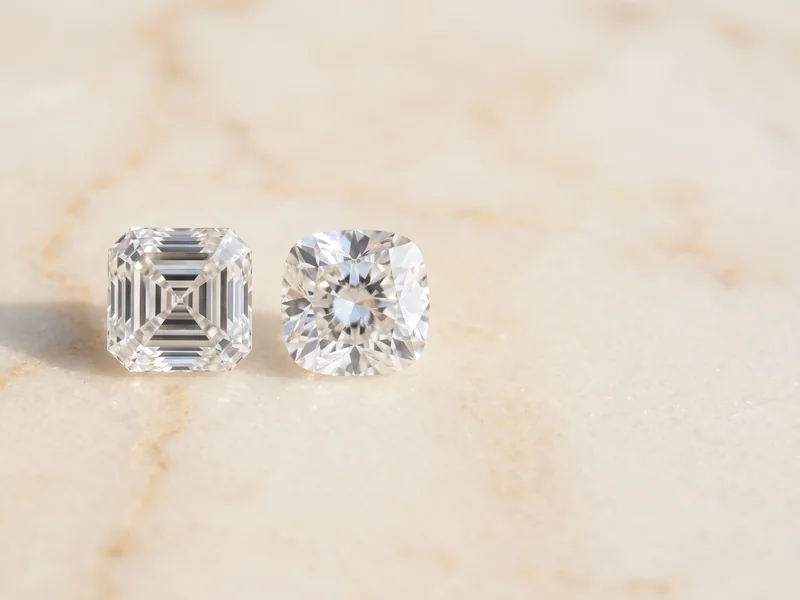 Diamond ShapesRadiant vs Cushion Cut DiamondsDiamond ShapesUnderstanding Diamond Shapes
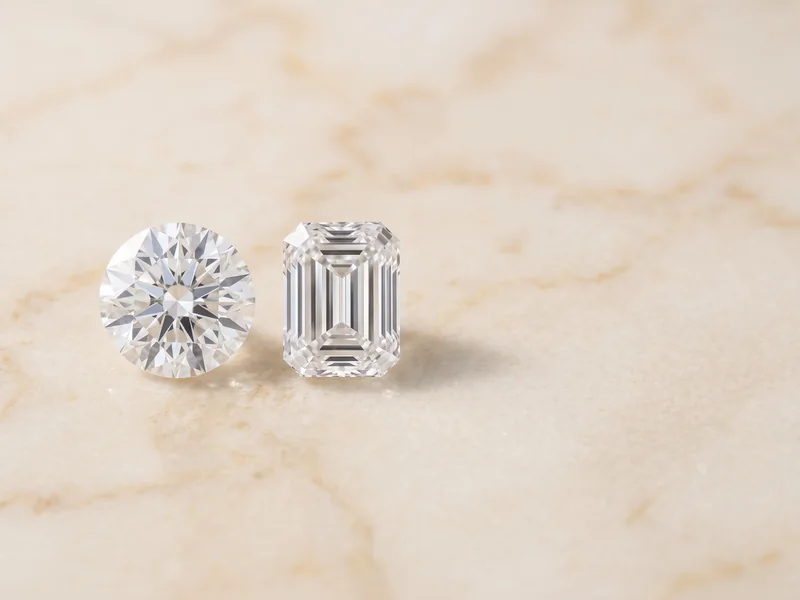 Diamond ShapesAll 34 Diamond Cuts: Every Shape Explained and Compared
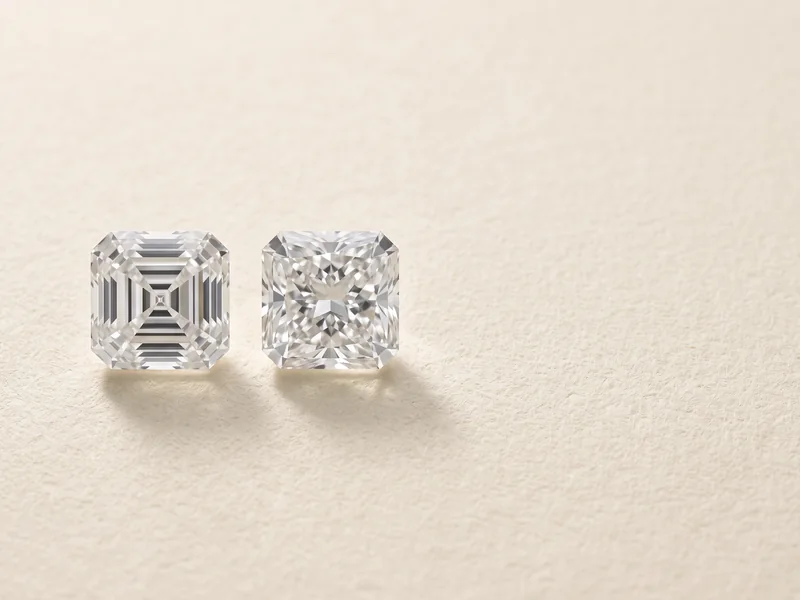 Diamond ShapesSquare and Cushion Cuts: Princess, Radiant, Cushion and Flanders
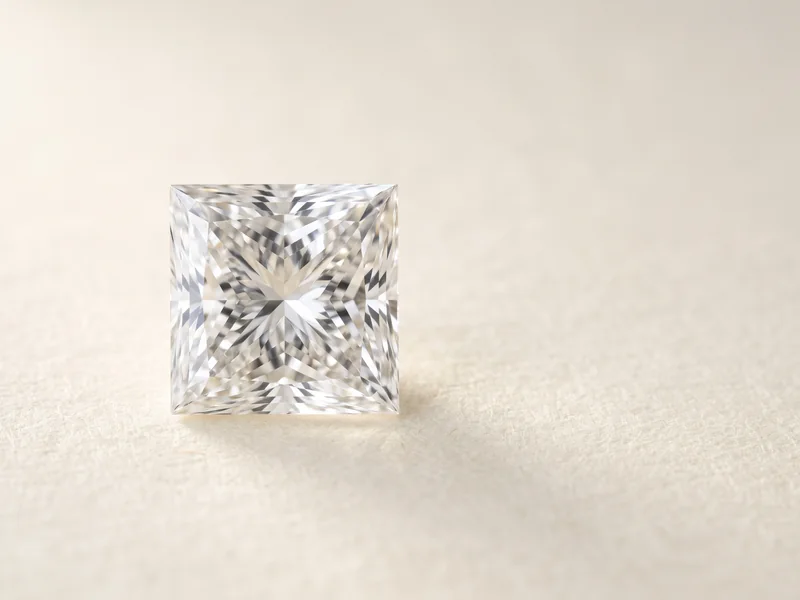 Diamond ShapesPrincess Cut Diamonds
Explore more
More guides on this topic
Education