
- Education
- Diamond Shapes
- Princess Cut Diamond Chevron Pattern Guide: 2, 3 or 4 Chevrons?
Diamond shapes
Princess Cut Diamond Chevron Pattern Guide: 2, 3 or 4 Chevrons?
The princess cut diamond chevron pattern decides what kind of sparkle a square diamond gives you, yet grading reports never mention it. Here is how to read it, count it and match it to your size and setting.
 Reviewed by Raj Sood, Graduate Gemologist (GIA), AJP (GIA)Master jeweller and Graduate Gemologist (GIA) · reviewed 4 November 2026
Quick answer
A princess cut diamond chevron pattern is the set of V-shaped pavilion facets you see through the table, usually two, three or four per quadrant. Fewer chevrons give larger, bolder flashes; more give finer, busier sparkle. Many people prefer two or three under about 1 carat and three or four above, but proportions and symmetry matter more.
What is a princess cut diamond chevron pattern?
A princess cut is a square (sometimes slightly rectangular) modified brilliant. That means it has the sharp corners and straight sides of a square, but its facets are angled to throw back light the way a round brilliant does, rather than in the flat, mirror-like steps of an emerald or Asscher cut. If you are new to the shape itself, start with our complete princess cut diamond guide.
The chevron pattern is the arrangement of facets on the pavilion, the lower, pointed half of the diamond beneath the girdle (the thin outer edge). On each of the four pavilion sides, the cutter places a stack of V-shaped facets nested one inside the other, pointing down towards the culet (the very bottom point). Because they look like the stripes on a military sleeve, the trade calls them chevrons. Most princess cuts have two, three or four chevrons per side, and the count is fixed when the stone is cut: it cannot be changed later without recutting.
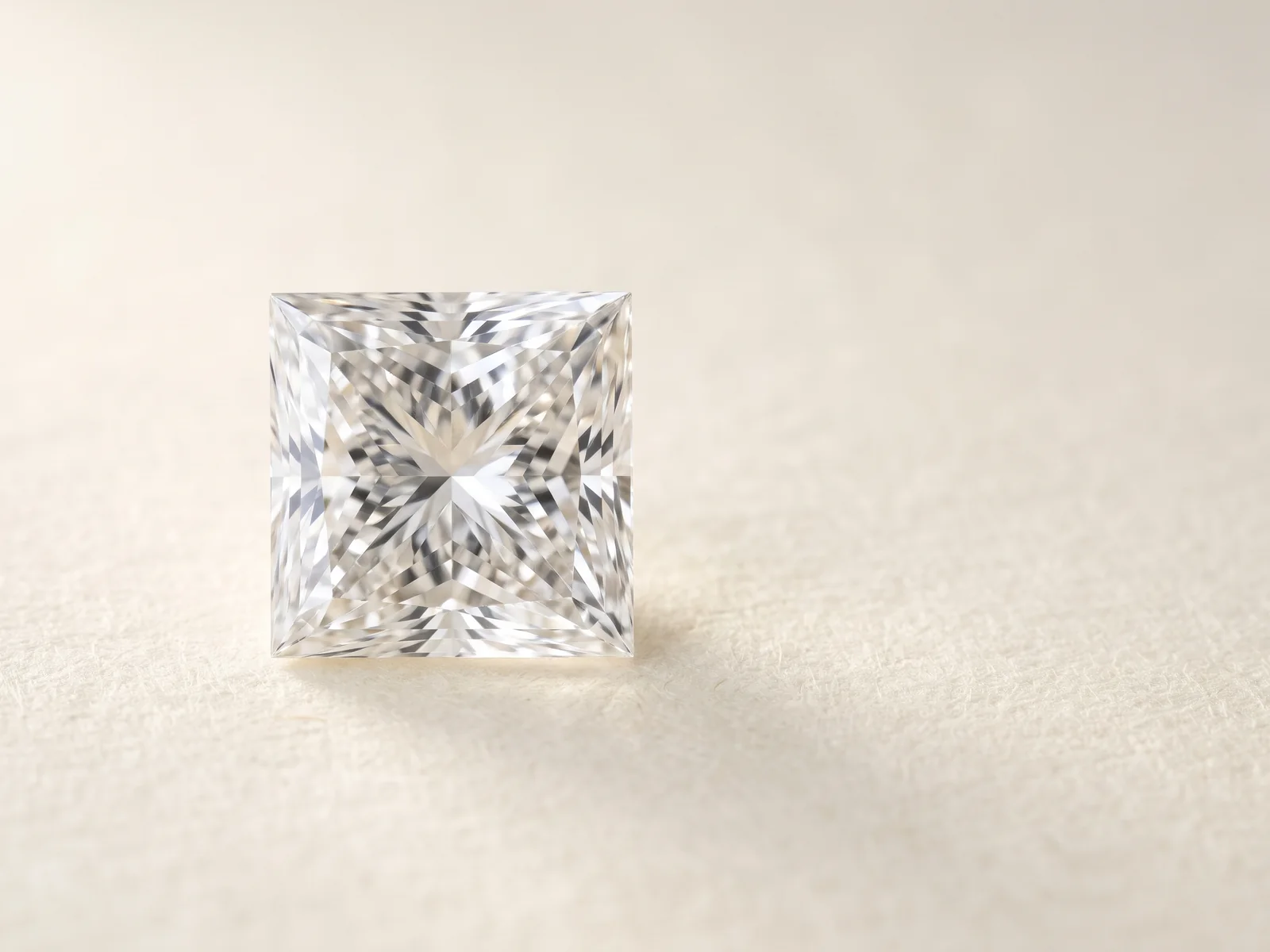
You never see the pavilion directly once the stone is set. What you see is the chevrons reflected up through the table (the large flat facet on top) and the crown. Those reflections multiply, so a stone with three chevrons per side shows a lattice of nested squares, crosses and V-shapes far busier than the facet diagram suggests. That reflected pattern is what people mean when they say one princess "sparkles in big flashes" and another "glitters like crushed ice".
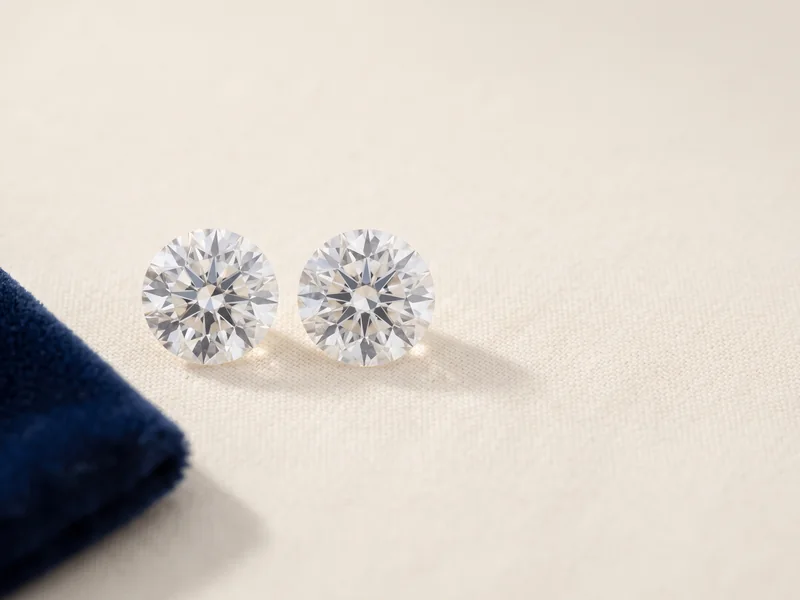
Brilliant faceting on a flat-bottomed cut works differently again; our page on how rose cuts differ from brilliant cuts shows why a rose cut, which has no pavilion at all, has no chevrons. For a refresher on how the princess fits among the other square and fancy shapes, see how the main diamond shapes differ, or browse all 34 diamond cuts we explain. Any unfamiliar term here is also defined in the GemTrove jewellery glossary.
Where do the chevrons sit on a princess cut?
Picture the princess upside down. Four long pavilion main facets run from the culet up to each of the four corners, forming an X. Between each pair of corner mains sits one side of the pavilion, and that is where the chevrons live. The outermost chevron runs closest to the girdle; each one inside it is smaller and sits closer to the culet.
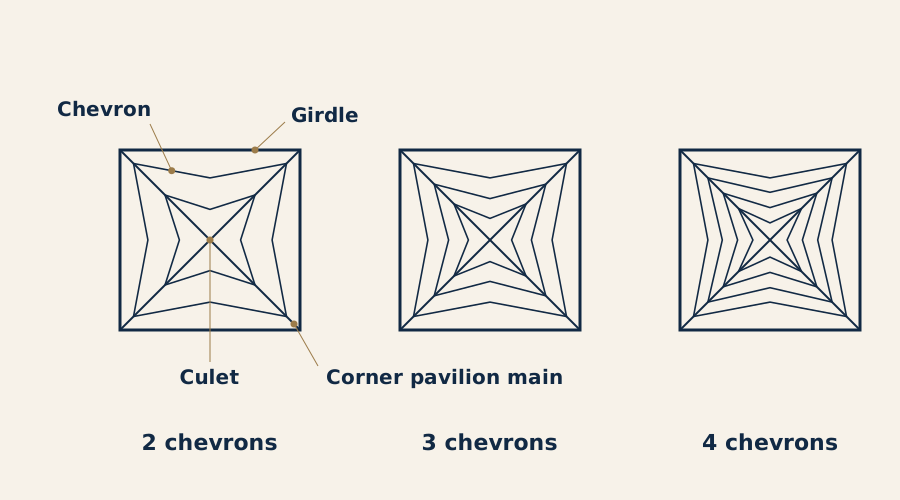
Diamond has a refractive index of about 2.42 and is 10 on the Mohs hardness scale. The high refractive index is what bends light so strongly inside the stone that it bounces between the pavilion facets and back out through the top. Each chevron is a small mirror. Fewer mirrors means each one is larger and returns a bigger, brighter flash. More mirrors means each one is smaller, so you get more, finer points of light, known as scintillation (the on-off sparkle you see as the stone or your eye moves).
The crown (top half) of most princess cuts carries bezel and star-style facets similar to a round brilliant, plus extra facets along the edges. Some cutters add a few more crown facets to match a four-chevron pavilion, which is why facet counts range from around 50 to 58 rather than sitting at a single number.
The chevrons stop short of the four corners, which are the thinnest, most exposed points of the stone. Diamond is hard but can still chip along its cleavage planes if a thin edge takes a knock, so the way those corners are finished and set matters as much as the facet pattern. Our guide to protecting a princess cut's four sharp corners covers that side of things.
What is the difference between 2, 3 and 4 chevron princess cuts?
This is the question most people arrive with. There is no right count, only a different character of sparkle. Here is how they compare when the proportions are good.
| Chevrons per side | Face-up look | Sparkle character | Often suits |
|---|---|---|---|
| 1 (rare) | Large, plain reflections; can look glassy | Few, very broad flashes | Small accent stones only |
| 2 | Bold cross and a few large squares | Big, distinct flashes; crisp contrast | Under about 1 ct; people who like a clean, graphic look |
| 3 | Balanced lattice of nested squares | Mix of bold flashes and fine sparkle | Most sizes; the most common count |
| 4 | Busy, finely broken pattern | Many small pinpoint flashes, close to a crushed-ice look | About 1.5 ct and above; people who want maximum glitter |
A two-chevron princess shows a strong, readable pattern. In a small stone, say 0.30 to 0.70 carat, each facet is still large enough to flash brightly, and the pattern looks tidy rather than empty. Push the same layout up to 2 carats and each facet becomes a broad flat plane; some people love the bold look, others find it a little glassy.
A three-chevron princess is the middle ground and the layout you will see most often. It breaks the light into enough pieces to stay lively in a 1.5 carat stone without turning a half-carat into a blur.
A four-chevron princess splits each side into many small facets. In a larger stone this fills the face with fine sparkle, close to the look of a radiant cut; why radiants show a crushed-ice look explains that comparison. In a small stone the facets can be so tiny that, from normal viewing distance, the pattern reads as a soft shimmer rather than distinct flashes. If you love very finely broken sparkle, the heavily faceted Portuguese cut takes the same idea much further on a round outline.
Which princess cut diamond chevron pattern suits your carat size?
A princess carries a lot of its weight in a deep pavilion, so it faces up smaller than its carat weight suggests. That depth is also why the chevron count matters: the pavilion is a big canvas, and how it is divided shows clearly through the table.
| Carat weight | Typical side length | Diagonal (corner to corner) | Chevron count many people prefer |
|---|---|---|---|
| 0.50 ct | about 4.4 mm | about 6.2 mm | 2 or 3 |
| 0.75 ct | about 5.0 mm | about 7.1 mm | 2 or 3 |
| 1.00 ct | about 5.5 mm | about 7.8 mm | 3 |
| 1.50 ct | about 6.3 mm | about 8.9 mm | 3 or 4 |
| 2.00 ct | about 7.0 mm | about 9.9 mm | 3 or 4 |
These sizes are typical for a square princess of good depth; a stone cut deeper looks smaller face-up for its weight. The diagonal is worth noticing. A 1 carat princess is about 5.5 mm across its sides, smaller than a 1 carat round at about 6.4 mm, but about 7.8 mm corner to corner, which is why a princess can look generous on the hand even though its side length is modest. Our comparison of which shapes face up largest for their weight puts the princess beside the other cuts. For colour, clarity and size in more detail, see princess sizes, colour and clarity in more depth.
Treat the chevron column as a starting point, not a rule. Two people looking at the same pair of stones will often split on which they prefer, and that is exactly why seeing the stone move matters more than any chart.
Not sure which one is right?
Send us the stones you are looking at and our gemologist will tell you which to choose and why.
How can you count the chevrons on a princess cut?
Grading reports from GIA and IGI describe the shape, measurements, colour, clarity, polish and symmetry, but they do not state the chevron count. The facet diagram printed on a report is a standard outline, not a map of that particular stone's pavilion, so do not count from it. You need the stone, a clear photo or a 360° video.
- Face-up in a video: pause when the stone is square-on. Pick one side and look from the edge towards the centre. Each V-shaped line pointing towards the centre is one chevron reflection.
- Face-down photo: if one is available, the chevrons are drawn plainly on the pavilion. Count the nested V shapes on one side, between two corner facets.
- Check all four sides: the count should match on every side. A mismatch is a sign of a hurried cut.
- Watch for doubling: reflections can make three chevrons look like six. If the count seems very high, count only the sharpest, longest lines.
If pavilion, culet or girdle are still unclear, our definitions of pavilion, culet and girdle have simple illustrations. And if you have also been comparing step cuts, it helps to know their pattern works completely differently: step-cut windmill reflections come from rows of long parallel facets rather than chevrons.
Do princess cut diamond proportions matter more than the chevron count?
Yes. The chevron count decides the style of sparkle. The proportions decide whether there is much sparkle at all. A three-chevron princess with a pavilion that is too shallow will leak light out of the bottom and look grey or see-through in the centre, a fault called a window. One that is too deep sends light out of the sides and leaves a dark centre, and it hides carat weight underneath where you cannot see it.
| Measurement | Range many cutters aim for | What goes wrong outside it |
|---|---|---|
| Total depth | about 65–75% | Too shallow: window. Too deep: dark centre, smaller face-up size |
| Table | about 67–75% of width | Too large: less fire. Too small: stone looks closed |
| Length-to-width ratio | 1.00–1.05 | Above about 1.05 the square starts to look rectangular |
| Girdle | thin to slightly thick | Extremely thin corners are prone to chipping |
| Culet | none or pointed | A large culet shows as a dot in the centre |
GIA does not give an overall cut grade to princess cuts, so you judge the cut from these numbers, the polish and symmetry grades, and above all how the stone looks moving. Symmetry is especially important for chevrons: if the culet sits off-centre, the chevrons on one side are wider than the other, and the lattice looks lopsided. Choose Excellent or Very Good symmetry where you can, then confirm it by eye.
Because the princess is one of several square and rectangular shapes, it helps to compare them on the same terms. Our overview of every square and rectangular shape we cover lines them up.
Related guidePrincess vs Radiant Cut DiamondsHow does the princess chevron pattern compare with radiant, Asscher and other cuts?
Each faceting style produces its own face-up pattern. Knowing them helps you recognise what you are looking at in a video, and decide whether a princess pattern is really what you want.
| Princess | Radiant | Asscher | Round brilliant | |
|---|---|---|---|---|
| Faceting style | Modified brilliant | Modified brilliant | Step cut | Brilliant |
| Pavilion pattern | Chevrons on each side | Many small brilliant facets | Concentric steps | Mains and halves meeting at culet |
| Face-up look | Cross with nested squares | Broken, crushed-ice sparkle | Windmill and hall-of-mirrors | Arrows and fine sparkle |
| Corners | Sharp, pointed | Cut (trimmed) | Cut (trimmed) | None |
| Typical ratio | 1.00–1.05 | 1.00–1.05 square, up to about 1.35 rectangular | 1.00–1.05 | 1.00 |
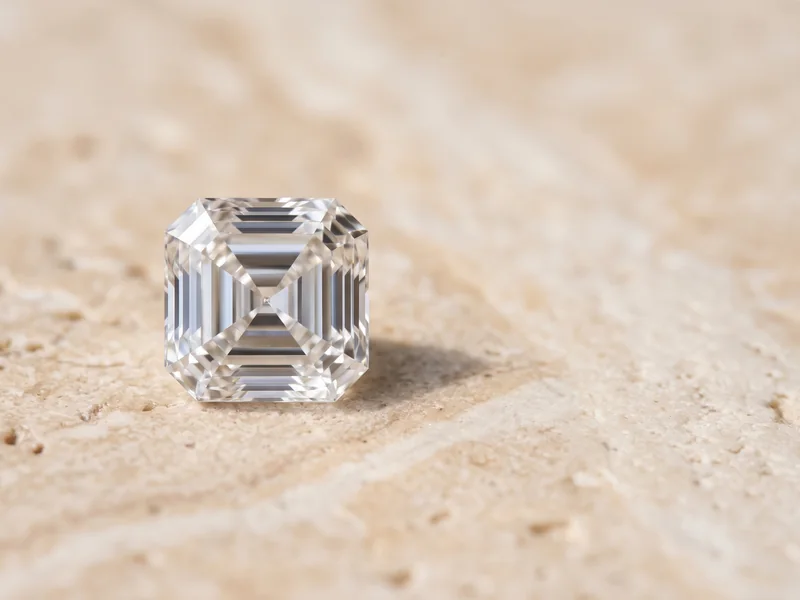
The closest relative is the radiant, which keeps a square or rectangular outline but trims the corners and uses many more pavilion facets; see our princess versus radiant comparison. The Asscher is square too, but step cut, so instead of chevrons you see the concentric squares described in the Asscher windmill pattern. Our page putting princess and Asscher side by side covers sparkle, size and price.
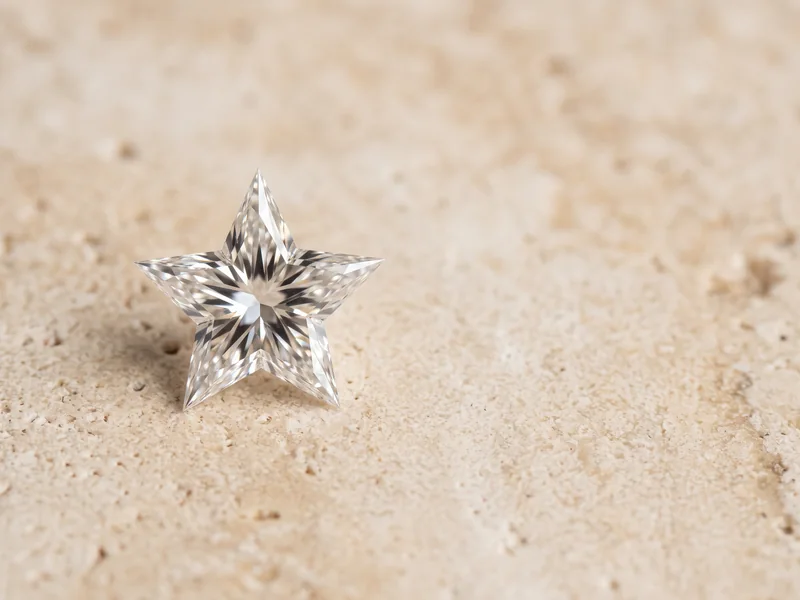
The round brilliant's arrows pattern has its own history, told in how the modern round grew from the Old European cut. If you are drawn to unusual faceting in general, star cut diamonds with extra-faceted crowns show how changing the facet layout changes the look of a stone without changing its outline.
Does the setting change how princess cut chevrons look?
Somewhat. The chevrons are on the pavilion, so anything that changes how much light reaches the pavilion changes the pattern you see. A few practical points:
- Four claws at the corners: the classic princess setting. Use V-claws (V-shaped claws that wrap each corner) so the corners are protected; four round claws placed on the sides leave the points exposed.
- Bezel or half-bezel: a rim of metal around the edge. Very secure, though a full bezel blocks some side light and can make a two-chevron stone look less lively.
- Open gallery: a setting with open space under the stone lets more light in through the pavilion, which suits finely faceted four-chevron stones.
- Halo: small diamonds around the princess add their own sparkle, which pairs well with a bold two-chevron pattern.
- Metal colour: white metals keep the pattern looking crisp; yellow and rose gold reflect warmth into the facets, softening contrast slightly.
For claw shapes, bezel options and everyday-wear advice, read about V-claws and corner-guarding settings.
Do natural and lab-grown princess cut diamonds have different chevron patterns?
No. The chevron pattern is a cutting decision, not a property of the diamond. A lab-grown (laboratory-grown) diamond is real diamond, with the same hardness and refractive index as a natural diamond, and it can be cut with two, three or four chevrons exactly like a mined stone. The two look identical to the eye; only a gemmological laboratory can tell them apart, and the grading report will say which it is.
What can differ is supply. Natural princess cuts are popular with cutters partly because the square outline keeps more of an octahedral rough crystal than a round does. Lab-grown princesses are often cut in larger batches to standard layouts, so you may see more consistency in chevron count, and sometimes less choice. Either way, count the chevrons yourself rather than assuming.
| 1 ct princess, G–H, VS | Approximate price range (AUD) |
|---|---|
| Lab-grown | about $700–$2,000 |
| Natural | about $4,000–$9,000 |
These are broad ranges only and move with the market and the exact grades. A princess usually costs less per carat than a round of the same weight, colour and clarity; our page on how price per carat varies by shape sets out the pattern. The chevron count on its own does not usually change the price; proportions, colour, clarity and carat do.
Browse princess cut diamonds: natural and lab-grown
How do you choose a princess cut chevron pattern? Step by step
- Read the report. Confirm the shape, measurements, colour, clarity, polish, symmetry and whether the diamond is natural or lab-grown.
- Check the ratio and proportions. Aim for a ratio of 1.00–1.05, depth about 65–75% and table about 67–75%.
- Count the chevrons. Use a face-up 360° video or a face-down photo and count the V-shapes on one side, then check the other three match.
- Match the count to the size. As a starting point, two or three chevrons under about 1 carat, three or four above about 1.5 carats.
- Watch it move. Look for an even lattice, no grey window in the centre and no dark patch that stays put.
- Plan the setting. Choose V-claws, a bezel or a halo that protects all four corners, and an open gallery if you want the most light through the pavilion.
Free consultation
Talk to a gemologist
Compare stones in person or online with Raj Sood, Graduate Gemologist (GIA), AJP (GIA).
Book a consultationFAQ
Common questions
How many chevrons should a princess cut diamond have?
Most have two, three or four per side, and three is the most common. Many people prefer two or three in stones under about 1 carat and three or four in larger stones, but personal taste decides it.
Is a 4 chevron princess cut better than a 3 chevron?
Not better, just different. A four-chevron stone gives finer, busier sparkle, while a three-chevron stone balances bold flashes with fine sparkle; good proportions matter more than either count.
Does the grading report show the chevron count?
No. GIA and IGI reports do not state it, and the printed facet diagram is a standard outline, so count the chevrons from a 360° video, a face-down photo or the stone itself.
Can lab-grown princess cut diamonds have different chevron patterns?
Yes. Lab-grown princess cuts can be faceted with two, three or four chevrons just like natural stones, because the pattern is set by the cutter, not by how the diamond formed.
Why does my princess cut look dark in the middle?
Usually because the pavilion is cut too deep, so light escapes out the sides instead of returning through the top. A pavilion that is too shallow causes the opposite problem, a grey, see-through window.
Does the chevron count change the price of a princess cut?
Not much on its own. Price is driven mainly by carat, colour, clarity and how well the stone is proportioned.
Terms in this guide

Ask a gemologist
Not sure which diamond to choose?
Raj Sood is a Graduate Gemologist (GIA) and master jeweller. Bring the stones you are considering, or send the reports, and he will tell you honestly which one is better and why.
Keep learning
Related guides
 Diamond ShapesPrincess Cut DiamondsDiamond ShapesPrincess-Cut Diamond Corner Protection
 Diamond ShapesPrincess vs Radiant Cut Diamonds
 Diamond ShapesAsscher-Cut Diamond Windmill PatternDiamond ShapesUnderstanding Diamond ShapesDiamond ShapesPrincess vs Asscher Cut Diamonds
 Diamond ShapesRose Cut vs Brilliant Cut Diamonds
 Diamond ShapesStar Cut Diamonds
Explore more
More guides on this topic
Education