
- Education
- Diamond Shapes
- Kite Cut Diamond Guide: Facets, Ratio, Settings and Price
Diamond shapes
Kite Cut Diamond Guide: Facets, Ratio, Settings and Price
A kite cut diamond is one of the rarest shapes you will find, and its four sharp corners make it striking but demanding to set. Here is how to judge one, from the facet pattern and ratio to the setting and band that keep it safe.
 Reviewed by Raj Sood, Graduate Gemologist (GIA), AJP (GIA)Master jeweller and Graduate Gemologist (GIA) · reviewed 4 November 2026
Quick answer
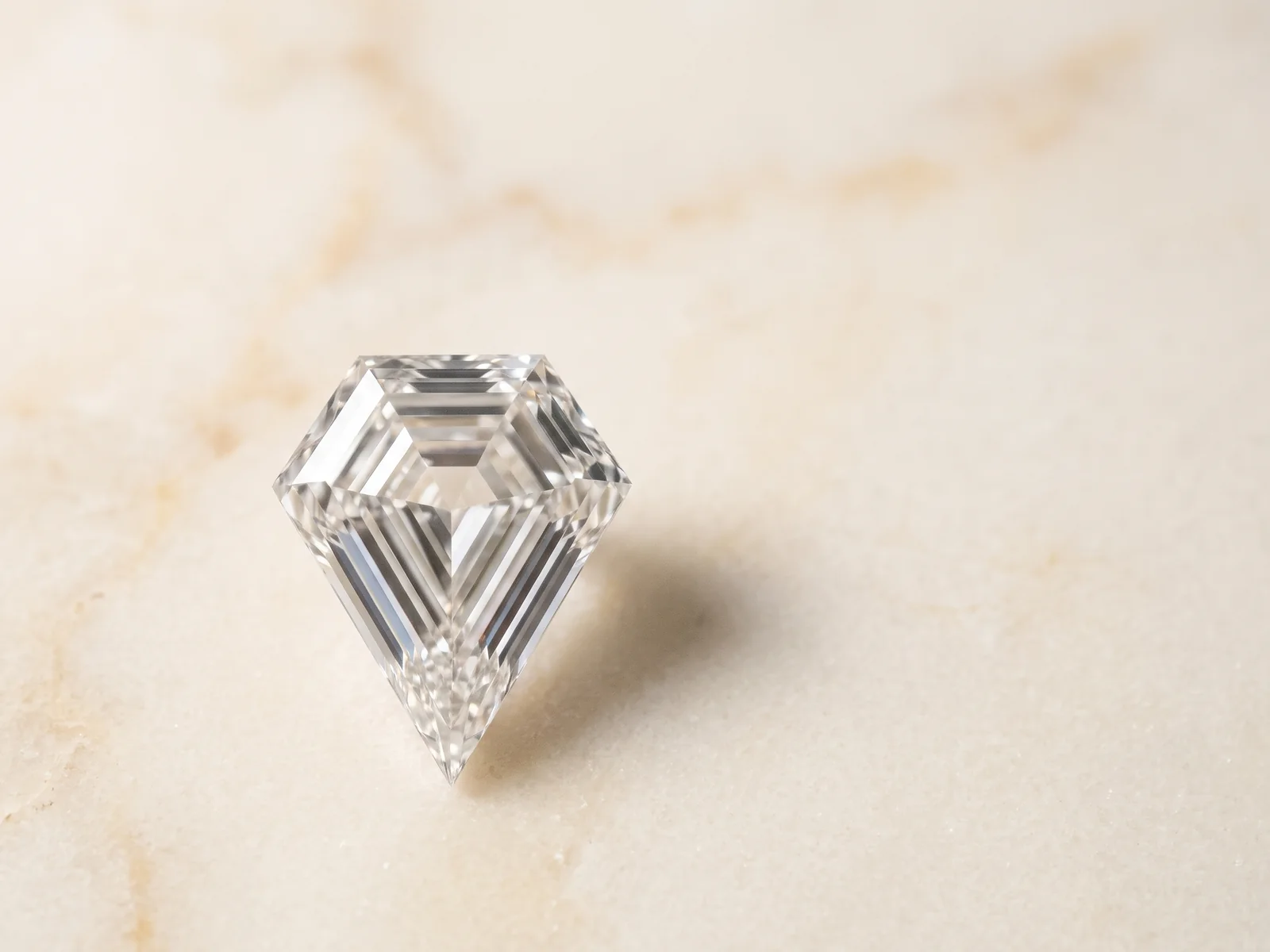
A kite cut diamond is a four-sided fancy shape with one short and one long point, like a flying kite. Most are step cut, so they show clarity and colour clearly. Look for even sides, sharp corners protected by claws or a bezel, eye-clean VS2 or better clarity, and a ratio of about 1.20–1.60.
What is a kite cut diamond?
A kite cut diamond is a four-sided fancy shape named after the toy it looks like. A short, wide upper section meets a longer, tapering lower section, and the widest part of the stone sits above the middle rather than across it. In geometry this outline is a kite: a quadrilateral (four-sided shape) with two pairs of equal sides that sit next to each other. It belongs to the geometric family of shield, kite and hexagon cuts, and it is one of the less common entries in our comparison of all 34 diamond cuts.
Every kite has the same parts. The top point is the short end. The two side corners (sometimes called shoulders) mark the widest line across the stone. The two short edges run from the top point to the side corners, and the two long edges run from the side corners down to the lower point, the long sharp tip. How evenly these parts are balanced decides whether the stone reads as a crisp kite or as a lopsided wedge.
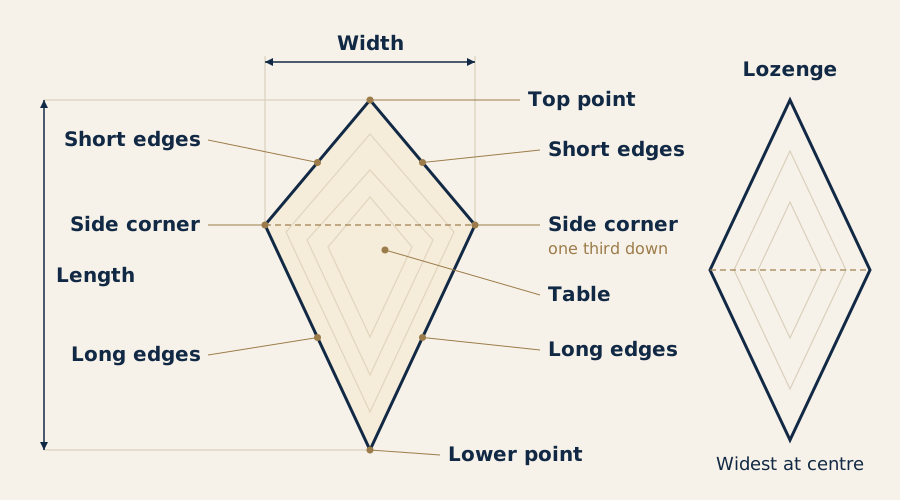
The kite is easy to confuse with its close relative, the lozenge cut, the kite's evenly sided cousin. A lozenge is a rhombus: all four sides are the same length and the widest point is exactly in the middle. Move that widest line upwards and the shape becomes a kite.
Diamond is 10 on the Mohs hardness scale and has a refractive index of about 2.42, so it resists scratching and bends light strongly. Hardness is not the same as toughness, though. Diamond can chip along its cleavage planes (natural planes of weakness in the crystal) if a thin corner takes a knock, and a kite has four corners, two of them quite sharp. Much of the advice below comes back to protecting those points. Any term you have not met yet is explained in our plain-English jewellery glossary.
How is a kite cut diamond faceted?
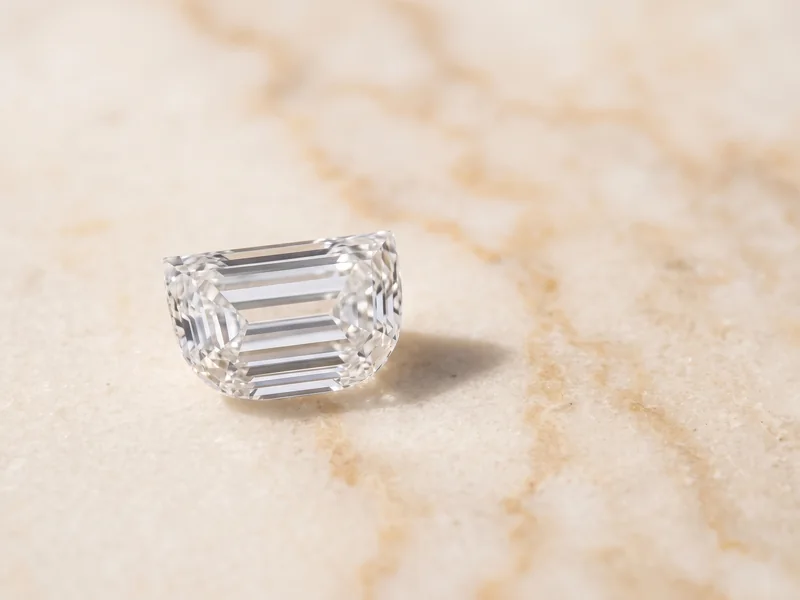
Most kites are step cut. Step cutting uses long, flat facets that run parallel to the edges of the stone, stepping down from the table (the large flat top facet) like terraces. It is the same approach used for the classic baguette and the emerald cut. A step-cut kite gives broad, calm flashes of light, often described as a hall-of-mirrors look, rather than the busy sparkle of a round.
You will also find brilliant-cut kites, faceted with triangles and small kite-shaped facets in a modified brilliant pattern. These sparkle more and hide small inclusions better, but they lose the clean architectural lines many people want from a kite. A smaller number are rose cut or antique-style, with a flat base and a domed, faceted top; our page on how rose and brilliant faceting differ explains the trade-off between glow and sparkle.
| Facet style | How it looks | Hides inclusions? | Shows body colour? | Typical use |
|---|---|---|---|---|
| Step cut | Clean lines, broad flashes, glassy | Poorly | More | Side stones, Art Deco-style and modern centre stones |
| Modified brilliant | Lively sparkle, busier pattern | Well | Less | Centre stones where sparkle matters most |
| Rose or antique-style | Soft glow, flat base | Moderately | Moderate | Vintage-inspired and handmade pieces |
A well-cut step-cut kite should show:
- Straight, even steps that follow each edge without wobbling or narrowing on one side.
- A centred table that mirrors the outline, not pushed towards one corner.
- Crisp corners with the facet junctions meeting cleanly at each point.
- Brightness across the whole stone, without a dull, glassy window in the centre (a window is where light passes straight through because the stone is cut too shallow).
What is the ideal ratio for a kite cut diamond?
The length-to-width ratio compares the distance from the top point to the lower point with the distance across the side corners. Divide length by width from the measurements on the grading report. Because kites are cut by relatively few workshops, there is no industry standard, but most stones fall somewhere between about 1.20 and 1.60.
| Ratio | How it looks | Suits |
|---|---|---|
| Below 1.20 | Short and squat, close to a lozenge or rotated square | Clusters and accent stones |
| 1.20–1.40 | Compact and balanced | Side stones and east-west centre stones |
| 1.40–1.60 | Elongated, the classic kite look | Centre stones set point-down and pendants |
| Above 1.60 | Slim and dagger-like | A bold personal choice; the lower point is more exposed |
Ratio is only half the story. The other half is where the side corners sit. If they sit very high, the upper section becomes tiny and the stone starts to look like a triangle; if they sit near the middle, it drifts towards a lozenge. Most kites look balanced with the side corners roughly a third of the way down from the top point. Measure it on a photo if you can, or ask for the stone to be viewed face-up beside a ruler.
GIA does not give kites an overall cut grade the way it does for rounds, so labels you may see online, explained in our page on what ideal and excellent cut grades really mean, do not apply here. Judge the cut by eye and from the polish and symmetry grades. As a rough guide, many step-cut fancy shapes sit at about 60–75% total depth; much shallower and the stone can look watery, much deeper and it carries weight underneath without looking bigger.
What colour and clarity should a kite shaped diamond be?
Step cuts are honest. Their wide, open facets show inclusions (internal features) and body colour more clearly than a brilliant cut, which breaks light into many small flashes that disguise both. That changes the grades worth paying for.
For clarity, aim for VS2 or better in a step-cut kite, and consider VS1 in a centre stone over about 0.75 carat, where the large table makes inclusions easier to see. Pay close attention to the two sharp points. An inclusion near a point is easy to see and, if it is a feather (a small internal crack) that reaches the surface, it can weaken the most exposed part of the stone. The plotting diagram on the report shows where each inclusion sits.
For colour, warmth tends to gather at the points, where the facets are crowded together. In white gold or platinum most people are happy from G or H. In yellow or rose gold, I or J can look white, because the warm metal reflects into the stone.
- Step-cut centre in white metal: G–H colour, VS2–VS1 clarity.
- Step-cut centre in yellow or rose gold: I–J colour, VS2–VS1 clarity.
- Brilliant-cut kite: a carefully chosen eye-clean SI1 can work.
- Kite diamond side stones: match them to the centre stone, usually within one colour grade, and keep them eye-clean.
Not sure which one is right?
Send us the stones you are looking at and our gemologist will tell you which to choose and why.
What sizes do kite diamonds come in?
Kites are cut in two broad size bands. Small kites, from about 0.05 to 0.30 carat each, are mostly used as accents and side stones, often in matched pairs. Larger kites, from about 0.50 carat up, are used as centre stones. Natural kites above one carat are genuinely scarce; lab-grown kites are easier to find in larger sizes because the rough can be grown to suit.
| Carat weight | Approximate size (length × width) | Common use |
|---|---|---|
| 0.10 ct | about 4.0 × 3.0 mm | Side stones, clusters |
| 0.25 ct | about 5.5 × 4.0 mm | Side stones, earrings |
| 0.50 ct | about 7.0 × 5.0 mm | Small centre stones, pendants |
| 1.00 ct | about 9.0 × 6.5 mm | Centre stones |
| 2.00 ct | about 11.0 × 8.0 mm | Statement centre stones |
These figures assume a step-cut kite at about 1.40 ratio and are a guide only. Kite proportions vary from cutter to cutter, so two stones of the same weight can differ by a millimetre or more in length. Always compare the millimetre measurements, not just the carat weight.
What is the best setting for a kite cut diamond ring?
The setting has two jobs: hold the stone securely and cover the corners that are most likely to chip. The usual choices for a kite cut diamond ring:
- Four claws, one per corner: the simplest option. Use a V-claw (a V-shaped claw that wraps the point) on the lower point at least, and ideally on the top point too.
- Bezel or half-bezel: a thin rim of metal around the edge. The most protective choice and a clean modern look, though it hides a sliver of the outline.
- East-west: the kite lies across the finger rather than along it, which reads as unusual and keeps the long point away from knocks at the fingertip.
- Point-down pendant: the kite's natural orientation, hanging from the short top point.
- Three-stone: two kites flanking a round, oval or emerald cut, pointing towards the centre.
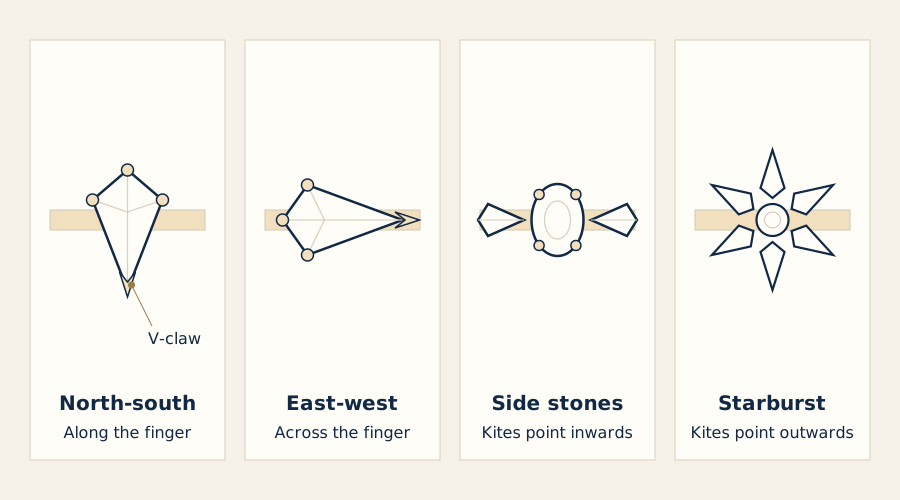
As side stones, kites sit in the same toolkit as the other shapes in our guide to side stone shapes and how to pair them. Their pointed outline guides the eye inwards in a similar way to trilliant side stones with their curved triangle outline, while half moon side stones suit oval and round centres better and bullet cuts with their single pointed end give a longer, straighter line. Several kites arranged point-outwards around a centre stone make a starburst or compass cluster, a design common in Art Deco-inspired rings.
Which wedding band suits a kite diamond engagement ring?
A kite set north-south is widest near the top, at the side corners, and narrows towards the lower point. A straight wedding band will usually touch the side corners first and leave a gap below. There are three common ways to deal with that:
- Raise the setting slightly on a gallery (the open metalwork under the stone) so a straight band slides underneath and sits flush.
- Use a contoured or notched band that curves around the claws and the lower point.
- Choose a gap on purpose, a modern look that some people prefer, with a plain or finely set band.
Set east-west, a kite sits lower and wider across the finger, so a contoured band is usually the neater fit. If you want diamonds in the band as well, small step-cut stones suit the kite's straight lines, and kites can be set alternately tip-to-tip in a band of their own.
How does a kite compare with shield, lozenge and trapezoid cuts?
| Kite | Lozenge | Shield | Trapezoid | Trilliant | |
|---|---|---|---|---|---|
| Sides | 4 | 4 | Usually 5–6 | 4 | 3 |
| Outline | Widest above centre, long lower point | Rhombus, widest at centre | Flat top, tapering to a point | One pair of parallel sides | Triangle, often curved sides |
| Usual facet style | Step, sometimes brilliant | Step or brilliant | Step or brilliant | Step | Brilliant or step |
| Sharp points | Two, plus two side corners | Two, plus two side corners | One main point | Four corners | Three |
| Common use | Side stones, clusters, bold centres | Side stones, clusters | Side stones, geometric centres | Side stones | Side stones, solitaires |
The shield cut is the shape most often weighed against a kite, because both have a broad top and a pointed base; the shield's flat top edge makes it look sturdier, while the kite reads lighter and more angular. A trapezoid with its two parallel sides is the quieter side stone, and the triangular cut family gives the strongest point of all.
If you like multi-sided outlines, compare the kite with the five-sided pentagonal cut and the hexagonal cut with its honeycomb outline. For a square shape that still has corners to protect, see princess cut diamonds, and for a cut-cornered square with Belgian roots, the Flanders cut. To see where all of these fit, start with our introduction to diamond shapes.
Related guideGeometric Diamond Cuts: Shield, Kite, Hexagon, Pentagon and MoreHow much does a kite cut diamond cost, natural or lab-grown?
Kites are cut from both natural and laboratory-grown diamond, and the two look the same to the eye. Lab-grown diamonds are real diamond, with the same hardness and refractive index, grown in a laboratory rather than mined. They cost much less than natural diamonds and are easier to find in centre-stone sizes. Natural kites, especially above one carat, are rare and often have to be sourced individually. Either way, a centre stone should come with an independent grading report from a lab such as GIA or IGI that states whether it is natural or lab-grown.
| Kite, G–H, VS | Approximate price range (AUD) |
|---|---|
| Lab-grown, 0.50 ct | about $500–$1,200 |
| Lab-grown, 1.00 ct | about $900–$2,500 |
| Natural, 0.50 ct | about $1,500–$3,500 |
| Natural, 1.00 ct | about $4,000–$10,000 |
| Natural side stone pair, about 0.20 ct total | about $500–$1,500 |
These are broad ranges only, and they move with the market. Because demand for kites is low, they generally cost less per carat than a round of the same weight, colour and clarity. Two things push kite prices up: finding a well-matched pair for side stones, which can take time, and step cutting, which rewards higher clarity grades. Within kites, carat, colour, clarity and the evenness of the outline matter most.
Browse kite cut diamonds: natural and lab-grown
How do you choose a kite cut diamond? Step by step
- Read the report. Check the shape description, measurements, colour, clarity, polish and symmetry, and whether the diamond is natural or lab-grown.
- Work out the ratio. Divide length by width; most kites look balanced between about 1.20 and 1.60.
- Check the side corners. They should sit level with each other, roughly a third of the way down from the top point.
- Inspect the points. Look for chips, feathers or inclusions near the lower point and top point on the plotting diagram and in a video.
- Look for a window. In a step cut, make sure the centre stays bright as the stone moves, not glassy.
- Match side stones. For pairs, compare measurements, ratio and colour side by side.
- Plan the setting and band together. Choose V-claws or a bezel for the points and confirm how the wedding band will sit before you commit.
Free consultation
Talk to a gemologist
Compare stones in person or online with Raj Sood, Graduate Gemologist (GIA), AJP (GIA).
Book a consultationFAQ
Common questions
What is a kite cut diamond?
It is a four-sided fancy diamond shape with a short upper section and a longer, tapering lower point, like a flying kite. Most are step cut, with long parallel facets, though brilliant-cut kites also exist.
Are kite cut diamonds good for engagement rings?
Yes, as long as the corners are protected. A bezel, half-bezel or V-claws on the points make a kite suitable for everyday wear.
What is the difference between a kite and a lozenge diamond?
A lozenge is a rhombus with four equal sides and its widest point in the middle. A kite has two short sides and two long sides, so its widest point sits above the centre.
Are kite cut diamonds expensive?
Usually they cost less per carat than a round of the same grades, because demand is lower. Natural kites above one carat are scarce, and matched pairs for side stones can cost more to source.
Can you get a lab-grown kite diamond?
Yes. Lab-grown kites are available in larger sizes than most natural kites and cost much less. They are real diamond, and the grading report will state that the stone is lab-grown.
What clarity should a step-cut kite diamond be?
VS2 or better is a sensible minimum, because step cuts show inclusions clearly. For a centre stone over about 0.75 carat, many people move up to VS1.

Ask a gemologist
Not sure which diamond to choose?
Raj Sood is a Graduate Gemologist (GIA) and master jeweller. Bring the stones you are considering, or send the reports, and he will tell you honestly which one is better and why.
Keep learning
Related guides
 Diamond ShapesGeometric Diamond Cuts: Shield, Kite, Hexagon, Pentagon and MoreDiamond ShapesShield Cut Diamonds
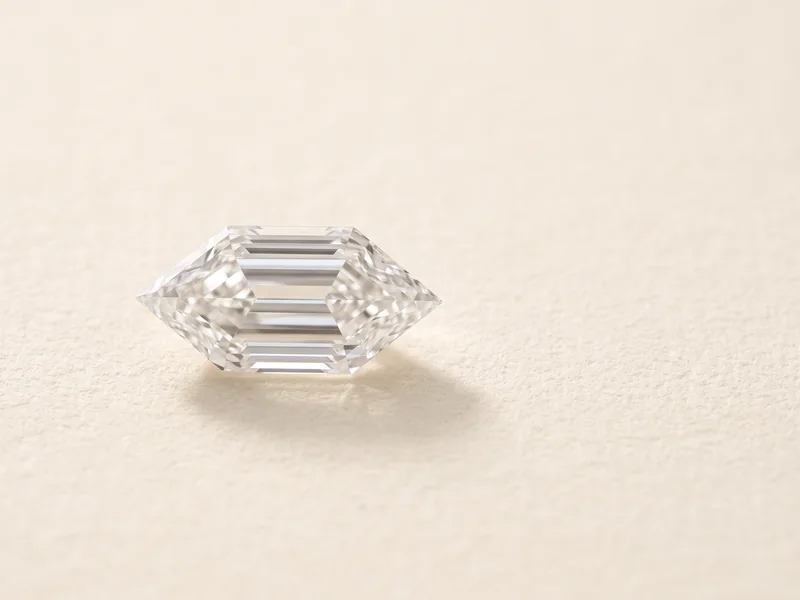 Diamond ShapesLozenge Cut Diamonds
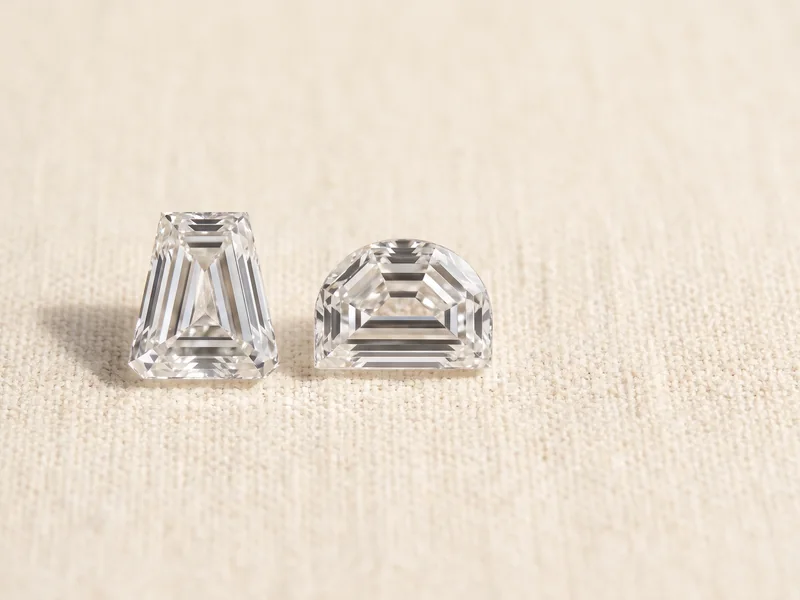 Diamond ShapesSide Stone Diamond Cuts: Trapezoid, Half Moon, Bullet, Baguette, TrilliantDiamond ShapesUnderstanding Diamond Shapes
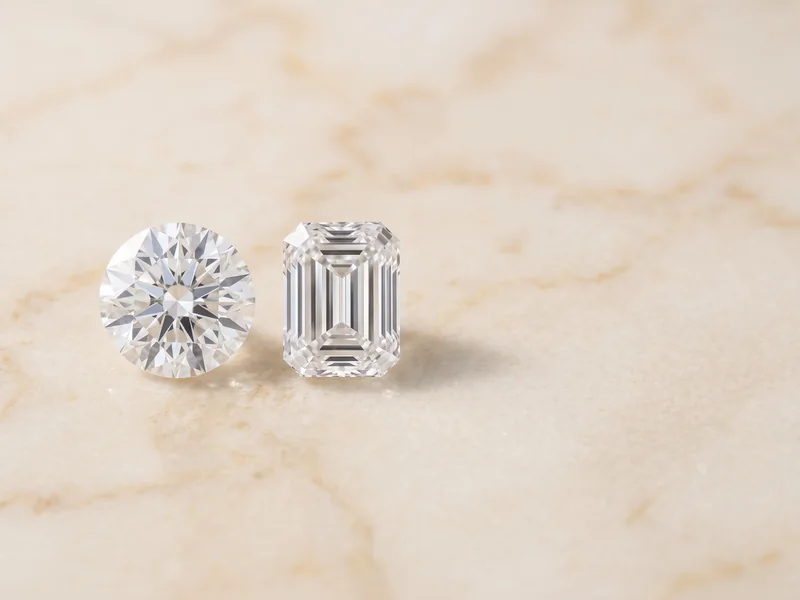 Diamond ShapesAll 34 Diamond Cuts: Every Shape Explained and Compared
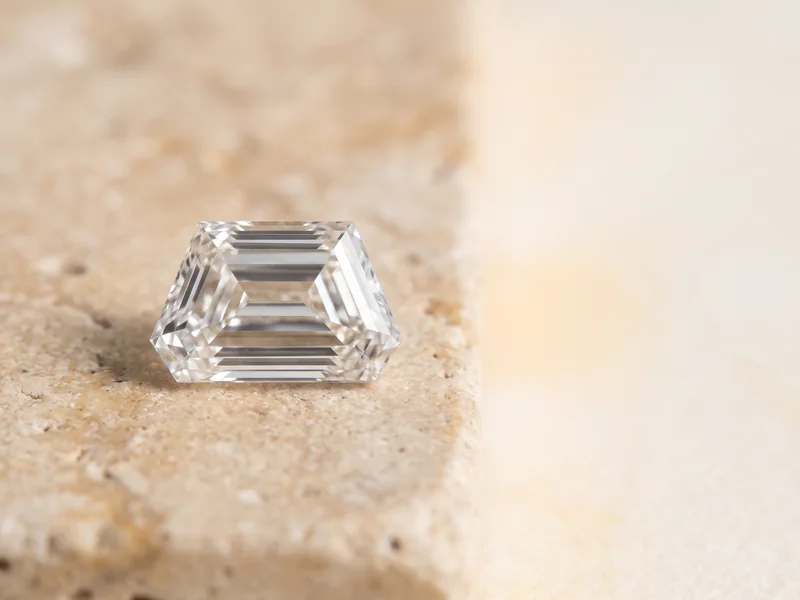 Diamond ShapesTrapezoid Cut Diamonds
 Diamond ShapesHalf Moon Cut Diamonds
Explore more
More guides on this topic
Education